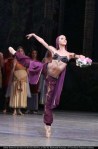
 One my absolute favorite dance documentaries, Ballerina, is now available to watch instantly on Netflix. This exquisite portrait of five female ballet dancers from the legendary Kirov is a relatively recent film, which lends it a much more modern air than most dance documentaries available, particularly when it comes to the level of virtouosity of the dancing itself. If you are looking for true inspiration and to see just how elevated a level ballet can reach, I highly recommended you check it out.
Tag: ballet school
Dancewear en l’air: The Stretch Knit Legging
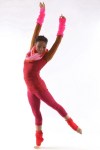 The CBT is always on the lookout for warm-ups that keep your muscles protected with minimum bulk. K.D. Dance brings it to the table with their ultra chic stretch legging, style AL114161.
In typical K.D. Dance fashion, this cozy number is both stylish and functional. The acrylic/lycra blend provides softness with just the right amount of cling, and K.D. Dance offers an outrageous range of color choices for this item.
These tights are an excellent piece for wear between classes, to and from classes, or during rehearsals and classes. And if you have a teacher like me that only allows streamlined warm-ups that don’t obscure alignment, you’re definitely in luck here.
Batman Tandoo? You mean Battement Tendu!
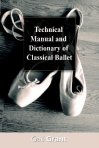 Ever wanted to write, better pronounce, or better understand a term in ballet? Then you must grab yourself a copy of Gail Grant’s Technical Manual & Dictionary of Classical Ballet. This small book is an absolute must-have for anyone interested ballet professionally or for college.
Considered in the dance world to unquestionably be the best reference for ballet terms, this little tome is fairly inexpensive (just about $10 in the listing on Amazon) and is simply an A-Z reference for virtually every ballet term used or in use.
Part of what makes the Gail Grant Dictionary such a standby is its inclusion and cross-reference of terminology across ballet techniques. For instance, if you go to a summer intensive and hear the word raccourci, looking it up in Grant’s Dictionary would tell you that it is as a term of the French School. The definition then cross-references you to the Russian term retiré, so you will learn the interchangeability of the terms. (I’m sure you know that ballet originated in France and was exported to other countries where it further evolved. Thus the development of varying techniques from the Italians, the Danes, the Russians, the Americans and the Cubans. These have all made their way to the United States. With so many techniques here, it is common to hear different terms from different teachers, even within the same school.) You would also learn that it means shortened – referring to the bend at the knee which “shortens” the leg – because this position is actually a variation on a développé a lá seconde!
If you are looking for books to support your training and develop you into a knowledgeable dancer, Gail Grant’s Dictionary just can’t be beat. There are quite a few other books that are invaluable for dancers, but you’ll find that this one stands firm at the top of the list for professional dancers, serious students and seasoned teachers.
Dancewear en l’air: The Plush Tank Leo
 For me, nothing ruins a good classical line like a busy leotard. With the rising popularity of the Natalie brand’s fussy, strappy confections, it seems like every time a student detournés, I am accosted by a web of criss-cross straps and camisole lines.
For my taste, nothing flatters a young dancer like the clean lines of a classic tank leo. Enter the Body Wrappers / Angelo Luzio P300 plush tank leotard. A modern take on the classic standby, its gorgeuos, soft fabric features an elegant bust detailing on an empire waist (and that’s “ahm-PEER”, btw, not “EHM-pyre”, kiddos.) The CBT loves that it looks lux while not looking overdone, and could easily pair with a matching skirt or with warm-ups for a more casual look.
When Can I Go on Pointe, CBT?
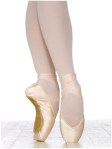 Every beginning female ballet dancer dreams of going on pointe, but that dreamy day can and will be ruined by pain and injury if you are not prepared. I don’t want to scare you but I have witnessed the pain and frustration of an ill-prepared beginner pointe student! It is far more difficult to overcome poor pointe technique resulting from ill-preparedness than to simply wait until the dancer’s strength and technique are ready.
It is your ballet teacher’s job to know from experience and education when his or her students are ready, but surprisingly few ballet teachers actually share that information with their students. There can be many reasons for this. Some teachers are concerned that if they explain the details of why, students and parents will be encouraged to argue about whether their daughter fits the parameters. Other teachers like to encourage a certain mystique about the whole affair (though they’d never admit this), thus generating further suspense and excitement for the students and parents and securing the teacher’s perceived status as a guru of super secret sacred ballet info.
I do not subscribe to either of these philosophies. In fact, I believe that transparency in these matters is vital for the dancer’s education! It is with that in mind that I share with you my guidelines for pointe preparedness. Mind you, these are not hard and fast rules, and it does take the teacher’s expertise to know if the dancer has actually met a given requirement. So without further ado:
- A student must be 11 years minimum to allow proper bone ossification. When children are young, the growth plates are soft, and repetition of improper technique in something as strenuous as pointe can deform the feet and body in short order. It is common for dancers to have to wait until they are 12 or older so their technique and bones can strengthen.
- A student must have at least 2 consecutive years of quality training immediately prior to promotion. Length of training is not an estimation of pointe readiness, however.
- A student must be in good health and able to take a whole class. This includes being of healthy weight. If the student frequently needs to rest because of illness or injury, she is not strong enough for the extra demands of pointe work.
- A student must consistently take a minimum of two classical ballet technique classes a week. Daily class is preferred and necessary for students training for ballet as a profession. Class frequency makes a significant difference in development.
- A student must pay attention in class and work well. Going on pointe is a big step and requires commitment on the part of the student.
- A student must be responsible enough to bring all the gear she will need to class. Pointe shoes require extra care and accessories.
- A student must habitually use her core muscles properly and have a strong, proper posture while dancing and standing. Pointe requires that the student use the muscles in her torso, legs and feet to stand en pointe and not use the shoes as a crutch. Core weakness will throw the student off balance and will make it difficult to dance.
- A student must use correct plié while dancing and exhibit supple calf and leg muscles.
- A student must hold turnout from the hip while dancing. Turnout makes it possible to do steps that could not otherwise be done. If the student does not maintain their turnout, they are not strong enough for pointe.
- A student must keep the heels forward. (No sickling, a sure sign of improper technique.) The most stable position for pointe work is to have the weight slightly forward between the big and second toes. Improper center will make it more difficult to stay en pointe, and will increase the chances of strain and injury.
- A student must point the whole foot from the ankle and instep with toes pointed but long while dancing. These muscles need to be strong enough to support the body weight. If the student is not in the habit of articulating the foot muscles properly, they will not be able to support themselves en pointe.
- A student must have enough of an arched instep to stand on pointe. Dancers with very high arches often have weak alignment or weak muscles that they must first master.
- A student must execute properly 16 relevés in the center without stopping and 8 at the barre on one leg without stopping, right and left. There should be no pumping action through the upper body during this execution. Strength for pointe work is achieved by repeating exercises. Relevés are excellent for building calf and leg strength, which is vital for pointe. If foot and leg strength is an issue, Theraband exercises can improve this deficiency.
- A student must pique passé/retiré with straight leg and proper alignment. Student should have enough strength to push themselves onto half-pointe. This step is harder to do en pointe and a bent leg is a sign of weakness or improper step preparation.
- A student must hold a retiré balance on half-pointe. The student should be well-placed (hips square, back straight, legs turned-out), and have the strength to balance on half-pointe. This pose is more difficult to correct en pointe, as the surface area for balancing is smaller and the turnout strength requirements are greater.
Most syllabi dictate that working properly in ballet class is sufficient preparation for pointework. As mentioned above, special exercises may be prescribed to help the dancer who is behind her classmates. Some schools devote whole classes to this preparation, called Pre-Pointe. There are varying philosophies on its appropriateness – but that is a topic for another day!
Dancewear en l’air: The Wrap Skirt
 What items look good for ballet class, but aren’t going to annoy, me, your teacher? You can count on the CBT to let you know here, in Dancewear en’lair.
I thought I’d start off with one of my all-time favorite dance skirts, the ubiquitious Mirella S12.
In a wide variety of colors – though no florals or prints, boo! – this little number is a must for the dance student. I restrict my female students to the classic black leo and pink tights, but for pointe, variations/repertoire and partnering I allow skirts, this being my favorite due to its quality fit which doesn’t hide alignment.
Unlike any of the many, many skirts I’ve purchased over the years, the Mirella S12 never fails to flow into a perfect soft line along the body. It’s cut to flatter many different body types, and Mirella even makes an S12A style available for larger frames. It’s not everyday that a dancewear company recognizes that we dancers are not all delicately framed with long legs and short torsos! Kudos, Mirella.
If you are looking for a skirt you won’t regret buying and that will serve you well over the years, this is the one. Just be sure to check your school’s dress code first!
College Bound Ballerina
You’re in high school, you love dancing, but you want to have a solid back-up plan in case you can’t make it your career. The CBT commends you on your smart thinking, especially in this economy!
If you want to dance in college, where do you start? If only there was one place where you could check out dance programs side by side to compare what they have to offer … especially when it comes to scholarships. Well, there is! Click over to www.DanceU101.com for an easy to use and comprehensive searchable database of college dance programs.
Have your cake and eat it, too – dancing in college can help make both you and your parents very happy: You can double major to get that business degree your parents want you to have and dance yourself to a BFA (that’s a Bachelor of Fine Arts, kiddos) so you don’t have to give up your passion. And in the words of Mr. Balanchine: “If you work really hard and say your prayers” – you might just land a scholarship to boot. Won’t that please the parents?
 BalletScoop