Does your ballet class hairstyle stand up to the force of chaines and multiple pirouettes? Nothing screams “amateur” like hair and hairpins flying. Oh, the embarrassment of the undone bun! But with just a little effort, you can put those pedestrian days behind you.
I expect students to start doing their own hair for class by around age ten. It can take some time to learn how to master the technique on yourself, but not half as long as you might think – usually a few hours of practice is all it takes. Today, you’ll get the 411 from the CBT on how to master this essential skill for dancers.
The basic bun style begins with a ponytail at the crown of the head. This step has to be done correctly in order for the bun to take shape properly. Use a good brush to sweep the hair evenly and smoothly into the pony. Dampening the hair can make it more manageable. Secure it with an elastic that is not too bulky, which will get in the way of hairpins and cause bumps, nor too flimsy, in which case it will need too many wrap-arounds and may break easily. Try to find elastics that are close in color to your hair. Use a light spray of hairspray (Elnett is a favorite of celebrity stylists and is available in a travel size.) to sleeken your wispies, or wait until the bun is complete and use clips to take care of them. Once the pony is in place, brush the hair in the tail to re-smooth it. DO NOT to coil the hair into a bun and then try to wrap a scrunchie or elastic around the bun … Seriously, just don’t!
The next part is the where it all usually goes wrong – here’s where you twist the ponytail and start to coil it around its base. What makes or breaks this part is whether the bun is kept close to the head with one hand each time the tail is coiled. If you don’t use a hand to secure the bun against the head as its coiled, you’ll end up with a cone-shaped thing that sticks out and looks, well, absurd.
After one full coil is made around the ponytail base, start inserting hairpins horizontally from the outer edge of the coil into the base, every inch or so of the circumference. Make sure to grab a bit of bun hair with each pin and a bit of hair from the scalp beneath the bun. That’s what connects the bun to your head. If you don’t feel a bit of resistance, the hairpin is probably just sitting in the bun and is not connecting anything to anything. As with the elastics, try to find pins that are similar in color to your hair. I find that U-shaped pins work better than “bobby” pins.
When you reach end, tuck the tail in and secure with a hairpin. Remember to secure wispies with clips; clip your bangs too if your studio requires. Voilá, a respectable bun!
Many dancers opt to also wrap a super-fine hairnet, again matched to the hair, around the bun to lock in bun wispies. Hair spray may be all that is needed for some, though others find these steps to be overkill. Whether you choose to do these steps may depend on the culture of your studio and your personal preferences, but both are must-dos for performances and auditions.
The ballerina bun isn’t just one style, it has many variations depending on the height wear the bun is fixed and what is done with the surrounding hair. A bun that sits very high on the head is generally associated with Balanchine technique, and a bun that sits low is often associated with more old-school techniques and, if the surrounding hair covers the ears a bit, with romantic-era ballets.
Once you’ve mastered the basic technique, play around with different configurations to find the style that suits you best. It’s a commonly held belief that the high bun is preferred for auditions, but the truth is that what’s best for auditions is dependant on what style the company or school is and what you feel most comfortable in. For class, its fun to experiment by adding a braid to your hairline, inverting the pony, braiding the pony or accessorizing with ribbons or flowers. There are tons of options out there – go have fun with your bun!
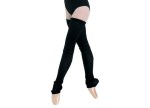 Legwarmers are an absolute staple for ballet dancers. You can throw them on with practically anything to keep your gams toasty and cozy in a chilly studio, and they come in a wide variety of lengths and fabrics. Perfect for barrework and stretching, the Bloch
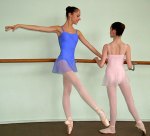 Anyone who’s taken pas de deux class while wearing a wrap skirt knows what an annoyance those ties can be in the middle of supported pirouettes or allegro work. Skirts can be fun to wear and can accent your movement nicely, but in partnering class they can be a distraction or irritation to you and your partner. Time for a one-piece dance dress, like Degas’s delicately refined
  If you are looking for a fun leo that will transition you from ballet classes to jazz classes in style, check out Yumiko Dancewear’s
  Looking for a ballet leotard that will make you stand out in an audition without looking too showy, sporty or – heaven forbid – neon? It can be tough to find elegant leos that aren’t simply more of the same classical cuts, but Ainsliewear has pulled it off rather nicely with
  One my absolute favorite dance documentaries,
 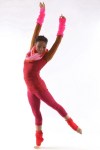 The CBT is always on the lookout for warm-ups that keep your muscles protected with minimum bulk. K.D. Dance brings it to the table with their ultra chic stretch legging, style
 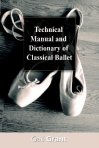 Ever wanted to write, better pronounce, or better understand a term in ballet? Then you must grab yourself a copy of
  For me, nothing ruins a good classical line like a busy leotard. With the rising popularity of the Natalie brand’s fussy, strappy confections, it seems like every time a student detournés, I am accosted by a web of criss-cross straps and camisole lines.
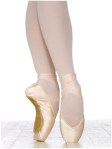 Every beginning female ballet dancer dreams of going on pointe, but that dreamy day can and will be ruined by pain and injury if you are not prepared. I don’t want to scare you but I have witnessed the pain and frustration of an ill-prepared beginner pointe student! It is far more difficult to overcome poor pointe technique resulting from ill-preparedness than to simply wait until the dancer’s strength and technique are ready.
 BalletScoop