Dancewear en l’air: The Cross-Bust Camisole Leo

Nothing beats gorgeously simple Italian design, and here to prove it is Deha with model No. T02105. This leotard features excellent fit with a shape-accentuating cross-bust empire bodice and is available in eight interesting colors.

The CBT loves that the simple but stunning design of this piece is exactly what makes it so compelling – no skirt or embellishment necessary. And that makes it perfect for class.

Update: The link to the Deha leo has been having problems all day, so here’s a link to the English main page. Once you are there, click “Deha Ballet shop on-line” and you’ll see this leo on page two of the Donna (Ladies) section. Sorry for the inconvenience!

Dancewear en l’air: The Sporty Zipper Unitard

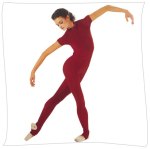
Unitards can be fun for rehearsals and even auditions, especially for contemporary ballet, and Sansha’s mock-neck unitard #503 is a modern change from the usual unembellished tank and long-sleeved versions.

This unitard features a zipper from the neck to right below the bust so you can customize your look. Stirrups at the feet keep the leg lines as long as possible and accentuate pointe shoes particularly well.

How do you say “Cecchetti” anyway?

There are many different styles of ballet taught around the world. Each is usually named after its founder and that person’s country: Cecchetti for Italian ballet, for example. But what are the differences between them? Which one came first? Does it matter which one you are trained in? How can you choose which one is best for you? How can you figure out which one you’re currently training in?

The four most popular styles of ballet in the U.S. are:

  1. French Technique – This is the original style of ballet and the foundation for its vocabulary. All other ballet techniques can be traced to the French style.
  2. Cecchetti Technique – (Pronounced like “check-ET-ee”) A style created by ballet master Enrique Cecchetti in Italy as a revision of the French technique.
  3. Vaganova Technique – (Pronounced like “va-GAH-no-va”) A technique created by Agrippina Vaganova in Russia as a hybrid revision of the French and Cecchetti styles.
  4. Balanchine Technique – (Pronounced like “BA-lan-sheen”) Created in the U.S. by Russian-born George Balanchine as a revision of the Vaganova technique.

Other popular styles include Royal Academy of Dance (RAD), Cuban method and Bournonville (Danish ballet). Each technique has its own special philosophy on what kinds of movements look best on the body and are best mechanically-speaking. The vocabularies can vary quite a bit as well. I’ll be posting soon to tell you more about what makes each style unique and what would make a dancer choose one technique over another.

You can usually figure out what technique you are being taught by simply reading the brochures or website of your school or asking your teacher. Especially in the U.S. however, ballet teachers may be trained in a mix of styles and end up teaching their students different things from different techniques. This can create confusion for the student, especially the student thinks she is being trained in only one technique.

It can be great for your versatility to explore different ballet styles, but only once you have reached a somewhat advanced level in your dancing. Doing so too early can confuse your muscle memory and your brain! Until you are ready, its usually best to find a teacher who articulates what technique is being taught and who specifies when you are presented with a step or vocabulary from a different style.

Ballet in Film: TutuMUCH


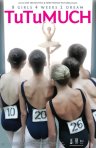
To keep with my theme today of professional track training, I thought it would be perfect to highlight the not-yet-released documentary TuTuMuch, which follows nine girls through the summer audition process of the revered Royal Winnipeg Ballet School.

Professional ballet schools can be very closed when it comes to their audition processes. For those of you who’ve never been through such an audition, TuTuMuch provides a revealing look at what happens behind the curtain. The vast majority of young dancers auditioning will not make it into the program, but those that do will be one step closer to making their dream a reality.

So you want to dance professionally?

Deciding to pursue a professional dance career is a huge decision. If its something you really want, you will have to have to put maximum effort not only into your training, but into setting yourself up in the best situation to support this goal. With so many factors to address, where should you start?

If you are still a young student, the first item to consider iswhether you are getting the training you need to be technically and artistically competitive. One way to assess your current school is to find out how many of its students have gone on to professional careers and exceptional college dance programs. You should also consider how many hours of training you receive each week and what level of proficiency your teachers each reached before becoming instructors. If you want to dance professionally, you should be training about four hours daily, five days a week, by age thirteen or so. Your teachers should have each either danced professionally or pursued study in pedagogy for their field of dance. Be aware that a former professional dancer may not know how to teach well, and a pedagogically trained teacher may not have enough knowledge about professional-level training.

For ballet, contemporary and modern dancers, finding a school that will put you at your best advantage for a professional career can mean transferring to a school that is attached to a professional company. Many such schools will require an audition for acceptance or at least for level placement. Some of the largest and best of these schools also offer academic classes, like Walnut Hill or the tuition-free Harid Conservatory. Some, like School of American Ballet and Joffrey Ballet School, are affiliated with professional children’s academic schools, and some, like The Rock School for Dance Education, have special arrangements with the local school system. Finding the right school, getting in, and finding a way to afford it can each be huge hurdles.

Some dancers simply do not have support from their family or money to attend or even apply to such prestigious schools, in which case transferring to the best school in your town is the next best option. It is a tougher road but not an impossible one. Before deciding this is your path, research all available scholarships, free-tuition programs and ways to raise funds. Remember that when you start auditioning for work, you will be competing against hundreds of graduates of professional schools like the ones above.

Deciding to transfer out of your current school can be a difficult one. Often a young dancer’s school is like her second home, her dance friends and teachers her second family. Remember that transferring schools doesn’t mean having to cut ties with everyone there, and you should always be respectful and appreciative of the many things your “old” school taught you. A dancer’s first school is usually the one that inspired her to begin a path to a professional career, and that passion for dance is the most invaluable part of a dancer’s education.

You will become eligible for many company auditions by sixteen, but that does not mean you need to start auditioning then. Most companies don’t take dancers until they are in their early twenties at least. Going to a very high-quality college dance program is the step I recommend for professional-track dancers graduating from high school. College dance programs are always evolving in quality, so when its time to start looking at colleges, I highly suggested getting yourself a copy of The Dance Magazine College Guide to find out which ones are best. Ideally, you want to find a truly top program that turns out professional dancers and is affiliated with a professional company so you can gain performing experience and set up a connection to a company while in college. Once again, getting into and affording the right school can be huge hurdles. Scholarships and working while in school can ease the financial burden, but the audition is all you.

About two years before you want to start your professional career, you will need to start intensive research on potential employers and decide on your application presentation. You may have to have to put in as many hours researching companies, developing your marketing materials (résumé, photographs, videos, etc) and earning money to fund an audition tour as you do training – and that’s a lot of hours.

Different companies value different qualities. Preferred body types, training techniques and dancer “looks” can vary widely. You don’t want to waste your time auditioning for a company that only likes lithe blondes with Balanchine training if you are a short redhead trained in Cecchetti. You’ll find that some companies welcome a variety of looks for their dancers, and you may prefer that culture.

Finally, it comes down to the audition. When at all possible, avoid the cattle calls of open auditions. It can be extremely difficult to find work this way. Instead, find out how to get into a company class. Some companies will want to see your video before they will agree to let you audition. Those pre-screened auditions are also much better than the cattle calls. If you are offered contracts, you will need to compare your potential pay and benefits, geographic locations, amenities, facilities,  performance opportunities, etc, to decide which offer you want to accept.

There is so much more to this process than I’ve laid out here, and I’ll try to address specific items in more depth in later posts. But hopefully this has given you the basic idea of what it really means to say, “I want to dance professionally!”

Dancewear en l’air: The Backseamed Pink Tight

Ballet tights in an unflattering shade of pink are one of the CBT’s pet peeves! Choosing a pink that clashes with your pointe shoes or ballet shoes will shorten your lines and just look wrong.
Pinks can vary depending on the amount of blue and yellow in the dye formula. Generally, classical or ballet pink tights look best with the more salmon-y shoes, like Freeds and Capezios, while theatrical pink looks better with truer pinks and paler shoes, like Grishkos and Russian Pointes. You may need to purchase one shade to match your soft shoes and one for pointe.

Non-mesh tights are usually very soft and appear to be a pretty pale pink in the package, but they often look white, yellow or purple once their on. Mesh tights can be almost scratchy sometimes, but usually have better pinks. (Steer clear of Capezio #9 in classical pink, though, it’s famous among dancers for looking bright orange!) A backseam makes alignment checks easier and visually lengthens your lines dramatically.

One of the best ballet tights on the market currently is the Body Wrappers A45, a convertible mesh version with a backseam available in ballet pink and theatrical pink. Its designed to feel super soft against the skin so you’ll get the best of both fabric worlds, and you’ll look polished and professional.

The Dancer’s Résumé

An essential for many aspiring dancers by high school, the dancer’s résumé can be a very intimidating project for a young student! Your first résumé is always the hardest one to write, but a little guidance is really all you need.

One of the very best beginner résumé guides for dancers is available for free online – just visit Your Dance Résumé. This guide was written ages ago, but the advice is timeless.

Remember, as a student your résumé is not expected to be long. In fact, it would be inappropriate for an entry-level dancer to have more than two pages; one page is preferred. Keep it neat and don’t embellish or fudge the facts. And don’t forget to keep updating it as you expand your experience and education!

L.A. Audition Tips

Not every ballet student dreams of joining a company. Are you a versatile dancer that has dreams of dancing in music videos and commercials one day? Here are some solid tips for auditioning out west. Not surprisingly, your ballet training can prove more important than your hip-hop!

When Awkward Leos Attack!

I’ll never forget my first ballet class away from home, standing at a barre in the middle of a huge ballroom with strips of marley duct-taped over red and blue carpeting. I’ll also never forget the sheer relief of realizing that the master class teacher’s annoyed comments after the first exercise were not directed to me, but to the dancer next to me who had been yanking her leo up in the front and down in the back incessantly. “Tell your mother to buy you a leotard that fits before you come to another class,” he said with complete seriousness. “If you have to pull it up and pull it down all the time, it doesn’t fit you!”

It had never occurred to me that adjusting a leotard was noticeable, let alone that it could turn into enough of a distraction for a teacher to ban it! We’ve all had That Leotard though … The one that you know will look totally gorgeous, if you can just have another sec to situate it just right …

Just like in street clothes, different cuts are made for different shapes. If you have a leo in your closet that bugs you no end, ask yourself why you are bothering with it? Endless tugging and yanking and wedgie picking – that’s right, I said it! – isn’t only a distraction to your own concentration, it’s annoying to your teachers and can make you seem unprepared and unprofessional. Um, not worth it!

Rest assured, the issue has nothing to do with you or your body. It has everything to do with one simple fact. Are you ready for this revelation?

People come in different shapes!

Shocking, I know. My longer torso was the cause of all my leotard tugging. Certain brands and cuts will never sit right on me – but others look simply fabulous!

Teacher annoyance aside, if you aren’t comfortable in your dance gear, you can’t put your all into your training. Don’t waste your time fussing with an awkward leo. Next time you’re shopping for dance clothes, try on as many different cuts, brands and fabrics as possible until you find what combinations look and feel great – so you can stop thinking about your gear and just focus on your dancing.

Ballet in Film: Ballerina

One my absolute favorite dance documentaries, Ballerina, is now available to watch instantly on Netflix. This exquisite portrait of five female ballet dancers from the legendary Kirov is a relatively recent film, which lends it a much more modern air than most dance documentaries available, particularly when it comes to the level of virtouosity of the dancing itself. If you are looking for true inspiration and to see just how elevated a level ballet can reach, I highly recommended you check it out.
Batman Tandoo? You mean Battement Tendu!

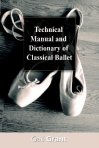
Ever wanted to write, better pronounce, or better understand a term in ballet? Then you must grab yourself a copy of Gail Grant’s Technical Manual & Dictionary of Classical Ballet. This small book is an absolute must-have for anyone interested ballet professionally or for college.

Considered in the dance world to unquestionably be the best reference for ballet terms, this little tome is fairly inexpensive (just about $10 in the listing on Amazon) and is simply an A-Z reference for virtually every ballet term used or in use.

Part of what makes the Gail Grant Dictionary such a standby is its inclusion and cross-reference of terminology across ballet techniques. For instance, if you go to a summer intensive and hear the word raccourci, looking it up in Grant’s Dictionary would tell you that it is as a term of the French School. The definition then cross-references you to the Russian term retiré, so you will learn the interchangeability of the terms. (I’m sure you know that ballet originated in France and was exported to other countries where it further evolved. Thus the development of varying techniques from the Italians, the Danes, the Russians, the Americans and the Cubans. These have all made their way to the United States. With so many techniques here, it is common to hear different terms from different teachers, even within the same school.) You would also learn that it means shortened – referring to the bend at the knee which “shortens” the leg – because this position is actually a variation on a développé a lá seconde!

If you are looking for books to support your training and develop you into a knowledgeable dancer, Gail Grant’s Dictionary just can’t be beat. There are quite a few other books that are invaluable for dancers, but you’ll find that this one stands firm at the top of the list for professional dancers, serious students and seasoned teachers.

College Bound Ballerina

You’re in high school, you love dancing, but you want to have a solid back-up plan in case you can’t make it your career. The CBT commends you on your smart thinking, especially in this economy!

If you want to dance in college, where do you start? If only there was one place where you could check out dance programs side by side to compare what they have to offer … especially when it comes to scholarships. Well, there is! Click over to www.DanceU101.com for an easy to use and comprehensive searchable database of college dance programs.

Have your cake and eat it, too – dancing in college can help make both you and your parents very happy: You can double major to get that business degree your parents want you to have and dance yourself to a BFA (that’s a Bachelor of Fine Arts, kiddos) so you don’t have to give up your passion. And in the words of Mr. Balanchine: “If you work really hard and say your prayers” – you might just land a scholarship to boot. Won’t that please the parents?