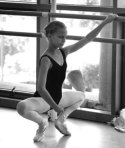
Inspiration: Kathryn Morgan

Young NYCB soloist Kathryn Morgan hails from Fayetteville, North Carolina, and received her initial training from Mobile Ballet in Alabama, where she recently returned to perform as a guest artist. In 2004, Kathryn went to the legendary School of American Ballet, moving into an apprenticeship with NYCB in 2006 and a corps de ballet post in 2007. Her promotion to soloist happened just over a year ago, in October of 2009.

Kathryn, or “Katie”, is perhaps one of the company’s most charming ballerinas, and her quiet, radiant grace is apparent in every role. She has been featured by the New York Times, Dance Spirit and Pointe Magazine and guest-blogged for the latter. You’ll be truly inspired by the gorgeous photos on her website – it took me quite a while to decide which one was prettiest for this post!

UPDATE: Kathryn has a new website now, with a fabulous blog of her own. Check it out! It’s called IfThePointeShoeFits.

Dancewear en l’air: The Diamond Leotard

This thoughtfully cut leo features criss-crossing panels of fabric that narrow towards the hips making a flattering hourglass effect and creating a small diamond in the center bust. The criss-cross pieces wrap low around the back of the leotard creating a cute hip-skimming accent.

I hesitated to feature this interestingly cut leotard because, since Bloch’s recent purchase of Mirella, not all of their leotards are featured on either site. This particular leo is tough to find anywhere, but if you know the model number (MJ7115) you can find it in online discount stores, particularly if you’re willing to order from the UK. It’s available in a slate-like indigo, true red and classic black.

The 360 design of this leotard is what makes it so gorgeous. I’d pair it legwarmers or just pink tights so as not to obsure its pretty and flattering shape.

Supercharge Your Pointework!

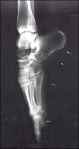
The American Orthopaedic Foot & Ankle Society agrees: pointework is a serious undertaking. They endorse several tried-and-true dancer exercises that you will find enormously impactful for your oh-so-important foot and ankle training to enhance stabilization, strength and articulation. Add these simple, technique-cleansing routines to your regimen today (You’ll thank me later!):

Doming Exercise

The dancer sits on a chair with knees bent to 90 degrees and feet flat on floor. The dancer then tries to make an arch under the metatarsal heads while keeping the toes flat and long, not allowing any curling of toes. Hold for count of ten, repeat 5 times with each foot. This helps strengthen the intrinsic muscles (the small muscles between the metatarsal bones.

Marble Exercise

Place 20 marbles on the floor. Pick them up one at a time by curling the toes around them. Move each marble to a jar and when dropping in the jar, spread the toes apart as widely as possible. Repeat with other foot.

Alphabet Exercise

Write A to Z with each foot, using the foot and ankle and not the leg to draw the letters. This is a good overall ankle strengthening exercise.

Theraband (Sport Cord) Exercise

Dancers should move their ankle in 4 directions against the theraband. Flex (dorsiflexion), pointe (plantarflexion), sickle (inversion) and wing (eversion). Dancers should first point their foot followed by trying to turn the foot in (“sickle”) against the resistance of the theraband. A dancer should be able to see the tendon just behind the inside of their ankle working. This tendon is the tibialis posterior which is crucial for rising up on the toes.

Releves

The dancer should do calf raises with their feet in a parallel position, otherwise known as a releve. After barre work, it is good to do 24 single leg releves in parallel on each leg. This will help strengthen the Achilles tendon and calves.

Ballet in Film: Only When I Dance

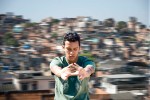
Only When I Dance is an award-winning documentary presented this year that follows two desperately underprivileged dance students, a girl and boy, from one of the most violent and tragic favelas in Rio. The odds of these two young people succeeding are stacked strongly against them. Find out what happens when two children dare to dream of escaping to a better life through dance.

Click here to find out how you can help the Vida Ballet Fund. This organization provides grants to young people from disadvantaged backgrounds of Rio and the surrounding favelas who would not otherwise have access to dance school or an opportunity to pursue dance as a career.

We All Start Somewhere

Hello dancers! The Fall/Winter semester is already about half over. Now is a great time to check in on yourself and your training. What’s working for you? Are you making progress in the areas that you need to?

When this season started, I challenged you to be strategic about your new training year. That entailed setting specific goals and putting together a plan of attack for each. Mid-semester is the perfect time to review your progress and re-assess your plan.

What were your goals when the semester began? Have you been able to focus on them while you train, or did you forget about them and just “get through” your classes? Have you been consistent with any special exercises or stretches you needed to do outside of class? Be honest. And remember, New Year’s isn’t the only time to make resolutions! If you’ve been slackin’, resolve now to get refocus your efforts and rededicate yourself to your goals for this year.

Don’t forget that your teachers are there to help you, too. If you aren’t sure how you’re doing, talk to your teacher about your progress. Above all, stay focused and keep your eye on the ball. Watch dance movies that inspire or motivate you to enjoy your training. If you’re lucky enough to have good performances taking place in your city, try to make it to a live professional show. While you’re watching the pros, remember that they were once students too, trying to apply corrections and become the real artists that they now are. Just like you one day could be.

I’m just a dancer, not a miracle worker!

First position, arm in second. Core engaged, neutral pelvis. Long neck, shoulders down. Elbow below shoulder, inside of elbow faces front. Wrist below elbow, inside of hand faces front. Fingers slightly curved, thumb tucked in. Chest open, rib cage closed. Rotate the legs from the hip socket. No rolling in. Energy through your limbs, but don’t grip. Now breathe, smile, look effortless and … grand plié!

Does it feel sometimes like there are too many things to think about in ballet at one time, even in the simplest of steps? That’s because there are! The corrections I just listed would be impossible for a beginner to keep in mind all at the same time. So how can you master a step when there are so many corrections to deal with?

The answer is: Don’t think about them! More specifically, your mission is to get corrections so ingrained in your muscle memory that you can “forget” about them and focus on other, new corrections. What’s the secret to that? Like the tortoise and the hare – slow and steady wins the race.

Your teacher is responsible for providing only as many corrections at a time as you can properly process and apply. Then, like a careful gardener, she must patiently remind you and even reteach the info in different ways. You must keep focused and stay dedicated. Finally, it “clicks” and muscle memory has made it a habit. Tada!

You are certainly capable of handling a multiple new corrections at one time, but there is also a limit. Your teacher might focus particularly on one part of the body for a few weeks or on a certain movement quality. As you become familiar with a correction, she may only need to say one or two words before you instantly know what adjustment to make. This means the brain is learning! She might then introduce you to a brand new correction or two, though it could take some months before the prior step or correction is really solidly learned. Even after a correction is solidly learned, occasional reminders may be necessary. Be patient with yourself if you notice this, particularly if you are having to “retrain” aspects of your technique.

Your teacher is responsible for providing you with corrections that are challenging but also achievable – A good teacher won’t ask you to do anything you are not capable of but won’t push you beyond your limit either. Keep focused, don’t be afraid of new information, and be patient if you are hearing the same corrections for a while.

You’ll be surprised what you can achieve with diligence and patience. Don’t forget that a dancer’s education is never truly complete – we are all always striving for improvement.
Ballet in Print: Cuban Ballet

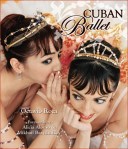
In order to reach their full potential as artists, many Cuban ballet dancers leave their country to escape the complicated politics of Cuba. And that nation’s loss has become the world’s gain as pointed out by noted dance critic and this book’s author, Octavio Roca. Cuban Ballet explores this evolution and is gorgeously illustrated with both vibrant full-color and dramatic black and white photographs of current and former Cuban ballet dancers.
Cuban Ballet provides an exceptional portrait of Cuban ballet’s history, including stories of select Cuban ballet stars. This book also features a forward by Mikhail Baryshnikov and by Alicia Alonzo, who you might have guessed is one of the dancers featured most prominently. Released only last month, this exciting and beautiful new book is available at a significant discount through Amazon.

Dancewear en l’air: The Tiger Leotard

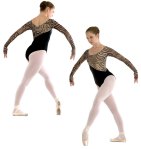
This leo is so outrageous I just had to feature it for fun today! The Tiger Leotard (scroll down on their long-sleeve leos page to find it) by London-based Wear Moi International – not to be confused with French dancewear company Wear Moi – makes this arresting tiger stripe ballet leotard, which seems reminiscent to me of Oleg Vinogradov’s Knight in a Tiger’s Skin ballet from the Kirov!

Like many of Wear Moi’s leos, this item is created in two different fabrics, in this case a black lycra bottom and the striking tiger print on top. An asymetrical seam connecting the two and extra-long sleeves set off the tiger print with a haphazard and exotic vibe. This style is not for the faint of heart!

Dear CBT: Tendu Translation

Dear ClassicalBalletTeacher,

What does battement tendu mean?

– Anonymous Dance Student

Dear Dancer:

The literal translation is “beat stretch”. This describes the outstretched extension of the leg from the body with the toes á terre (on the ground) and in time with music. Battement tendu is an superb exercise for the body when done correctly.

Battement, or beat/beaten, is the word that precedes most ballet steps involving an extension of one leg while standing (as opposed to jumping). Examples are battement jeté, battement enveloppé and battement fondu. If you are interested in the translations and definitions of ballet technique terminology, you will really enjoy grabbing a copy of Gail Grant’s Dictionary of Classical Ballet. Happy Dancing!

The Barre is Your Friend!

Ah, the ubiquitious ballet barre. But is it really needed for developing good technique? Why don’t other forms of dance use a barre? Where on earth did it come from?
As you know from this site, ballet originated from court dances that look almost nothing like the ballet technique of today. And as that dancing evolved, steps got more difficult and more balance was required for them. Eventually, dance teachers had their students hold on to the backs of chairs while learning the tough steps, and so the ballet barre was born. It’s hard to imagine ballet without it now – imagine beginner pointe in the center! Continue reading

Technical Tricks of the Trade: Advice from an Amateur (via You Dance Funny, So Does Me)

How about some technical tricks and tips today, kiddos? Here is an excellent (and funny) article with a by a male dancer and amateur dance historian with a concise list of some of the best quick technique tips!

You’d be surprised what you can learn from a set of new eyes, even when they may not be the most experienced.  The fact that people read this blog has given me an inflated sense of ego, and I feel impudent enough to offer some advice when it comes to taking class.  I believe that our flaws shape our perceptions, and as someone with bad feet, bad turnout and no natural flexibility, I’m always looking at how people use such things.  One of the teac … Read More

via You Dance Funny, So Does Me

Dancewear en l’air: The New Princess-Seamed Camisole

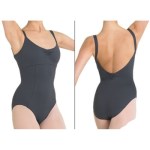
Sleek and sophisticated is what I think when I look at the construction of Bloch’s L2750. This style gives homage to classic shape through flattering empire and princess seams, but brings it to 2010 with updated fabric and a modern cool-toned Steel version. The straps are camisole style, but not too thin that they’ll dig into your shoulders.

This piece is great for class, rehearsal or even a leotard performance. Just add dance shoes.

Pretty Pointe Shoes, We Hardly Knew Ye!

Peachy pink satin pointe shoes … so beautiful! But they don’t stay that way for long do they? No, after a few hours worth of barre, your pointe shoes will be broken-in and start showing small signs of wear. That perfect amount of break-in only last so long before they start getting too soft and worn down.

If you are taking multiple pointe classes a week, your shoes could even be all used up in a week or even less! If you are still early in your pointe training, your shoes will last much longer – you may even grow out of them before they have a chance to get totally “dead” – but it’s still important to know how to look for signs of too much wear.

The reason that pointe shoes are unfit for wear at a cetain point is that they stop supporting the foot. That will put unnecessary strain and stress on the joints, muscles and connective tissues of your feet. Your pointe shoes are unfit for wear when they offer only minimal resistance in roll-through releve, when they stop supporting the arch and certainly when they allow the metatarsal to pop out of the throat of the shoe.

Some dancers prefer to keep their dead shoes for demi-pointe use during non-pointe ballet classes. This can help a dancer continue to become comfortable in a pointe shoes. Personally, I prefer a real soft shoe for ballet technique classes, but some might find the dead pointe shoes useful for training. Plus, they don’t have to buy soft shoes anymore.

Before storing your “dead” pointe shoes or giving them away as gifts, take some time to analyze how they broke-in. Did the shank break or break-down much more quickly than the box? You may need a stronger shank or possibly a higher vamp. Did the box break down before you got the shank broken-in? You might need a softer shank or even a lower vamp. Take note of how the features of the shoe worked for you throughout your working in them. Make a list of good and bad things you noticed about the break-in and bring it and the shoe’s brand and style name with you when you go for your next fitting. This information is invaluable in deciding whether you should move to a different brand or style or if you are having technique issues that need to be straightened out. Ask your teacher for help if you’re not sure how to make these observations.

Pointe shoes are expensive and breaking in new ones can be no fun, but your health and safety are paramount! Learn to recognize when your pointe shoes are beyond safe use and when it’s time to get re-fitted and buy new ones.

Dancewear en l’air: The Pro Pad by Ouch Pouch

Toe pads are essential for most pointe students, but some can be bulky and prevent articulation. The Pro Pad by Ouch Pouch is an excellent alternative to traditional pads because it features gel padding only on the top of the pad to protect the toe joints from friction and pressure. The bottom of the pad is fabric only to allow real connection to the shoe and floor.

Fits Like a Glove – For Your Foot! – Part 2

Once you’ve found the best pointe shoe combinations of box, width, vamp and shank, try the remaining shoe or shoes with cushioning. I do not recommend loose lambs wool, paper towels or newspaper. There are so many much better options available these days!

Cushions should enhance comfort and fine-tune the fit; they should not be used to compensate for a sloppy fit! Use as little cushioning as possible. Many dancers who wear no pads find they need at least one of the oval or mushroom cushions. If these are not sufficient, use additional cushions. It is also possible that a narrower box or a box liner is needed to prevent the foot from dropping in too much. If the length and width are correct but there is pain or pressure on the toe(s), more cushions may be needed. Here are some options: Continue reading