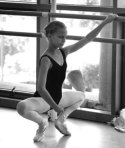
 First position, arm in second. Core engaged, neutral pelvis. Long neck, shoulders down. Elbow below shoulder, inside of elbow faces front. Wrist below elbow, inside of hand faces front. Fingers slightly curved, thumb tucked in. Chest open, rib cage closed. Rotate the legs from the hip socket. No rolling in. Energy through your limbs, but don’t grip. Now breathe, smile, look effortless and … grand plié!
Does it feel sometimes like there are too many things to think about in ballet at one time, even in the simplest of steps? That’s because there are! The corrections I just listed would be impossible for a beginner to keep in mind all at the same time. So how can you master a step when there are so many corrections to deal with?
The answer is: Don’t think about them! More specifically, your mission is to get corrections so ingrained in your muscle memory that you can “forget” about them and focus on other, new corrections. What’s the secret to that? Like the tortoise and the hare – slow and steady wins the race.
Your teacher is responsible for providing only as many corrections at a time as you can properly process and apply. Then, like a careful gardener, she must patiently remind you and even reteach the info in different ways. You must keep focused and stay dedicated. Finally, it “clicks” and muscle memory has made it a habit. Tada!
You are certainly capable of handling a multiple new corrections at one time, but there is also a limit. Your teacher might focus particularly on one part of the body for a few weeks or on a certain movement quality. As you become familiar with a correction, she may only need to say one or two words before you instantly know what adjustment to make. This means the brain is learning! She might then introduce you to a brand new correction or two, though it could take some months before the prior step or correction is really solidly learned. Even after a correction is solidly learned, occasional reminders may be necessary. Be patient with yourself if you notice this, particularly if you are having to “retrain” aspects of your technique.
Your teacher is responsible for providing you with corrections that are challenging but also achievable – A good teacher won’t ask you to do anything you are not capable of but won’t push you beyond your limit either. Keep focused, don’t be afraid of new information, and be patient if you are hearing the same corrections for a while.
You’ll be surprised what you can achieve with diligence and patience. Don’t forget that a dancer’s education is never truly complete – we are all always striving for improvement.
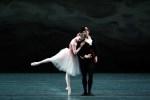 Young NYCB soloist Kathryn Morgan hails from Fayetteville, North Carolina, and received her initial training from Mobile Ballet in Alabama, where she recently returned to perform as a guest artist. In 2004, Kathryn went to the legendary School of American Ballet, moving into an apprenticeship with NYCB in 2006 and a corps de ballet post in 2007. Her promotion to soloist happened just over a year ago, in October of 2009.
 This thoughtfully cut leo features criss-crossing panels of fabric that narrow towards the hips making a flattering hourglass effect and creating a small diamond in the center bust. The criss-cross pieces wrap low around the back of the leotard creating a cute hip-skimming accent.
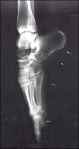 The American Orthopaedic Foot & Ankle Society agrees: pointework is a serious undertaking. They endorse several tried-and-true dancer exercises that you will find enormously impactful for your oh-so-important foot and ankle training to enhance stabilization, strength and articulation. Add these simple, technique-cleansing routines to your regimen today (You’ll thank me later!):
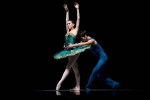 Sarah Van Patten has been a principal dancer with San Francisco Ballet for three years and is an exceptional talent and an elegant ballerina with artistic sincerity.
 Still deciding whether to go to college before trying to have a dance career? You’ve gotta read
 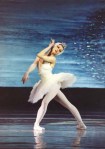 Sometimes it’s tough to remember what you are working towards with the endless classes, rehearsals and corrections. Every dancer could use some inspiration to keep focused and excited about dance, so with that in mind, I thought I’d take some time to feature for you some of today’s elite ballet artists.
 An 80’s retro top is perfect for dance inspiration, and
 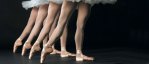 Hello dancers! The Fall/Winter semester is already about half over. Now is a great time to check in on yourself and your training. What’s working for you? Are you making progress in the areas that you need to?
 Let’s beat those Monday blues with some fashion today. If you’re in the mood for a stylistic pick-me-up,
 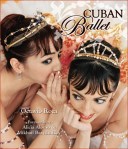 In order to reach their full potential as artists, many Cuban ballet dancers leave their country to escape the complicated politics of Cuba. And that nation’s loss has become the world’s gain as pointed out by noted dance critic and this book’s author, Octavio Roca.
  Ah, the ubiquitious ballet barre. But is it really needed for developing good technique? Why don’t other forms of dance use a barre? Where on earth did it come from?
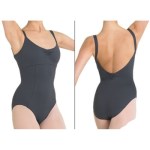 Sleek and sophisticated is what I think when I look at the construction of Bloch’s
  Toe pads are essential for most pointe students, but some can be bulky and prevent articulation. The
  BalletScoop