Ballet for the Teen Beginner – Part 1

When is too late to start ballet? What should I look for in a ballet school? Can I become a professional dancer if I start training as a teen? What on earth do I wear?

If you’re a teen that is interested in beginning ballet classes for the first time, these are just a few of the exciting questions you probably have. Ballet is a wonderful activity at any age for strengthening the body, increasing flexibility, emotional expression and spending time with friends. Starting as a teen will give you a different experience than if you start young, but it can certainly be as fun and enjoyable. So let’s get to those questions …

I recommend a physical exam with your doctor before beginning any new physical activity, but it is never too late to begin ballet lessons if you are medically able. Your goals in dance are important to consider though. Do you just want to get some activity into your week while spending time with friends? Do you dream of eventually wearing pointe shoes? Do you aspire to a professional career? Do you just want to try something new?

If your goals are recreational, you have chosen a wonderful activity. Ballet is terrific exercise, is very creative and is great for spending time with friends and making new ones. It’s unlike any other sport because it is also a performing artform. You should plan to take classes once or twice a week to progress at a safe pace recreationally.

If you would also like to one day wear the coveted satin pointe shoes, you may be able to reach this goal. However, this will require a bit more dedication than the above. There are many different factors that go into a student’s preparedness for pointe work, including skeletal structure which cannot be altered. Soft tissue malleability is also an issue. Young children have some ability to change soft tissue range of motion, but that decreases dramatically in the teen years. You will need at least two years of twice weekly lessons before you should be considered for pointe training. Whether you are an acceptable candidate for pointe at that time should be determined by a qualified teacher. But rest assured that ballet is incredibly enjoyable and satisfying activity regardless of whether you are on pointe or not!

Now for the toughest question: Can you become a professional ballerina if you start ballet lessons in your teens? If you are very, very lucky and work very, very hard, yes you can. Just ask Darcy Bussell, Melissa Hayden, Carmen Corella or Misty Copeland. But it would be wrong of me not to tell you that those are extremely rare and fortunate circumstances with dancers that were born with a naturally favorable body and facility for ballet and pointe. If you’ve read my article on becoming a professional dancer, you know just how competitive it is, and that is for students who have been training for nearly all their lives! (Of course, it is different for male ballet dancers, who may be able to start in their mid-teens with no problem.)

Training in ballet as a teen can open doors to other styles of dance that are based on ballet technique. Studying ballet can prepare you for success in modern, jazz, contemporary and other disciplines. Because they don’t require pointe training, these styles can be more accessible to teen beginners for potential of professional dance. Also, even recreational ballet training might lead to new college opportunities.

Once you’ve given some thought to your goals, its time to research local dance schools. The easiest way to come up with a complete list of dance schools in your area is to look on www.yp.com. There are a lot of websites that claim to have dance school listings, but most are dependent on the schools initiating that listing, which many schools don’t. If you are interested in pairing your ballet lessons with classes in other dance forms, focus on studios that offer those other forms of dance in addition to ballet.

Because dance can be harmful if taught improperly, it is important to review the training of each teacher you consider. They should have trained with a school that is well-respected in the dance community at large, not just locally, or they should have had a respectable professional career. Thanks to Google, this shouldn’t be difficult to find out once you have the teacher’s bio. Visit the school to get a feel for its suitability. Do the students conform to a clean and professional-looking dress code? Do the classes seem organized and logically-run? Ask if the studio has sprung floors, which minimize injury. Studios should be large and well-lit with high ceilings and with mirror panels covering at least one wall.

If you have dreams of dancing professionally, your ideal option is to enroll in the recreational division of a professional ballet school (one that is affiliated with professional ballet company) and to try audition into the professional training division once you have reached an acceptable level. You may need to audition even to enter the recreational division. Speak to the teacher or the school directors about your options for entry and progression. You will need to take a minimum of one class a day most days of the week to train at this level. Once you have a learned the basics and strengthened your body, this schedule could need to increase significantly.

Hopefully the schools you look at will offer a teen beginner ballet class. If they do not and you are not comfortable in a class with much younger students, look for an adult beginner class. Do not be discouraged if you cannot find either at a good school in your town. Instead, speak to the teacher or director about how far along you would need to be before you can move into a class with students closer to your age. Create a plan with the teacher or director for reaching your goal so you will not feel like you are stuck in a lower age group indefinitely.

Starting ballet classes can be so exciting. Congratulations on choosing such a beautiful and fun activity. In my next post, I’ll help you prepare for your first ballet classes … with a little shopping!
Choices, Choices – Plus Some Great Ballet Videos!

So now you have the basic scoop on the most popular techniques in this U.S. But there’s more! The other major methods that you should know of are:

Bournonville (pronounced BOR-non-vill) technique is a lovely iteration that evolved through the Royal Danish Ballet and is known for its quick footwork, kind expression and minimized show of effort. Bournonville ballets can be easy to spot from the pairing of busy feet and a calmly graceful port de bras. While the technique is not often taught in the U.S., the choreography is. Many Bournonville ballets are still performed regularly, including La Sylphide, Flower Festival in Genzano and Napoli.

Royal Academy of Dancing from England is an amalgam of French, Cecchetti, Vaganova and Bournonville styles and is known for its purity of line. RAD students are examined yearly and are recognizable by the strict dress code with belts and satin ribbons on girls’ soft satin ballet shoes. RAD cannot be taught by dancers not certified and schools not accredited. It is not as popular in the U.S. as some other techniques but is enormously popular in Europe and other continents.

Cuban ballet is also a blend other techniques but with a strong Vaganova influence and is noted for its joyful sensuality. Until very recently, Cuba was the only country where you could learn this technique, but a few schools have opened in the Miami area. The home of Cuban ballet is the Cuban Ballet School.

It is also worth mentioning that while not recognized widely yet, American Ballet Theatre is creating its own through the ABT National Training Curriculum. They recently settled on there own system of arabesques, which appear similar to the Cecchetti versions.

You should be prepared now, baby ballerinas, to recognized the techniques when they are named and understand some of their differences. Most good teachers are usually specialized in teaching one or two specific techniques and are educated on the existence of the others. Can you tell the differences in style? Which one is your favorite?

ABT Sample Video (Scroll to page bottom.)

Balanchine Sample Video

Bournonville Sample Video

Cecchetti Sample Video

French Sample Video

RAD Sample Video

Vaganova Sample Video

The Balanchine Technique: An Unprecedented Innovation

New York City Ballet – it is perhaps the most famous U.S. ballet company, rivaled only by American Ballet Theatre. Balanchine ballet technique and NYCB are true American creations. And through their evolution, George Balanchine and Lincoln Kirstein completely changed the course of dance history.

George Balanchine, originally Georgy Balanchivadze, came to the U.S. from Russia in the 1930s. From a young age, he trained in ballet at the Imperial Theatre School and in music at the Petrograd Conservatory of Music. Balanchine began choreographing in his teens, and in 1924 was included in a small group that was allowed to tour outside of the Soviet Union, a very rare privilege at that time. The dancers did not return home but instead joined Serge Diaghilev’s famous Ballet Russes.

Balanchine left Ballet Russes eventually and took various other positions over the next few years. While in London, Balanchine met Lincoln Kirstein, whose dream was to open an American company with its own repertoire distinct from the Europeans’. And Balanchine wanted a ballet school for this company. Balanchine and Kirstein together created the esteemed School of American Ballet in 1934, arguably the finest ballet school in America today. Known simply as SAB to most dancers, this school is the main feeder for Balanchine and Kirstein’s company, New York City Ballet. The first ballet Balanchine created there, Serenade, was choreographed on the SAB students and is now downright legendary. Graduating SAB students are some of the only ballet students in the country who are nearly guaranteed to find professional dance work.

Balanchine’s contemporary choreography and manner of movement evolved into its own technique. Based on the Russian (pre-Vaganova influence) method, Balanchine took basic movements like tendus, pirouettes, port de bras and arabesques and reworked them in ways that he felt best presented the form and movement to the audience. Even a simple port de corp devant was not to be considered a stretch but a fully artistic movement where the aesthetic of the body’s journey through space was the most important thing. Petit allegro was sped up, exaggerated in places and given modern touches. Landings from jumps were with heels barely or not at all touching the floor. Some of Balachine’s choreography is easy to spot with hips sweeping forward and arms outstretched in a jazzy style never before seen in classical ballet. Balanchine port de bras work is also easy to spot with its arms crossing over one another during position changes and fingers each with their own specific placement.

Balanchine created some of the most famous neoclassical ballets. These were often called “leotard ballets” because the dancers performed in simple outfits of tights and a leotard with just a short skirt or slim belt. He preferred dancers that were very long and lean with girls’ hair kept high to elongate the neck. Balanchine urged some of is best dancers to teach his technique to others and some of the most revered schools and companies resulted, including the Pennsylvania Ballet with the Rock School for Dance Education and the Miami City Ballet with its school.

Balanchine’s technique is certainly not without controversy. Traditionalists often cite the jumping technique as unsafe. Many others find that the port de bras are overly flowery and the alignment for arabesques and such are too angular and harsh. Suki Schorer, who Balanchine trained to teach, wrote a book on the technique, but many arguments have followed from other Balanchine students on the correctness of her instruction.

In order to maintain the integrity of at least the dances he created, the George Balanchine Trust was founded as a licensing system. Balanchine’s ballets cannot be changed, performed or broadcast without authorization. It sounds like a good idea until you realize that Balanchine was a champion of evolution and innovation. And while the Trust has certainly protected Balanchine’s work from the being skewed or performed by simply bad dancers, it has also acted as a roadblock to sharing his genius with the world and building on it. Many arguments have been made about the prudence of the Trust’s legacy protection actions, considering today’s useful access to videos and data through the internet. Just last year, a very popular YouTube ballet channel, Ketinoa, was suspended because of a Trust violation.

What do you think, kiddos? Should Balanchine’s legacy be protected at all costs? Or does performing art belong to humanity?

Update: I just want to make two quick notes on this post. First, I want to clarify that I do understand the argument that says that Balanchine’s was a style, not a technique. However I refer to it as a technique out of a) loyalty to Ms. Suki Schorer after my few classes with her and at the Rock and b) my study of Balanchine work and understanding of it, however limited, compared to other techniques. Personally, I feel that the whole question in and of itself is divisively irrelevant and mostly symantical. Second, I want to thank D for his/her comment below which pointed out that Balanchine’s work was based on the pre-Vaganova version of Russian technique. I have made the requisite change in the above text. Thanks for your contribution!)

The Vaganova Technique: Fire & Ice from the East

One of the very first ballet teachers, Jean Baptiste Landé, had an enormous cultural impact on Russia when he took a group of French ballet students to perform for Empress Anna. The Empress was so delighted that she decided to open the first Russian ballet school, the Imperial Ballet School, in 1738. This was the first iteration of what was to become the famous Vaganova Academy of Russian Ballet.

Agrippina Vaganova was a student of the Imperial Ballet School and danced with its professional company, the Imperial Russian Ballet, until retiring to become a teacher in 1916. During her career, Vaganova strived to discover the best methods for classical movement. She carefully studied the French and Cecchetti methods as well as the theories of her Russian colleagues and fused together the best of what she found. Vaganova taught and developed her system over 30 years of teaching at the academy, which eventually was named for her. The technique she created became a physical and aesthetic masterpiece that joined the romanticism of the French, the virtuosity of the Italians and the fiery soulfulness of the Russians.

Vaganova ballet technique requires and trains a malleable back and limbs and a very strong trunk. Like Cecchetti before her, Vaganova created her own system of port de bras, arabesques, body poses, attitudes, and wall/corner numbering, but instead of adding to the French systems of each, she streamlined them.

The Vaganova Academy still exists today. Thousands of 9 and 10 year olds audition each year after taking music and dance classes in their hometowns. Only about 20 boys and 20 girls are chosen. Students are housed in dorms and provided training, education, meals and medical care. Similar to the Paris Opera Ballet School, students are examined each year to determine whether they are up to the physical and technical standard to be allowed to continue. Those that make it to graduation are eligible for a position with the Kirov Ballet Company. The scene is much the same for the Bolshoi Ballet Academy, also known as the Moscow Choreographic Institute, which began in the late 1700s as a ballet class for an orphanage and is also firmly based in Vaganova technique.

The Vaganova and Bolshoi Academies have been responsible for the training of many if not most of the finest dancers the world has seen, including Anna Pavolva, Vaslav Nijinsky, Galina Ulanova, Maya Plisetskaya, Natalia Dudinskaya, Yuri Grigorvich, Natalia Bessmertnova, Ekaterina Maximova, Vladimir Vasiliev, Diana Vishneva, Mikhail Baryshnikov, Galina Mezentseva, Rudolf Nureyev, Natalia Makarova, Uliana Lopatkina, and Svetlana Zakharova to name a few. In addition to these stars, the Kirov and Bolshoi companies are given credit for many of the greatest classical ballets ever created due to the residencies of legendary choreographers Jules Perrot, Marius Petipa and Petipa’s assistant Lev Ivanov, whose creations while in Russia included Paquita, Don Quixote, La Bayadére, The Sleeping Beauty, Raymonda, and revivals of Giselle, Le Corsaire, Coppélia, La Esmeralda, La Sylphide, Swan Lake.

In the U.S., Vaganova technique is one of the most popular methods because of the popularity of its stars and because many Vaganova dancers settled in the U.S. where they opened their own ballet schools and brought the Vaganova method to American students. The Kirov and Bolshoi each have a presence in the U.S. through the Kirov Ballet Academy and the Bolshoi Ballet Academy Summer Intensive.

The Cecchetti Method: A Singular Systemization

The Italians were the first to codify and systematize ballet training. Enrique Cecchetti, born in the dressing room of a theater in 1850, is considered the father of this method, though Cecchetti built on the principles of Carlo Blasis, who codified his own teaching method in 1820.

Known for its brilliancy and virtuosity, this method includes many unique modifications of steps. For example, an Italian changement is a change of the feet done in the same way as a traditional changment except that both legs come to a retiré position mid-changée. Other evolutions include interesting “off-balance” poses – think a lá secónde with the body tilted away from the leg. Additionally, new labels and executions were created for port de bras, arabesques, attitudes, body positions and wall/corner numbering. Perhaps the most widely-seen modification is the flexed-foot, floor-striking battement frappé, which is seen in the classes of other techniques quite frequently.

As a part of the systematization of this method, the Cecchetti technique is governed by a strict program of examinations, and classes for each level are actually pre-set for the particular day of the week, so that the teachers do not plan new barre exercises or centre enchainments each week. This helps the students to study and perfect examination exercises.

The Cecchetti Counsel of America is the accrediting institution in the U.S., but the true home of this technique is the Accademia Teatro alla Scala in Italy. The Scala school is not just for dance but also includes music, stage, and performing arts management departments.

The ballet company of La Scala is one of the most revered in the world, and was and is home to many of the most famous dancers of today and yesterday including Maria Taglioni, Carlotta Grisi, Roberto Bolle and Alessandra Ferri. And although Svetlana Zakharova is a Vaganova ballerina, one of her current contracts is as a principal dancer étoile with La Scala.

The French School of Ballet: The Elegant Original

The very first ballet school was established in France in 1661 by Louis XIV, which is why France is credited for being the original ballet technique despite Italy’s earlier balletic court dances. French ballet is known for its elegance and refinement rather than its virtousity. Check out the two beautiful videos here to see if you can get a feeling for the precision and understated beauty of this method.

The language of ballet terminology is French and is somewhat different in France than the version that is used in other methods. Take a quick peek at Gail Grant’s Dictionary and you’ll see many definitions annotated with, “A term of the French School.” Many of these phrases and words, such as sissone en descendant, are not used in any other method. The French School also has its own system ofarabesques, port de bras and wall/corner numbering.

L’École de Danse de I’Opéra de Paris is the modern day home of French ballet technique. Admission is extremely selective, and students at the Paris Opera Ballet School endure rigorous training and yearly eliminations. Apprentices and corps de ballet dancers are selected from those students that make it to graduation, which often makes training at this feeder school competitive and solitary.

The company, Paris Opera Ballet, currently numbers 191 ballet dancers total, and has a heirarchy system unique in the ballet world. POB has emerged as a leader not only in classical and contemporary ballet, but also in modern dance.

The French method is not often taught in the U.S., but it’s the direct parent school of all other ballet schools in the world. You can’t take a plié without having to credit the French!

How do you say “Cecchetti” anyway?

There are many different styles of ballet taught around the world. Each is usually named after its founder and that person’s country: Cecchetti for Italian ballet, for example. But what are the differences between them? Which one came first? Does it matter which one you are trained in? How can you choose which one is best for you? How can you figure out which one you’re currently training in?

The four most popular styles of ballet in the U.S. are:

  1. French Technique – This is the original style of ballet and the foundation for its vocabulary. All other ballet techniques can be traced to the French style.
  2. Cecchetti Technique – (Pronounced like “check-ET-ee”) A style created by ballet master Enrique Cecchetti in Italy as a revision of the French technique.
  3. Vaganova Technique – (Pronounced like “va-GAH-no-va”) A technique created by Agrippina Vaganova in Russia as a hybrid revision of the French and Cecchetti styles.
  4. Balanchine Technique – (Pronounced like “BA-lan-sheen”) Created in the U.S. by Russian-born George Balanchine as a revision of the Vaganova technique.

Other popular styles include Royal Academy of Dance (RAD), Cuban method and Bournonville (Danish ballet). Each technique has its own special philosophy on what kinds of movements look best on the body and are best mechanically-speaking. The vocabularies can vary quite a bit as well. I’ll be posting soon to tell you more about what makes each style unique and what would make a dancer choose one technique over another.

You can usually figure out what technique you are being taught by simply reading the brochures or website of your school or asking your teacher. Especially in the U.S. however, ballet teachers may be trained in a mix of styles and end up teaching their students different things from different techniques. This can create confusion for the student, especially the student thinks she is being trained in only one technique.

It can be great for your versatility to explore different ballet styles, but only once you have reached a somewhat advanced level in your dancing. Doing so too early can confuse your muscle memory and your brain! Until you are ready, its usually best to find a teacher who articulates what technique is being taught and who specifies when you are presented with a step or vocabulary from a different style.

Ballet in Film: TutuMUCH


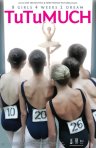
To keep with my theme today of professional track training, I thought it would be perfect to highlight the not-yet-released documentary TuTuMuch, which follows nine girls through the summer audition process of the revered Royal Winnipeg Ballet School.
Professional ballet schools can be very closed when it comes to their audition processes. For those of you who’ve never been through such an audition, TuTuMuch provides a revealing look at what happens behind the curtain. The vast majority of young dancers auditioning will not make it into the program, but those that do will be one step closer to making their dream a reality.

So you want to dance professionally?

Deciding to pursue a professional dance career is a huge decision. If its something you really want, you will have to have to put maximum effort not only into your training, but into setting yourself up in the best situation to support this goal. With so many factors to address, where should you start?

If you are still a young student, the first item to consider iswhether you are getting the training you need to be technically and artistically competitive. One way to assess your current school is to find out how many of its students have gone on to professional careers and exceptional college dance programs. You should also consider how many hours of training you receive each week and what level of proficiency your teachers each reached before becoming instructors. If you want to dance professionally, you should be training about four hours daily, five days a week, by age thirteen or so. Your teachers should have each either danced professionally or pursued study in pedagogy for their field of dance. Be aware that a former professional dancer may not know how to teach well, and a pedagogically trained teacher may not have enough knowledge about professional-level training.

For ballet, contemporary and modern dancers, finding a school that will put you at your best advantage for a professional career can mean transferring to a school that is attached to a professional company. Many such schools will require an audition for acceptance or at least for level placement. Some of the largest and best of these schools also offer academic classes, like Walnut Hill or the tuition-free Harid Conservatory. Some, like School of American Ballet and Joffrey Ballet School, are affiliated with professional children’s academic schools, and some, like The Rock School for Dance Education, have special arrangements with the local school system. Finding the right school, getting in, and finding a way to afford it can each be huge hurdles.

Some dancers simply do not have support from their family or money to attend or even apply to such prestigious schools, in which case transferring to the best school in your town is the next best option. It is a tougher road but not an impossible one. Before deciding this is your path, research all available scholarships, free-tuition programs and ways to raise funds. Remember that when you start auditioning for work, you will be competing against hundreds of graduates of professional schools like the ones above.

Deciding to transfer out of your current school can be a difficult one. Often a young dancer’s school is like her second home, her dance friends and teachers her second family. Remember that transferring schools doesn’t mean having to cut ties with everyone there, and you should always be respectful and appreciative of the many things your “old” school taught you. A dancer’s first school is usually the one that inspired her to begin a path to a professional career, and that passion for dance is the most invaluable part of a dancer’s education.

You will become eligible for many company auditions by sixteen, but that does not mean you need to start auditioning then. Most companies don’t take dancers until they are in their early twenties at least. Going to a very high-quality college dance program is the step I recommend for professional-track dancers graduating from high school. College dance programs are always evolving in quality, so when its time to start looking at colleges, I highly suggested getting yourself a copy of The Dance Magazine College Guide to find out which ones are best. Ideally, you want to find a truly top program that turns out professional dancers and is affiliated with a professional company so you can gain performing experience and set up a connection to a company while in college. Once again, getting into and affording the right school can be huge hurdles. Scholarships and working while in school can ease the financial burden, but the audition is all you.

About two years before you want to start your professional career, you will need to start intensive research on potential employers and decide on your application presentation. You may have to have to put in as many hours researching companies, developing your marketing materials (résumé, photographs, videos, etc) and earning money to fund an audition tour as you do training – and that’s a lot of hours.

Different companies value different qualities. Preferred body types, training techniques and dancer “looks” can vary widely. You don’t want to waste your time auditioning for a company that only likes lithe blondes with Balanchine training if you are a short redhead trained in Cecchetti. You’ll find that some companies welcome a variety of looks for their dancers, and you may prefer that culture.

Finally, it comes down to the audition. When at all possible, avoid the cattle calls of open auditions. It can be extremely difficult to find work this way. Instead, find out how to get into a company class. Some companies will want to see your video before they will agree to let you audition. Those pre-screened auditions are also much better than the cattle calls. If you are offered contracts, you will need to compare your potential pay and benefits, geographic locations, amenities, facilities,  performance opportunities, etc, to decide which offer you want to accept.

There is so much more to this process than I’ve laid out here, and I’ll try to address specific items in more depth in later posts. But hopefully this has given you the basic idea of what it really means to say, “I want to dance professionally!”

The Dancer’s Résumé

An essential for many aspiring dancers by high school, the dancer’s résumé can be a very intimidating project for a young student! Your first résumé is always the hardest one to write, but a little guidance is really all you need.

One of the very best beginner résumé guides for dancers is available for free online – just visit Your Dance Résumé. This guide was written ages ago, but the advice is timeless.

Remember, as a student your résumé is not expected to be long. In fact, it would be inappropriate for an entry-level dancer to have more than two pages; one page is preferred. Keep it neat and don’t embellish or fudge the facts. And don’t forget to keep updating it as you expand your experience and education!

L.A. Audition Tips

Not every ballet student dreams of joining a company. Are you a versatile dancer that has dreams of dancing in music videos and commercials one day? Here are some solid tips for auditioning out west. Not surprisingly, your ballet training can prove more important than your hip-hop!

Etiquette Shmetiquette?

Does it really matter what your hair looks like in ballet class or if you forget your shoes every once in a while? It’s not like its an audition, right? Um … wrong! Every day you set foot in the studio, you are presenting yourself for potential casting decisions, promotions and recommendations by your teachers.

Most schools have an annual recital, but few hold auditions for stage placement and casting. How do you think those decisions are made? They are made based on the technique, work ethic, attitude and etiquette that you show in class every day to your teachers. Class is of course not the same as an audition – it should be seen as a safe place where you can explore and expand your dance vocabulary, take chances and feel comfortable asking questions. But it is important that in daily class you hold yourself to a high standard not only when it comes to your dedication and technical work, but also how you present yourself in general. So what does that mean exactly?

Simply put, you never want to detract from the 110% effort you put into your technique (which I assume you are putting in!) by coming across as lazy, rude or irresponsible. A teacher will have a hard time promoting or recommending any student if the student is technically proficient but simply not up to par when it comes to grooming, manners or dress code. Showing that you are on top of these things can help show that you are ready to take on more, which can solidify a level promotion or lead to an important new understudy role, an assistant teacher position or even a lead role – but I guarantee this works the opposite way as well. (If you read my recent post on promotion to pointe class, you know just how directly it can affect level promotion!)

Setting a personal standard for yourself for class time can be tough sometimes – Remember that you are in total control of it. Especially at an advanced level, it’s easy to get comfortable and start believing that you have earned the right to wear your PJs to class or throw your hair up haphazardly, but I promise this will always detract from your hard work.

In the future, I’ll post on specific things you can do to manage the impression you make and to present yourself in the best light possible. Stay tuned for the details on how to master the hairstyles, look your best in your leos and impress with your professionalism.

Back to Ballet Class

Fall is nearly here – Are you ready physically and mentally to get back to dance class? Here is some excellent advice by venerated classical ballet teacher Victoria Leigh on how to digest your summer training, set goals and prepare yourself to be at the top of your game this fall.

Batman Tandoo? You mean Battement Tendu!

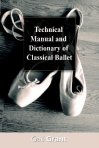
Ever wanted to write, better pronounce, or better understand a term in ballet? Then you must grab yourself a copy of Gail Grant’s Technical Manual & Dictionary of Classical Ballet. This small book is an absolute must-have for anyone interested ballet professionally or for college.

Considered in the dance world to unquestionably be the best reference for ballet terms, this little tome is fairly inexpensive (just about $10 in the listing on Amazon) and is simply an A-Z reference for virtually every ballet term used or in use.

Part of what makes the Gail Grant Dictionary such a standby is its inclusion and cross-reference of terminology across ballet techniques. For instance, if you go to a summer intensive and hear the word raccourci, looking it up in Grant’s Dictionary would tell you that it is as a term of the French School. The definition then cross-references you to the Russian term retiré, so you will learn the interchangeability of the terms. (I’m sure you know that ballet originated in France and was exported to other countries where it further evolved. Thus the development of varying techniques from the Italians, the Danes, the Russians, the Americans and the Cubans. These have all made their way to the United States. With so many techniques here, it is common to hear different terms from different teachers, even within the same school.) You would also learn that it means shortened – referring to the bend at the knee which “shortens” the leg – because this position is actually a variation on a développé a lá seconde!

If you are looking for books to support your training and develop you into a knowledgeable dancer, Gail Grant’s Dictionary just can’t be beat. There are quite a few other books that are invaluable for dancers, but you’ll find that this one stands firm at the top of the list for professional dancers, serious students and seasoned teachers.

College Bound Ballerina

You’re in high school, you love dancing, but you want to have a solid back-up plan in case you can’t make it your career. The CBT commends you on your smart thinking, especially in this economy!

If you want to dance in college, where do you start? If only there was one place where you could check out dance programs side by side to compare what they have to offer … especially when it comes to scholarships. Well, there is! Click over to www.DanceU101.com for an easy to use and comprehensive searchable database of college dance programs.

Have your cake and eat it, too – dancing in college can help make both you and your parents very happy: You can double major to get that business degree your parents want you to have and dance yourself to a BFA (that’s a Bachelor of Fine Arts, kiddos) so you don’t have to give up your passion. And in the words of Mr. Balanchine: “If you work really hard and say your prayers” – you might just land a scholarship to boot. Won’t that please the parents?