Ballet in Film: TutuMUCH


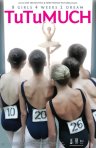
To keep with my theme today of professional track training, I thought it would be perfect to highlight the not-yet-released documentary TuTuMuch, which follows nine girls through the summer audition process of the revered Royal Winnipeg Ballet School.

Professional ballet schools can be very closed when it comes to their audition processes. For those of you who’ve never been through such an audition, TuTuMuch provides a revealing look at what happens behind the curtain. The vast majority of young dancers auditioning will not make it into the program, but those that do will be one step closer to making their dream a reality.

So you want to dance professionally?

Deciding to pursue a professional dance career is a huge decision. If its something you really want, you will have to have to put maximum effort not only into your training, but into setting yourself up in the best situation to support this goal. With so many factors to address, where should you start?

If you are still a young student, the first item to consider iswhether you are getting the training you need to be technically and artistically competitive. One way to assess your current school is to find out how many of its students have gone on to professional careers and exceptional college dance programs. You should also consider how many hours of training you receive each week and what level of proficiency your teachers each reached before becoming instructors. If you want to dance professionally, you should be training about four hours daily, five days a week, by age thirteen or so. Your teachers should have each either danced professionally or pursued study in pedagogy for their field of dance. Be aware that a former professional dancer may not know how to teach well, and a pedagogically trained teacher may not have enough knowledge about professional-level training.

For ballet, contemporary and modern dancers, finding a school that will put you at your best advantage for a professional career can mean transferring to a school that is attached to a professional company. Many such schools will require an audition for acceptance or at least for level placement. Some of the largest and best of these schools also offer academic classes, like Walnut Hill or the tuition-free Harid Conservatory. Some, like School of American Ballet and Joffrey Ballet School, are affiliated with professional children’s academic schools, and some, like The Rock School for Dance Education, have special arrangements with the local school system. Finding the right school, getting in, and finding a way to afford it can each be huge hurdles.

Some dancers simply do not have support from their family or money to attend or even apply to such prestigious schools, in which case transferring to the best school in your town is the next best option. It is a tougher road but not an impossible one. Before deciding this is your path, research all available scholarships, free-tuition programs and ways to raise funds. Remember that when you start auditioning for work, you will be competing against hundreds of graduates of professional schools like the ones above.

Deciding to transfer out of your current school can be a difficult one. Often a young dancer’s school is like her second home, her dance friends and teachers her second family. Remember that transferring schools doesn’t mean having to cut ties with everyone there, and you should always be respectful and appreciative of the many things your “old” school taught you. A dancer’s first school is usually the one that inspired her to begin a path to a professional career, and that passion for dance is the most invaluable part of a dancer’s education.

You will become eligible for many company auditions by sixteen, but that does not mean you need to start auditioning then. Most companies don’t take dancers until they are in their early twenties at least. Going to a very high-quality college dance program is the step I recommend for professional-track dancers graduating from high school. College dance programs are always evolving in quality, so when its time to start looking at colleges, I highly suggested getting yourself a copy of The Dance Magazine College Guide to find out which ones are best. Ideally, you want to find a truly top program that turns out professional dancers and is affiliated with a professional company so you can gain performing experience and set up a connection to a company while in college. Once again, getting into and affording the right school can be huge hurdles. Scholarships and working while in school can ease the financial burden, but the audition is all you.

About two years before you want to start your professional career, you will need to start intensive research on potential employers and decide on your application presentation. You may have to have to put in as many hours researching companies, developing your marketing materials (résumé, photographs, videos, etc) and earning money to fund an audition tour as you do training – and that’s a lot of hours.

Different companies value different qualities. Preferred body types, training techniques and dancer “looks” can vary widely. You don’t want to waste your time auditioning for a company that only likes lithe blondes with Balanchine training if you are a short redhead trained in Cecchetti. You’ll find that some companies welcome a variety of looks for their dancers, and you may prefer that culture.

Finally, it comes down to the audition. When at all possible, avoid the cattle calls of open auditions. It can be extremely difficult to find work this way. Instead, find out how to get into a company class. Some companies will want to see your video before they will agree to let you audition. Those pre-screened auditions are also much better than the cattle calls. If you are offered contracts, you will need to compare your potential pay and benefits, geographic locations, amenities, facilities,  performance opportunities, etc, to decide which offer you want to accept.

There is so much more to this process than I’ve laid out here, and I’ll try to address specific items in more depth in later posts. But hopefully this has given you the basic idea of what it really means to say, “I want to dance professionally!”
Dancewear en l’air: The Backseamed Pink Tight

Ballet tights in an unflattering shade of pink are one of the CBT’s pet peeves! Choosing a pink that clashes with your pointe shoes or ballet shoes will shorten your lines and just look wrong.
Pinks can vary depending on the amount of blue and yellow in the dye formula. Generally, classical or ballet pink tights look best with the more salmon-y shoes, like Freeds and Capezios, while theatrical pink looks better with truer pinks and paler shoes, like Grishkos and Russian Pointes. You may need to purchase one shade to match your soft shoes and one for pointe.

Non-mesh tights are usually very soft and appear to be a pretty pale pink in the package, but they often look white, yellow or purple once their on. Mesh tights can be almost scratchy sometimes, but usually have better pinks. (Steer clear of Capezio #9 in classical pink, though, it’s famous among dancers for looking bright orange!) A backseam makes alignment checks easier and visually lengthens your lines dramatically.

One of the best ballet tights on the market currently is the Body Wrappers A45, a convertible mesh version with a backseam available in ballet pink and theatrical pink. Its designed to feel super soft against the skin so you’ll get the best of both fabric worlds, and you’ll look polished and professional.

The Ballerina Gallery

Part of becoming a well-rounded ballet dancer is not only striving for versatility, but educating yourself on dance history and the great dancers that have come before you. For the latter, a visit to The Ballerina Gallery is a must.

A simple A-Z guide of some of the very best dancers that ever were and that are today, this online collection of biographies and photographs of great ballerinas is positively inspirational!

The Dancer’s Résumé

An essential for many aspiring dancers by high school, the dancer’s résumé can be a very intimidating project for a young student! Your first résumé is always the hardest one to write, but a little guidance is really all you need.

One of the very best beginner résumé guides for dancers is available for free online – just visit Your Dance Résumé. This guide was written ages ago, but the advice is timeless.

Remember, as a student your résumé is not expected to be long. In fact, it would be inappropriate for an entry-level dancer to have more than two pages; one page is preferred. Keep it neat and don’t embellish or fudge the facts. And don’t forget to keep updating it as you expand your experience and education!

L.A. Audition Tips

Not every ballet student dreams of joining a company. Are you a versatile dancer that has dreams of dancing in music videos and commercials one day? Here are some solid tips for auditioning out west. Not surprisingly, your ballet training can prove more important than your hip-hop!

10 Pointe Shoe “Don’ts”

Fall is nearly here, and with it a brand new crop of beginner pointe students. Are you ready for pointe classes? Perhaps you have scheduled a fitting or are just waiting for shoe-approval from your teacher. Maybe you already sat down with a parent or an older student to learn how to sew your shoes. Or maybe you are even entering your second or third year of pointe.

The CBT sees a lot of mistakes from pointe students in their first few years. Its to be expected, but if you want to jump the learning curve a bit, there are some pointers that can save you time, frustration and embarrassment. So with that in mind …

  1. DON’T rely on your parents. As you may have gathered from the above and prior posts, students should start taking care of their own gear and hair for class sooner rather than later. Having your parents take care of these things implies to your teacher that you are probably too immature to handle really advanced training.
  2. DON’T try to cheat in your sewing with Pointe Snaps or any other such horrid invention. Not only do they totally not work, they stomp all over the traditions of ballet.
  3. DON’T use Knot Keepers or tape to keep your knots in place. By all means, be concerned if your ribbons come out of hiding -Professional contracts used to include monetary fines for dancers that had this happen. But don’t ruin the look of your shoes by cheating with these things. Just learn to tie them properly.
  4. DON’T use rosin on your shoes if you have a marley floor. Here’s where innovation is a good thing. Rosin was used by dancers back when ballet floors were made of wood. It made the shoes slightly tacky to give greater connection and feel for the floor. Marley’s special makeup eliminates the need for rosin, and rosin can actually damage a marley floor.
  5. DON’T force yourself to deal with loose lambs wool or paper towels as your beginner toe padding. Those things are just far too much trouble for even the most advanced dancers these days. Again, the quality innovation and technology in this area is worth taking advantage of.
  6. DON’T overpad your toes. This is a super common beginner mistake. Overpadding prevents you from feeling the floor and pointing your foot properly, which makes the feet look like floppy fish and ruins your lines! Pad within reason, and as your feet become used to pointe shoes, periodically try to scale back your padding by going to a smaller pad or by removing them in favor of spot-padding.
  7. DON’T be afraid to try different shoes for a while. It can take quite some time to find the shoe that fits you best. You’ll probably get a perfectly decent pair the first few times, but its worth it to keep trying different things to find your most perfect match. You have to be prepared to learn the balance point in each new shoe you try, however.
  8. DON’T practice center exercises at home. At least, not unless you like taking off from dancing for six weeks because you sprained your ankle trying to do a piqué arabesque in your kitchen…
  9. DON’T expect too much too fast. Pointe training has to be done gently and carefully in order to reach the desired result. Every pointe student has had to go through the on-two-feet-facing-the-barre stage. You will be beyond that before you know it and glad you put in the time.
  10. DON’T forget to be proud of yourself for all the hard work you’ve put in and for everything you have achieved.

Ballet in Print: In the Wings

Few photographers hold a candle to the perspective that Kyle Froman takes on ballet, and that really shows in his pictorial book, In the Wings: Behind the Scenes at New York City Ballet. This book is a dream for any aspiring student of ballet.
As an NYCB corps de ballet member for thirteen years, Kyle has had all the access to and intimacy with the company that a most photographers could only hope for. Add to this a professional dancer’s perspective on the productions that take place each night, and In the Wings becomes a wonderful peek into Balanchine’s great creation and one of the highest quality professional ballet companies in the world, New York City Ballet.

Bun 101

Does your ballet class hairstyle stand up to the force of chaines and multiple pirouettes? Nothing screams “amateur” like hair and hairpins flying. Oh, the embarrassment of the undone bun! But with just a little effort, you can put those pedestrian days behind you.

I expect students to start doing their own hair for class by around age ten. It can take some time to learn how to master the technique on yourself, but not half as long as you might think – usually a few hours of practice is all it takes. Today, you’ll get the 411 from the CBT on how to master this essential skill for dancers.

The basic bun style begins with a ponytail at the crown of the head. This step has to be done correctly in order for the bun to take shape properly. Use a good brush to sweep the hair evenly and smoothly into the pony. Dampening the hair can make it more manageable. Secure it with an elastic that is not too bulky, which will get in the way of hairpins and cause bumps, nor too flimsy, in which case it will need too many wrap-arounds and may break easily. Try to find elastics that are close in color to your hair. Use a light spray of hairspray (Elnett is a favorite of celebrity stylists and is available in a travel size.) to sleeken your wispies, or wait until the bun is complete and use clips to take care of them. Once the pony is in place, brush the hair in the tail to re-smooth it. DO NOT to coil the hair into a bun and then try to wrap a scrunchie or elastic around the bun … Seriously, just don’t!

The next part is the where it all usually goes wrong – here’s where you twist the ponytail and start to coil it around its base. What makes or breaks this part is whether the bun is kept close to the head with one hand each time the tail is coiled. If you don’t use a hand to secure the bun against the head as its coiled, you’ll end up with a cone-shaped thing that sticks out and looks, well, absurd.

After one full coil is made around the ponytail base, start inserting hairpins horizontally from the outer edge of the coil into the base, every inch or so of the circumference. Make sure to grab a bit of bun hair with each pin and a bit of hair from the scalp beneath the bun. That’s what connects the bun to your head. If you don’t feel a bit of resistance, the hairpin is probably just sitting in the bun and is not connecting anything to anything. As with the elastics, try to find pins that are similar in color to your hair. I find that U-shaped pins work better than “bobby” pins.

When you reach end, tuck the tail in and secure with a hairpin. Remember to secure wispies with clips; clip your bangs too if your studio requires. Voilá, a respectable bun!

Many dancers opt to also wrap a super-fine hairnet, again matched to the hair, around the bun to lock in bun wispies. Hair spray may be all that is needed for some, though others find these steps to be overkill. Whether you choose to do these steps may depend on the culture of your studio and your personal preferences, but both are must-dos for performances and auditions.

The ballerina bun isn’t just one style, it has many variations depending on the height wear the bun is fixed and what is done with the surrounding hair. A bun that sits very high on the head is generally associated with Balanchine technique, and a bun that sits low is often associated with more old-school techniques and, if the surrounding hair covers the ears a bit, with romantic-era ballets.

Once you’ve mastered the basic technique, play around with different configurations to find the style that suits you best. It’s a commonly held belief that the high bun is preferred for auditions, but the truth is that what’s best for auditions is dependant on what style the company or school is and what you feel most comfortable in. For class, its fun to experiment by adding a braid to your hairline, inverting the pony, braiding the pony or accessorizing with ribbons or flowers. There are tons of options out there – go have fun with your bun!

Ballet in Print: A Young Dancer’s Apprenticeship

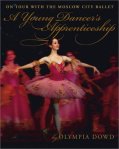
A Young Dancer’s Apprenticeship is the fascinating story of Olympia Dowd, a very young ballerina who was selected out of a small summer program to apprentice with the Moscow City Ballet. Ms. Dowd was a true prodigy, with technique and artistry far beyond her years. Her exceptional talent comes alive in beautiful color photographs throughout this book.

The life of a student is very different from life as a professional with a touring company. If you are interested in becoming a professional ballet dancer or just enjoy reading about what that world is like, this book is the perfect choice for you.

When Awkward Leos Attack!

I’ll never forget my first ballet class away from home, standing at a barre in the middle of a huge ballroom with strips of marley duct-taped over red and blue carpeting. I’ll also never forget the sheer relief of realizing that the master class teacher’s annoyed comments after the first exercise were not directed to me, but to the dancer next to me who had been yanking her leo up in the front and down in the back incessantly. “Tell your mother to buy you a leotard that fits before you come to another class,” he said with complete seriousness. “If you have to pull it up and pull it down all the time, it doesn’t fit you!”

It had never occurred to me that adjusting a leotard was noticeable, let alone that it could turn into enough of a distraction for a teacher to ban it! We’ve all had That Leotard though … The one that you know will look totally gorgeous, if you can just have another sec to situate it just right …

Just like in street clothes, different cuts are made for different shapes. If you have a leo in your closet that bugs you no end, ask yourself why you are bothering with it? Endless tugging and yanking and wedgie picking – that’s right, I said it! – isn’t only a distraction to your own concentration, it’s annoying to your teachers and can make you seem unprepared and unprofessional. Um, not worth it!

Rest assured, the issue has nothing to do with you or your body. It has everything to do with one simple fact. Are you ready for this revelation?

People come in different shapes!

Shocking, I know. My longer torso was the cause of all my leotard tugging. Certain brands and cuts will never sit right on me – but others look simply fabulous!

Teacher annoyance aside, if you aren’t comfortable in your dance gear, you can’t put your all into your training. Don’t waste your time fussing with an awkward leo. Next time you’re shopping for dance clothes, try on as many different cuts, brands and fabrics as possible until you find what combinations look and feel great – so you can stop thinking about your gear and just focus on your dancing.

Ballet in Film: Ballerina

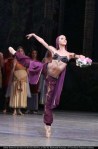
One my absolute favorite dance documentaries, Ballerina, is now available to watch instantly on Netflix. This exquisite portrait of five female ballet dancers from the legendary Kirov is a relatively recent film, which lends it a much more modern air than most dance documentaries available, particularly when it comes to the level of virtouosity of the dancing itself. If you are looking for true inspiration and to see just how elevated a level ballet can reach, I highly recommended you check it out.