Foot Envy and Falsies for the Feet – Um, Ew!

Have you ever looked with awe and envy at the highly arched banana feet of famous dancers like Paloma Herrera and Svetlana Zakharova? Have you been tempted to sport one of those gelatinous contraptions called “arch enhancers” to increase the look of your own foot? The CBT is here to tell you: Don’t waste your money.

Why? Let’s break this down, shall we –

  1. Numero uno – You are beautiful the way you are. You can disagree if you like, but facts are facts. The next time you feel like comparing your arches (or extension or turns …) to another dancer – especially to a professional – STOP. Remember that a) you are still a developing student b) you have many wonderful qualities that you have worked hard to achieve and that others might not have. Despite what glossy ballet photographs might make you think, no single dancer “has it all”.
  2. Do professional dancers use arch enhancers? Sadly, yes. And you’ve probably even oohed and aahed over one of them before. But all that this achieves is perpetuation of the idea among students that you all must have an exagerrated arch in order to succeed in ballet – which is not true; a low arched dancer can certainly become a professional if she maximizes her ankle range and her intrinsic articulation. (What are those? I’ll address them in an another post.) Also, high arches are more prone to injury, partly because low arches are better shock absorbers.
  3. There is so much more to a beautiful classical line than a highly-arched foot. I’d much rather see a strong average foot than a weak banana-style. Quality of movement makes a huge difference in ballet as well, and can easily make a low-arched dancer vastly more appealing than a high-arched dancer.
  4. Arch enhances do not enhance your arch; they only change the look of your instep. The arch and instep are two different aspects of the foot, and these contraptions deal exclusively with the latter. There isn’t a single add-on out there that can do a darn thing about your arch – but proper battements can!
  5. Arch enhancers usually look cartoonish. Sorry, but teachers like me can usually spot them pretty easily due to the awkward, hump-backed look that they can give to the foot. (Do you see it in the pic above?) And they can look extraordinarily strange when the foot is flat or in soft shoes! Watch this video for an example. The closest any company has come to a natural look is an Australian company called Dance Arches, but even their product is pretty easy to spot. The only time you might get away with it is during performances when your viewers are far away. But Lord knows what you’ll do when you have to dance with no tights or no shoes!
  6. Arch enhancers can cause discomfort and be annoying. They can crumple up on the arch, cause unwanted bulk in the shoe and irritate the skin. Um, that’s not exactly great for dancers – people who need their feet to be as healthy and articulated as possible!

The bottom line is that the only way to really enhance your arch is by good quality training. High arches are a dime a dozen, but gorgeously strong, articulated and controlled feet? That’s a truly beautiful rarity!

Kiddos, what bugs me most about this as a teacher is that all this fuss over arches keeps you all from addressing issues that you do have control over – and which can be far more important than your feet. Try rechannelling your energy into advancing your musicality, your port de bras, or mastery of your balance point. Those are the things that will really have a huge positive impact on your dancing and that you won’t have to take off at the end of the day!

Dancewear en l’air: The Evening-Style Halter

Flaunt Bodywear’s teardrop leotard KB-31201 is so elegant it looks ready for … a night at the ballet! This halter-style leo is cut to minimize discomfort at the neck strap and features a formal-looking mesh layer above the bust, around the back and coming to a point on the chest.

This beautiful cut would look lovely in black with classic pink tights and pointe shoes, and the red version would be great for a jazz or contemporary class.

Ballet in Print: Belyaevsky Ballet Photography

Former principal dancer with the Kirov Stanislav Belyaevsky is an incredible photographer who understands how to capture the dynamism, drama and virtuosity of Russian ballet all in a single still image.  Most of his collections can be viewed on his site and include recent and breathtaking shots of the Vaganova Academy, the Varna Competition, the Helsinki Ballet and the Finnish National Ballet and School.
You will be inspired and in awe by these stunning ballet images. Belyaevsky currently has a few books of his work available for purchase, but you won’t find them on Amazon. These books are currently only sold on Belyaevksy’s official website.

Choices, Choices – Plus Some Great Ballet Videos!

So now you have the basic scoop on the most popular techniques in this U.S. But there’s more! The other major methods that you should know of are:

Bournonville (pronounced BOR-non-vill) technique is a lovely iteration that evolved through the Royal Danish Ballet and is known for its quick footwork, kind expression and minimized show of effort. Bournonville ballets can be easy to spot from the pairing of busy feet and a calmly graceful port de bras. While the technique is not often taught in the U.S., the choreography is. Many Bournonville ballets are still performed regularly, including La Sylphide, Flower Festival in Genzano and Napoli.

Royal Academy of Dancing from England is an amalgam of French, Cecchetti, Vaganova and Bournonville styles and is known for its purity of line. RAD students are examined yearly and are recognizable by the strict dress code with belts and satin ribbons on girls’ soft satin ballet shoes. RAD cannot be taught by dancers not certified and schools not accredited. It is not as popular in the U.S. as some other techniques but is enormously popular in Europe and other continents.

Cuban ballet is also a blend other techniques but with a strong Vaganova influence and is noted for its joyful sensuality. Until very recently, Cuba was the only country where you could learn this technique, but a few schools have opened in the Miami area. The home of Cuban ballet is the Cuban Ballet School.

It is also worth mentioning that while not recognized widely yet, American Ballet Theatre is creating its own through the ABT National Training Curriculum. They recently settled on there own system of arabesques, which appear similar to the Cecchetti versions.

You should be prepared now, baby ballerinas, to recognized the techniques when they are named and understand some of their differences. Most good teachers are usually specialized in teaching one or two specific techniques and are educated on the existence of the others. Can you tell the differences in style? Which one is your favorite?

ABT Sample Video (Scroll to page bottom.)

Balanchine Sample Video

Bournonville Sample Video

Cecchetti Sample Video

French Sample Video

RAD Sample Video

Vaganova Sample Video

Ballet in Print: 2011 Balanchine Wall Calendar

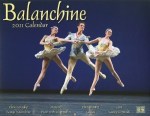
NYCB twelve months of the year? Who could resist? Calendars are one of the easiest ways to perk up your room, kiddos, so here’s a lovely, inspirational option for you ballerinas-in-training.

Published in June of this year, this calendar includes gorgeously crisp full-color shots, much cleaner than some of those generic ballet calendars with hazy, out-of-focus photos of students and trainees. You’ll be looking at some of the best dancers in the country performing famous Balanchine choreography. I know what’s going on my holiday list!

Dancewear en l’air: The Balanchinian Skirted Tank

In classic Balanchine style, this tank dress from Body Wrappers has clean lines and minimal fuss. The back is not too high or too low, and the attached skirt is just the right length for class or performance. Even the model here is sporting a Balanchine-esque pose.

Ideal for a variations or partnering class, this leo, P717, comes in four beautiful shades. Wear your bun high with this modern classic style and you’ll really be channeling the Balanchine ballerina.

The Balanchine Technique: An Unprecedented Innovation

New York City Ballet – it is perhaps the most famous U.S. ballet company, rivaled only by American Ballet Theatre. Balanchine ballet technique and NYCB are true American creations. And through their evolution, George Balanchine and Lincoln Kirstein completely changed the course of dance history.

George Balanchine, originally Georgy Balanchivadze, came to the U.S. from Russia in the 1930s. From a young age, he trained in ballet at the Imperial Theatre School and in music at the Petrograd Conservatory of Music. Balanchine began choreographing in his teens, and in 1924 was included in a small group that was allowed to tour outside of the Soviet Union, a very rare privilege at that time. The dancers did not return home but instead joined Serge Diaghilev’s famous Ballet Russes.

Balanchine left Ballet Russes eventually and took various other positions over the next few years. While in London, Balanchine met Lincoln Kirstein, whose dream was to open an American company with its own repertoire distinct from the Europeans’. And Balanchine wanted a ballet school for this company. Balanchine and Kirstein together created the esteemed School of American Ballet in 1934, arguably the finest ballet school in America today. Known simply as SAB to most dancers, this school is the main feeder for Balanchine and Kirstein’s company, New York City Ballet. The first ballet Balanchine created there, Serenade, was choreographed on the SAB students and is now downright legendary. Graduating SAB students are some of the only ballet students in the country who are nearly guaranteed to find professional dance work.

Balanchine’s contemporary choreography and manner of movement evolved into its own technique. Based on the Russian (pre-Vaganova influence) method, Balanchine took basic movements like tendus, pirouettes, port de bras and arabesques and reworked them in ways that he felt best presented the form and movement to the audience. Even a simple port de corp devant was not to be considered a stretch but a fully artistic movement where the aesthetic of the body’s journey through space was the most important thing. Petit allegro was sped up, exaggerated in places and given modern touches. Landings from jumps were with heels barely or not at all touching the floor. Some of Balachine’s choreography is easy to spot with hips sweeping forward and arms outstretched in a jazzy style never before seen in classical ballet. Balanchine port de bras work is also easy to spot with its arms crossing over one another during position changes and fingers each with their own specific placement.

Balanchine created some of the most famous neoclassical ballets. These were often called “leotard ballets” because the dancers performed in simple outfits of tights and a leotard with just a short skirt or slim belt. He preferred dancers that were very long and lean with girls’ hair kept high to elongate the neck. Balanchine urged some of is best dancers to teach his technique to others and some of the most revered schools and companies resulted, including the Pennsylvania Ballet with the Rock School for Dance Education and the Miami City Ballet with its school.

Balanchine’s technique is certainly not without controversy. Traditionalists often cite the jumping technique as unsafe. Many others find that the port de bras are overly flowery and the alignment for arabesques and such are too angular and harsh. Suki Schorer, who Balanchine trained to teach, wrote a book on the technique, but many arguments have followed from other Balanchine students on the correctness of her instruction.

In order to maintain the integrity of at least the dances he created, the George Balanchine Trust was founded as a licensing system. Balanchine’s ballets cannot be changed, performed or broadcast without authorization. It sounds like a good idea until you realize that Balanchine was a champion of evolution and innovation. And while the Trust has certainly protected Balanchine’s work from the being skewed or performed by simply bad dancers, it has also acted as a roadblock to sharing his genius with the world and building on it. Many arguments have been made about the prudence of the Trust’s legacy protection actions, considering today’s useful access to videos and data through the internet. Just last year, a very popular YouTube ballet channel, Ketinoa, was suspended because of a Trust violation.

What do you think, kiddos? Should Balanchine’s legacy be protected at all costs? Or does performing art belong to humanity?

Update: I just want to make two quick notes on this post. First, I want to clarify that I do understand the argument that says that Balanchine’s was a style, not a technique. However I refer to it as a technique out of a) loyalty to Ms. Suki Schorer after my few classes with her and at the Rock and b) my study of Balanchine work and understanding of it, however limited, compared to other techniques. Personally, I feel that the whole question in and of itself is divisively irrelevant and mostly symantical. Second, I want to thank D for his/her comment below which pointed out that Balanchine’s work was based on the pre-Vaganova version of Russian technique. I have made the requisite change in the above text. Thanks for your contribution!)

Ballet in Film: Katia & Volodia

The incredible husband and wife duo of Ekaterina Maximova and Vladimir Vasiliev are two of the very best-loved Russian ballet dancers. Katia & Volodia reveals clips of their early training, rehearsals as pros, performance snippets and clips of them coaching younger dancers.

Partnered together as small children in ballet school, the leading pair were wed in 1961. Maximova passed away last year at the age of 70 and was survived by her husband. In March of this year, a gala was given in honor of Vasiliev for his 70th birthday.

Ballerina in the Rough… (via Holly Haddad Photography)

Here are some lovely art photographs of a ballet student from North Carolina. Perhaps under Ethan Stiefel with NCSA?

Well well, this shoot has been some time in the making.  See, Miss Leah here is a very talented dancer.  She spends her school year in North Carolina splitting time between ballet and her studies.  Yup, cooool.  Back in January I took her head-shots and had this brain child you are going to view shortly.  It’s not everyday you can get some one as talented and care free as Leah.  Our plan was to “go with the flow” and I think creativity was flowin … Read More

via Holly Haddad Photography

The Vaganova Technique: Fire & Ice from the East

One of the very first ballet teachers, Jean Baptiste Landé, had an enormous cultural impact on Russia when he took a group of French ballet students to perform for Empress Anna. The Empress was so delighted that she decided to open the first Russian ballet school, the Imperial Ballet School, in 1738. This was the first iteration of what was to become the famous Vaganova Academy of Russian Ballet.

Agrippina Vaganova was a student of the Imperial Ballet School and danced with its professional company, the Imperial Russian Ballet, until retiring to become a teacher in 1916. During her career, Vaganova strived to discover the best methods for classical movement. She carefully studied the French and Cecchetti methods as well as the theories of her Russian colleagues and fused together the best of what she found. Vaganova taught and developed her system over 30 years of teaching at the academy, which eventually was named for her. The technique she created became a physical and aesthetic masterpiece that joined the romanticism of the French, the virtuosity of the Italians and the fiery soulfulness of the Russians.

Vaganova ballet technique requires and trains a malleable back and limbs and a very strong trunk. Like Cecchetti before her, Vaganova created her own system of port de bras, arabesques, body poses, attitudes, and wall/corner numbering, but instead of adding to the French systems of each, she streamlined them.

The Vaganova Academy still exists today. Thousands of 9 and 10 year olds audition each year after taking music and dance classes in their hometowns. Only about 20 boys and 20 girls are chosen. Students are housed in dorms and provided training, education, meals and medical care. Similar to the Paris Opera Ballet School, students are examined each year to determine whether they are up to the physical and technical standard to be allowed to continue. Those that make it to graduation are eligible for a position with the Kirov Ballet Company. The scene is much the same for the Bolshoi Ballet Academy, also known as the Moscow Choreographic Institute, which began in the late 1700s as a ballet class for an orphanage and is also firmly based in Vaganova technique.

The Vaganova and Bolshoi Academies have been responsible for the training of many if not most of the finest dancers the world has seen, including Anna Pavolva, Vaslav Nijinsky, Galina Ulanova, Maya Plisetskaya, Natalia Dudinskaya, Yuri Grigorvich, Natalia Bessmertnova, Ekaterina Maximova, Vladimir Vasiliev, Diana Vishneva, Mikhail Baryshnikov, Galina Mezentseva, Rudolf Nureyev, Natalia Makarova, Uliana Lopatkina, and Svetlana Zakharova to name a few. In addition to these stars, the Kirov and Bolshoi companies are given credit for many of the greatest classical ballets ever created due to the residencies of legendary choreographers Jules Perrot, Marius Petipa and Petipa’s assistant Lev Ivanov, whose creations while in Russia included Paquita, Don Quixote, La Bayadére, The Sleeping Beauty, Raymonda, and revivals of Giselle, Le Corsaire, Coppélia, La Esmeralda, La Sylphide, Swan Lake.

In the U.S., Vaganova technique is one of the most popular methods because of the popularity of its stars and because many Vaganova dancers settled in the U.S. where they opened their own ballet schools and brought the Vaganova method to American students. The Kirov and Bolshoi each have a presence in the U.S. through the Kirov Ballet Academy and the Bolshoi Ballet Academy Summer Intensive.

The Cecchetti Method: A Singular Systemization

The Italians were the first to codify and systematize ballet training. Enrique Cecchetti, born in the dressing room of a theater in 1850, is considered the father of this method, though Cecchetti built on the principles of Carlo Blasis, who codified his own teaching method in 1820.

Known for its brilliancy and virtuosity, this method includes many unique modifications of steps. For example, an Italian changement is a change of the feet done in the same way as a traditional changment except that both legs come to a retiré position mid-changée. Other evolutions include interesting “off-balance” poses – think a lá secónde with the body tilted away from the leg. Additionally, new labels and executions were created for port de bras, arabesques, attitudes, body positions and wall/corner numbering. Perhaps the most widely-seen modification is the flexed-foot, floor-striking battement frappé, which is seen in the classes of other techniques quite frequently.

As a part of the systematization of this method, the Cecchetti technique is governed by a strict program of examinations, and classes for each level are actually pre-set for the particular day of the week, so that the teachers do not plan new barre exercises or centre enchainments each week. This helps the students to study and perfect examination exercises.

The Cecchetti Counsel of America is the accrediting institution in the U.S., but the true home of this technique is the Accademia Teatro alla Scala in Italy. The Scala school is not just for dance but also includes music, stage, and performing arts management departments.

The ballet company of La Scala is one of the most revered in the world, and was and is home to many of the most famous dancers of today and yesterday including Maria Taglioni, Carlotta Grisi, Roberto Bolle and Alessandra Ferri. And although Svetlana Zakharova is a Vaganova ballerina, one of her current contracts is as a principal dancer étoile with La Scala.

Ballet in Film: La Danse

You know I love my themes! Today is French method ballet, so it’s the perfect time to introduce La Danse, a very recent documentary about the Paris Opera Ballet.

This much anticipated film contains beautiful footage of the world-famous company, but be forewarned – it’s about two hours long and is a mix of both modern dance and ballet. Both are of the best quality, however, which makes this documentary worth the time – just have some snacks ready!

The French School of Ballet: The Elegant Original

The very first ballet school was established in France in 1661 by Louis XIV, which is why France is credited for being the original ballet technique despite Italy’s earlier balletic court dances. French ballet is known for its elegance and refinement rather than its virtousity. Check out the two beautiful videos here to see if you can get a feeling for the precision and understated beauty of this method.

The language of ballet terminology is French and is somewhat different in France than the version that is used in other methods. Take a quick peek at Gail Grant’s Dictionary and you’ll see many definitions annotated with, “A term of the French School.” Many of these phrases and words, such as sissone en descendant, are not used in any other method. The French School also has its own system ofarabesques, port de bras and wall/corner numbering.

L’École de Danse de I’Opéra de Paris is the modern day home of French ballet technique. Admission is extremely selective, and students at the Paris Opera Ballet School endure rigorous training and yearly eliminations. Apprentices and corps de ballet dancers are selected from those students that make it to graduation, which often makes training at this feeder school competitive and solitary.

The company, Paris Opera Ballet, currently numbers 191 ballet dancers total, and has a heirarchy system unique in the ballet world. POB has emerged as a leader not only in classical and contemporary ballet, but also in modern dance.

The French method is not often taught in the U.S., but it’s the direct parent school of all other ballet schools in the world. You can’t take a plié without having to credit the French!

How do you say “Cecchetti” anyway?

There are many different styles of ballet taught around the world. Each is usually named after its founder and that person’s country: Cecchetti for Italian ballet, for example. But what are the differences between them? Which one came first? Does it matter which one you are trained in? How can you choose which one is best for you? How can you figure out which one you’re currently training in?

The four most popular styles of ballet in the U.S. are:

  1. French Technique – This is the original style of ballet and the foundation for its vocabulary. All other ballet techniques can be traced to the French style.
  2. Cecchetti Technique – (Pronounced like “check-ET-ee”) A style created by ballet master Enrique Cecchetti in Italy as a revision of the French technique.
  3. Vaganova Technique – (Pronounced like “va-GAH-no-va”) A technique created by Agrippina Vaganova in Russia as a hybrid revision of the French and Cecchetti styles.
  4. Balanchine Technique – (Pronounced like “BA-lan-sheen”) Created in the U.S. by Russian-born George Balanchine as a revision of the Vaganova technique.

Other popular styles include Royal Academy of Dance (RAD), Cuban method and Bournonville (Danish ballet). Each technique has its own special philosophy on what kinds of movements look best on the body and are best mechanically-speaking. The vocabularies can vary quite a bit as well. I’ll be posting soon to tell you more about what makes each style unique and what would make a dancer choose one technique over another.

You can usually figure out what technique you are being taught by simply reading the brochures or website of your school or asking your teacher. Especially in the U.S. however, ballet teachers may be trained in a mix of styles and end up teaching their students different things from different techniques. This can create confusion for the student, especially the student thinks she is being trained in only one technique.

It can be great for your versatility to explore different ballet styles, but only once you have reached a somewhat advanced level in your dancing. Doing so too early can confuse your muscle memory and your brain! Until you are ready, its usually best to find a teacher who articulates what technique is being taught and who specifies when you are presented with a step or vocabulary from a different style.