Inspiration: Kathryn Morgan

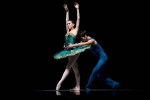
Young NYCB soloist Kathryn Morgan hails from Fayetteville, North Carolina, and received her initial training from Mobile Ballet in Alabama, where she recently returned to perform as a guest artist. In 2004, Kathryn went to the legendary School of American Ballet, moving into an apprenticeship with NYCB in 2006 and a corps de ballet post in 2007. Her promotion to soloist happened just over a year ago, in October of 2009.

Kathryn, or “Katie”, is perhaps one of the company’s most charming ballerinas, and her quiet, radiant grace is apparent in every role. She has been featured by the New York Times, Dance Spirit and Pointe Magazine and guest-blogged for the latter. You’ll be truly inspired by the gorgeous photos on her website – it took me quite a while to decide which one was prettiest for this post!

UPDATE: Kathryn has a new website now, with a fabulous blog of her own. Check it out! It’s called IfThePointeShoeFits.

Inspiration: Sarah Van Patten

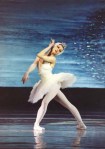
Sarah Van Patten has been a principal dancer with San Francisco Ballet for three years and is an exceptional talent and an elegant ballerina with artistic sincerity.

Born and raised in Boston, Massachusetts, Van Patten began her serious training at Boston Ballet School under Caroline Eaton, Jill Silverman and Kristen Beckwith and later trained under Jacqueline Cronsberg of Ballet Workshop of New England. She summered at the latter and also at SAB, Brianksy and Chautauqua.

Van Patten began her professional career as an apprentice at the age of 15 with the Royal Danish Ballet and was cast as the lead in Romeo & Juliet. A promotion to corps de ballet soon followed. In 2002, she moved to San Francisco Ballet to take a soloist position.

Check out Sarah Van Patten’s website and get inspired to reach for the stars in your next ballet class!

Inspiration: Olga Pavlova

Sometimes it’s tough to remember what you are working towards with the endless classes, rehearsals and corrections. Every dancer could use some inspiration to keep focused and excited about dance, so with that in mind, I thought I’d take some time to feature for you some of today’s elite ballet artists.

Trained at the Bolshoi Ballet Academy, Olga Pavlova is a versatile, ethereal ballerina currently with La La La Human Steps in Montreal. Check out her website bio and gorgeous photos!

Ballet in Print: Cuban Ballet

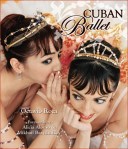
In order to reach their full potential as artists, many Cuban ballet dancers leave their country to escape the complicated politics of Cuba. And that nation’s loss has become the world’s gain as pointed out by noted dance critic and this book’s author, Octavio Roca. Cuban Ballet explores this evolution and is gorgeously illustrated with both vibrant full-color and dramatic black and white photographs of current and former Cuban ballet dancers.

Cuban Ballet provides an exceptional portrait of Cuban ballet’s history, including stories of select Cuban ballet stars. This book also features a forward by Mikhail Baryshnikov and by Alicia Alonzo, who you might have guessed is one of the dancers featured most prominently. Released only last month, this exciting and beautiful new book is available at a significant discount through Amazon.

Blood, sweat & blisters (via Boys and Ballet)

Here’s a long but good article on an upcoming UK television documentary about the many and varied sacrifices of a few select UK ballet students.

Blood, sweat & blisters Striving to become the next Darcey Bussell or Wayne Sleep takes hours of dedication, determination – and heavy financial investment. Emily Woodrow speaks to five young Welsh dancers with a dream to succeed in the ballet world and discovers the major sacrifices that they and their families have made.   Western Mail Photographs by the BBC Aug 21 2010 IT takes hard work, determination and discipline to become a professional ballet dancer, not to men … Read More

via Boys and Ballet

Ballet in Film: The Corella Ballet Documentary

Ok, so if you were born after 1995, you might not have had the googly-eyes for Angel Corella during his tenure as a completely adorable principal dancer of ABT and Paloma Herrera’s often partner. But you can now if you watch him and his own ridiculously gorgeous company dancers in their fab new upcoming documentary!

This film is about Corella’s revival of ballet in his home country of Spain, which went without a major company for a long time until Corella decided recently to start his own, the Corella Ballet de Castilla y Leon. Thanks once again to DanceMedia, you can enjoy the preview trailer, which includes tantalizingly long snippets of company class, rehearsals and performances, including Corella himself dancing and teaching, during their preparation for my personal favorite ballet, La Bayadére. Try not to drool!

For those of you that reside down South here with moi, Corella Ballet will be performing in New Orleans on its 2011 tour, and you can check that out here.

Dance Unions & Contracts: Meet AGMA

AGMA is the American Guild of Musical Artists, and if you’re thinking of dancing professionally, you could one day be a member. AGMA is a union of professional performing artists, including musicians, opera singers and dancers. AGMA negotiates contracts with performing companies, administrates retirement funds, posts auditions and hosts a relief fund for members in need.

If you are interested in dancing professionally, you might like to check out this page to review AGMA union dance contracts of some major companies for the current and recent past few years.

Tis the Season – for Casting Stress!

Fall audition season is wrapping up and cast lists at tons of schools are either in the works or already posted. Welcome to casting season! Have you been waiting with bated breath to scan your school’s bulletin board for your name? Do you already know what parts you’ll be working on this year? Is it stressing you out? How are you dealing?

You know casting season can be tough. After a year of hard work and maybe a summer intensive or two, a lot of students dream of solo or even lead roles, but not everyone is going to get what they want. If you are still waiting for your cast list to be posted, how should you deal with the pressure of the wait?

When you start thinking about that elusive cast list and all the “what ifs” that you cannot control, turn your mind to the things that you do have control over. Ask yourself, what should I be working on in class to keep improving? What are my goals for this year? Most teachers will be more than happy to talk to you one-on-one about what you need to improve most and how to go about focusing on those issues. Working on strengthening specific areas of your dancing will help you to continue on a path to success regardless of how the casting turns out.

Have you already found you name up on the casting list? Did you get the parts you hoped for? If not, are you motivated to work harder? Or are you busy picking apart the students who got the roles you wanted? If the second one sounds like you, it may be time to take a deep breath. Casting season is often when rumors about favoritism and politics take hold and may start running rampant among students and even – shockingly – among parents. Don’t get caught in this spiral. All it will do is keep you from focusing on you and how to get where you want to be.

I know it can be hard – especially if you have friends or even parents telling you that you deserved the role that Suzie got, but I promise that 99% of the time, casting decisions are made with careful attention to countless factors. For example, different students need different treatment at different times in their growth – Sometimes a students needs to be pushed to handle a solo role, and sometimes they need to be pushed to learn how to dance as a team member or team leader in the corps. Once again, the solution is to shift the focus from other students back to yourself. Focus on your dancing, what you need to do to move forward and how you can work on things that might be holding you back.

Finally, if you got that coveted role you’ve been dyin’ for – Congratulations! But remember, the work doesn’t stop here. An important solo or lead role can mean much longer rehearsal hours and a tougher standard that you need to meet. A lot more may be expected of you than you’ve had to deal with before – and you’ll still need to get all of that homework done! Take advantage of the guidance that your teachers and directors can provide.

However the casting chips may fall, remember congratulate yourself for working hard and getting through a competitive audition process. And get ready to rehearse your butt off!

Is a pro school right for you year-round?

I’ve often talked about how crucial training at a professional ballet school can be for students who aspire to a professional career, a high quality college dance career or both. Here is some great advice from the recent issue of Pointe Magazine about deciding whether a year-round program is right for you – and whether you are ready for it.

Dancewear en l’air: The Two-Tone Practice Tutu

In my recent post on the tutus, I featured this lovely rehearsal piece, C705, by Primadonna Tutus as the example. But such a well-made and economical piece really deserves it’s own post.

This practice tutu comes in classic white tulle. The black and white basque mimics the pointed basque-waist of a performance tutu’s architecture when worn with a black leotard as shown. This is a gorgeous rehearsal piece, but if you are looking to dress it up for a competition or recital, be forewarned that the two-tone feature doesn’t really lend itself to evolution into anything else. Primadonna offers all-white and all-black options if you need that versatility.

The price is nice on this piece and options include a 12″ or 14″ skirt, a hoop on request for $20 more, and either eight or ten layers of tulle. All told, you’ll probably won’t even reach $200 for the most expensive version.

Ballet for the Teen Beginner – Part 3

If you are getting ready to take ballet for the first time, you might want a heads up on what to expect, from what the barre is really for to what the teachers expect from you.

When you arrive, find out where to put your dance bag and purse. If you need to change, find out where dressing or restrooms are available. You should be in your dancewear with hair pulled back and completely ready to walk into class five minutes before the start time.

Exercises in ballet follow a certain general order. The class is begun at the barre, which you are probably familiar with from movies and TV as a railing that is used by dancers for warm-up. The barre is intended to be a light support. You should always practice at the barre as if you will eventually perform the exercises without it – because you will! Hanging on the barre or gripping it are huge no-nos.

When you walk into class, the first thing to do is introduce yourself to the teacher. Even if you met her during your enrollment, it is helpful for her if you re-introduce yourself.

Next, find a spot at the barre about four to five feet away from anyone else so that you can perform your exercises without kicking or bumping someone else accidentally. There’s definitely an unspoken rule about who gets what spot at the barre. Students who have some seniority usually have favorite spots that are considered theirs. Wait a few seconds before choosing your spot so you can avoid “stealing” one from one of these students.

If it’s the first day of class for a number of students or if it’s the first day of the year, the teacher might go over some class rules. In case she doesn’t though, here’s the basic rundown of what’s expected:

  1. When you are in the studio, speak only when prompted or raise your hand when you have a question, even if class is over or hasn’t yet begun.
  2. Ask for permission to leave the room or leave early, and ask in advance if at all possible. Never arrive late. If you absolutely must, enter the room as quietly as possible. Do not enter or exit the studio during a combination.
  3. Adhere to the dress code. Be neat and clean. Do not wear ill-fitting items or those in disrepair.
  4. At the barre and in the center, do not get so close to others that you kick or bump into them.
  5. Do not compare yourself to others. Work towards your personal best.
  6. Do not leave the room without a thank you, small curtsy or both to the teacher and accompanist. (This is very dependant on culture. Watch the other students.)
  7. No gum chewing.
  8. No jewelry.
  9. Water is the only drink allowed in class.
  10. You are responsible for reading notices, cast lists and keeping track of important dates and events.

The barre exercises will begin with knee-bends and extensions of the leg away from the body. At first, your toes will stay touching the floor, but as the exercises progress, the leg will be extended off the floor in increasing heights. You might also practice balancing on two legs and eventually on one.

After the barre exercises, students work on center practice. As a beginner, these exercises will be similar to the work performed at the barre and may also include small jumps. As you progress, turns will be added and jumps will increase in height and complexity.

Throughout the exercises, the teacher may call out corrections to the class. You are expected to listen and apply them. She may also direct her attention to an individual student and might use her hands to physically move the student’s body into the shape that’s needed. If you are that student, don’t get anxious. Just listen and try to put into practice what she is asking. If its your first day, this might happen quite a bit as the teacher works to get you to understand the steps.

For the last exercise, the teacher might guide the students through a slow bow or curtsy combination called reverance. Once class is over, all students should clap for the teacher as a thank you. They may also then thank the teacher individually with a curtsy. Watch the other students in the class and follow their lead on this. Some teachers do not prefer an individual curtsy and thank you because they need to get to another class and move on with the day.

Don’t be concerned at all if you did not understand a lot of the words used for the steps or if you were limited in what you could do. If you keep going to class, that will change quickly. This is my final post in this three-part series – All that is left is for you to go and take that first class!

Congratulations on trying something new and entering the beautiful world of strength and creativity that is ballet. Enjoy it and good luck!

Ballet for the Teen Beginner – Part 1

When is too late to start ballet? What should I look for in a ballet school? Can I become a professional dancer if I start training as a teen? What on earth do I wear?

If you’re a teen that is interested in beginning ballet classes for the first time, these are just a few of the exciting questions you probably have. Ballet is a wonderful activity at any age for strengthening the body, increasing flexibility, emotional expression and spending time with friends. Starting as a teen will give you a different experience than if you start young, but it can certainly be as fun and enjoyable. So let’s get to those questions …

I recommend a physical exam with your doctor before beginning any new physical activity, but it is never too late to begin ballet lessons if you are medically able. Your goals in dance are important to consider though. Do you just want to get some activity into your week while spending time with friends? Do you dream of eventually wearing pointe shoes? Do you aspire to a professional career? Do you just want to try something new?

If your goals are recreational, you have chosen a wonderful activity. Ballet is terrific exercise, is very creative and is great for spending time with friends and making new ones. It’s unlike any other sport because it is also a performing artform. You should plan to take classes once or twice a week to progress at a safe pace recreationally.

If you would also like to one day wear the coveted satin pointe shoes, you may be able to reach this goal. However, this will require a bit more dedication than the above. There are many different factors that go into a student’s preparedness for pointe work, including skeletal structure which cannot be altered. Soft tissue malleability is also an issue. Young children have some ability to change soft tissue range of motion, but that decreases dramatically in the teen years. You will need at least two years of twice weekly lessons before you should be considered for pointe training. Whether you are an acceptable candidate for pointe at that time should be determined by a qualified teacher. But rest assured that ballet is incredibly enjoyable and satisfying activity regardless of whether you are on pointe or not!

Now for the toughest question: Can you become a professional ballerina if you start ballet lessons in your teens? If you are very, very lucky and work very, very hard, yes you can. Just ask Darcy Bussell, Melissa Hayden, Carmen Corella or Misty Copeland. But it would be wrong of me not to tell you that those are extremely rare and fortunate circumstances with dancers that were born with a naturally favorable body and facility for ballet and pointe. If you’ve read my article on becoming a professional dancer, you know just how competitive it is, and that is for students who have been training for nearly all their lives! (Of course, it is different for male ballet dancers, who may be able to start in their mid-teens with no problem.)

Training in ballet as a teen can open doors to other styles of dance that are based on ballet technique. Studying ballet can prepare you for success in modern, jazz, contemporary and other disciplines. Because they don’t require pointe training, these styles can be more accessible to teen beginners for potential of professional dance. Also, even recreational ballet training might lead to new college opportunities.

Once you’ve given some thought to your goals, its time to research local dance schools. The easiest way to come up with a complete list of dance schools in your area is to look on www.yp.com. There are a lot of websites that claim to have dance school listings, but most are dependent on the schools initiating that listing, which many schools don’t. If you are interested in pairing your ballet lessons with classes in other dance forms, focus on studios that offer those other forms of dance in addition to ballet.

Because dance can be harmful if taught improperly, it is important to review the training of each teacher you consider. They should have trained with a school that is well-respected in the dance community at large, not just locally, or they should have had a respectable professional career. Thanks to Google, this shouldn’t be difficult to find out once you have the teacher’s bio. Visit the school to get a feel for its suitability. Do the students conform to a clean and professional-looking dress code? Do the classes seem organized and logically-run? Ask if the studio has sprung floors, which minimize injury. Studios should be large and well-lit with high ceilings and with mirror panels covering at least one wall.

If you have dreams of dancing professionally, your ideal option is to enroll in the recreational division of a professional ballet school (one that is affiliated with professional ballet company) and to try audition into the professional training division once you have reached an acceptable level. You may need to audition even to enter the recreational division. Speak to the teacher or the school directors about your options for entry and progression. You will need to take a minimum of one class a day most days of the week to train at this level. Once you have a learned the basics and strengthened your body, this schedule could need to increase significantly.

Hopefully the schools you look at will offer a teen beginner ballet class. If they do not and you are not comfortable in a class with much younger students, look for an adult beginner class. Do not be discouraged if you cannot find either at a good school in your town. Instead, speak to the teacher or director about how far along you would need to be before you can move into a class with students closer to your age. Create a plan with the teacher or director for reaching your goal so you will not feel like you are stuck in a lower age group indefinitely.

Starting ballet classes can be so exciting. Congratulations on choosing such a beautiful and fun activity. In my next post, I’ll help you prepare for your first ballet classes … with a little shopping!
Dancewear en l’air: The V-Neck Ballet Sweater

Professional ballerinas, fashion models and movie stars are just a few who reach for K.D. Dance sweater AC03DB when they want to throw something on that will flatter no matter what.
The “03” as it’s called is beloved for its soft touch and figure-balancing wide v-neck, which can be worn off the shoulder or on. Either way, it’s perfect for showing off tank or camisole straps and your elegant neckline. The length is flattering as well, falling just to the hip. This acrylic top is available in eighteen of K.D. Dance’s lush colors and would be great paired with your favorite leo or with your favorite jeans.

Dancewear en l’air: The Plush Velour Long-Sleeve Leotard

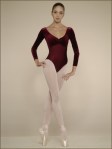
Ok, so winter isn’t exactly here yet, but it will be soon! What better way to stay warm when the chilly days come than with a luxiouriously velvety velour long-sleeved leo, like Grishko’s DA44VL?

I just love the look of velvet on a leotard. This one is done beautifully with an empire seam dividing the stretch bodice and the velour bust and sleeves. The pinched front creates the slightest hint of a sweetheart neckline. And this leotard is available in all the right colors for bringing out the richness of its fabrics – midnight blue, bordeaux and black.