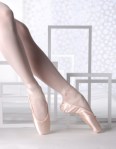
Square Foot, Round Shoe?

In the U.S., anyone can open a dance studio or dancewear shop – no regulated training or certification required. And this is a good thing for a lot of reasons. Even principal dancers have no document proving their abilities – their careers just speak for themselves. This does mean, however, that a lot of unqualified people get to open studios and shops regardless of their training. When it comes to a dance technique as advanced and specialized as pointe, the results of their undereducated counsel can be devastating to a growing dancer.

What can you do about this? First, you must research the background of your teacher to make sure she is well qualified. A professional career, training at highly ranked dance schools, and pedagogical study are things to look for. Unqualified teachers are rarely educated in or enforce pointe readiness parameters.

Second, educate yourself before you walk into your first pointe shoe fitting. To help you out with this, I posted basic pointe shoe terminology yesterday. Today, I’ll give you an intro to basic foot shapes and how to choose pointe shoes that make sense for each.

You should look for a pointe shoe that mimics the general shape of your foot. Feet come in many shapes and sizes, but the basic common shapes are:

  • Greek or Morton’s: This foot type has a long second toe. The rest of the toes are shorter. The width tends to be narrow to medium. These feet tend to prefer a somewhat tapered box.
  • Egyptian: This foot type has a long first toe. The rest of the toes taper. The width tends to be narrow to medium. This foot tends to prefer a tapered box.
  • Giselle or Peasant: this foot type has at least three toes the same length (sometimes more). The toes tend to be short and the width medium to wide. This foot usually prefers a square box.

Stand on flat parallel to a mirror and examine your foot. Is it flat against the floor? Do you have a high arch that protudes upwards?  Or do you have a foot height that is somewhere in the middle? This will affect your selection for the profile of the shoe.

Lastly, look down at your toes. Are they very long, short and stubby, or just medium length? This will affect the vamp length that you need.

Using these three basic parameters (footprint, foot height and toe length), you can choose which shoe types to begin your fitting with. In order to do that, however, you need to know which shoes mimic these shapes.

Unfortunately, marketing departments of pointe shoe manufacturers do not always give correct information in their pointe shoe descriptions. But there are researchers out there who carefully measure and examine pointe shoes for historical and scientific purposes. This is where you can really get good data on what shoes exhibit each feature that you need. My favorite pointe shoe resource is The Perfect Pointe. The researchers from this group have compiled an invaluable Master List of Pointe Shoes, which is an easy to use chart for choosing shoes with the features you need.

Following this basic guide should get your fitting off to a good start. In upcoming posts, we’ll talk about choosing a size (It’s not like street shoe fitting!) and examining each shoe you try for proper fit.
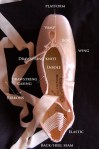
So is vamp short for … vampire?

Uh, that would be a no. Kiddos, if you want be a ballet dancer, recreationally or professionally, you gotta speak the lingo. So today, let’s talk about the language of pointe shoes. And to talk about that, we have to understand how they’re made.

To create a traditional paste shoe, the fabric, leather and other components need to be shaped on a form, or last. Layers of canvas, burlap or muslin with paste and sometimes flour are often hand-formed for the box, baked for hours, and dried for sometimes weeks. Often, shoes are formed from the inside and then turned right-side-out for the final touches like binding. Most pointe shoes have no left or right until they are broken in by the dancer. (Just to clarify for the real newbs out there: There is no wood tip or block in a pointe shoe!)

Each part of a pointe shoe, from the tip or platform on which the dancer balances when on pointe, to the thin and carefully sewn drawstring cover, or binding, has a name. So just for you, I’ve compiled this glossary of basic pointe shoe terms that you should know:

Binding: the fabric channel through which the drawstring runs

Box or Block: the stiff toe cup that encases the toes

Box liner: the soft fabric that lines the inside of the box

Crown: the vertical height between the vamp and the sole

Girth: the measurement around the widest part of the foot, at the metatarsals at the ball of the foot

High Profile: a pointe shoe box, often cylindrical, with a relatively large space between the outer sole and the top of the box, better for higher insteps.

Last: A last is designed to create a shape by replicating the form of a dancer’s foot. Every style, size and width requires its own last.

Low Profile: a pointe shoe box with a generally flat shape and a relatively small space between the outer sole and the top of the box, better for lower insteps

Metatarsals: the five bones between the ankle and the toes. Pointe shoe fitting is especially concerned with the area near the ball of the foot.

Outer Sole: the bottom part of the shoe, usually made of synthetic or leather, which is in contact with the floor when the dancer stands in the normal flat position

Platform: the part of the pointe shoe on which the dancer stands when en pointe

Pronation: the rolling inward of the foot so that when standing flat, more weight is on the ball of the foot than on the outside

Quarter: the part of the shoe covering the sides and heel of the foot

Shank: the stiff insole that provides support; Created from the leatherboard or redboard, this is the backbone of a pointe shoe. It is located under the socklining and provides support to the arch. A dancer’s strength and technical ability determine shank preference.

Side Wings: Side wings are an extension of the box and provide lateral support.

Side Quarters: the sections of satin from the side seams to the back of the stay

Sockliner: the soft fabric that lies directly underneath the foot and runs the length of the shoe

Sole: Made of either buffed or scored leather to provide traction, the sole is internally stitched to the upper.

Stay: fabric that covers the seam in the back of the shoe at the dancer’s heel

Throat: open area located between side seams at the center front of the shoe is the throat. It gives shape to the upper which accentuates a dancer’s arch.

Vamp: the section of the shoe “upper” measured from the platform back to and including the binding. A longer vamp can help draw the foot closer to the shank for more support on pointe, so that the foot doesn’t overextend.

Vamp Elastic: wide, firm elastic sewn at the throat of the shoe to extend the vamp and cover the top of the foot

Winged Box: a box with extra-long, stiff sides

Dancewear en l’air: The Two-Tone Practice Tutu

In my recent post on the tutus, I featured this lovely rehearsal piece, C705, by Primadonna Tutus as the example. But such a well-made and economical piece really deserves it’s own post.
This practice tutu comes in classic white tulle. The black and white basque mimics the pointed basque-waist of a performance tutu’s architecture when worn with a black leotard as shown. This is a gorgeous rehearsal piece, but if you are looking to dress it up for a competition or recital, be forewarned that the two-tone feature doesn’t really lend itself to evolution into anything else. Primadonna offers all-white and all-black options if you need that versatility.

The price is nice on this piece and options include a 12″ or 14″ skirt, a hoop on request for $20 more, and either eight or ten layers of tulle. All told, you’ll probably won’t even reach $200 for the most expensive version.

Ballet for the Teen Beginner – Part 3

If you are getting ready to take ballet for the first time, you might want a heads up on what to expect, from what the barre is really for to what the teachers expect from you.

When you arrive, find out where to put your dance bag and purse. If you need to change, find out where dressing or restrooms are available. You should be in your dancewear with hair pulled back and completely ready to walk into class five minutes before the start time.

Exercises in ballet follow a certain general order. The class is begun at the barre, which you are probably familiar with from movies and TV as a railing that is used by dancers for warm-up. The barre is intended to be a light support. You should always practice at the barre as if you will eventually perform the exercises without it – because you will! Hanging on the barre or gripping it are huge no-nos.

When you walk into class, the first thing to do is introduce yourself to the teacher. Even if you met her during your enrollment, it is helpful for her if you re-introduce yourself.

Next, find a spot at the barre about four to five feet away from anyone else so that you can perform your exercises without kicking or bumping someone else accidentally. There’s definitely an unspoken rule about who gets what spot at the barre. Students who have some seniority usually have favorite spots that are considered theirs. Wait a few seconds before choosing your spot so you can avoid “stealing” one from one of these students.

If it’s the first day of class for a number of students or if it’s the first day of the year, the teacher might go over some class rules. In case she doesn’t though, here’s the basic rundown of what’s expected:

  1. When you are in the studio, speak only when prompted or raise your hand when you have a question, even if class is over or hasn’t yet begun.
  2. Ask for permission to leave the room or leave early, and ask in advance if at all possible. Never arrive late. If you absolutely must, enter the room as quietly as possible. Do not enter or exit the studio during a combination.
  3. Adhere to the dress code. Be neat and clean. Do not wear ill-fitting items or those in disrepair.
  4. At the barre and in the center, do not get so close to others that you kick or bump into them.
  5. Do not compare yourself to others. Work towards your personal best.
  6. Do not leave the room without a thank you, small curtsy or both to the teacher and accompanist. (This is very dependant on culture. Watch the other students.)
  7. No gum chewing.
  8. No jewelry.
  9. Water is the only drink allowed in class.
  10. You are responsible for reading notices, cast lists and keeping track of important dates and events.

The barre exercises will begin with knee-bends and extensions of the leg away from the body. At first, your toes will stay touching the floor, but as the exercises progress, the leg will be extended off the floor in increasing heights. You might also practice balancing on two legs and eventually on one.

After the barre exercises, students work on center practice. As a beginner, these exercises will be similar to the work performed at the barre and may also include small jumps. As you progress, turns will be added and jumps will increase in height and complexity.

Throughout the exercises, the teacher may call out corrections to the class. You are expected to listen and apply them. She may also direct her attention to an individual student and might use her hands to physically move the student’s body into the shape that’s needed. If you are that student, don’t get anxious. Just listen and try to put into practice what she is asking. If its your first day, this might happen quite a bit as the teacher works to get you to understand the steps.

For the last exercise, the teacher might guide the students through a slow bow or curtsy combination called reverance. Once class is over, all students should clap for the teacher as a thank you. They may also then thank the teacher individually with a curtsy. Watch the other students in the class and follow their lead on this. Some teachers do not prefer an individual curtsy and thank you because they need to get to another class and move on with the day.

Don’t be concerned at all if you did not understand a lot of the words used for the steps or if you were limited in what you could do. If you keep going to class, that will change quickly. This is my final post in this three-part series – All that is left is for you to go and take that first class!

Congratulations on trying something new and entering the beautiful world of strength and creativity that is ballet. Enjoy it and good luck!

Ballet for the Teen Beginner – Part 2

You have selected a dance school and signed up for ballet lessons. Now its time to shop for your ballet clothes!

Your dance school should provide you with a dress code and a list of stores to purchase the items you need. Don’t go online to buy your first ballet clothes – you will need to try things on and get help selecting styles and sizes. You will need at least one basic leotard, a pair of pink tights, and a pair of pink ballet shoes. If you will be taking more than one class weekly, you may need another set or two of tights and a leotard. Depending on the dress code, you may also wish to purchase a basic short wrap skirt and some simple warm-ups or cover-ups for walking in the halls between classes or for warming up before class. So let’s talk about what to shop for.

Before we get started, be forewarned that you may feel a bit strange in a leotard and tights at first. They look and feel very different than street clothes! A question that new female dancers are often too shy to ask is: Should I wear underwear and a bra under a leotard and tights? Most dancers consider the tights to be the underwear and most leotards are made with a lining or shelf bra attached. (Wearing dancewear is very similar to wearing a bathing suit.) If you are not comfortable with this and prefer additional layers, there are many options available specifically for dance that you may choose from. Body Wrappers, Natalie and Capezio offer boyshorts, thongs, bikini cuts, bra tops, leotard-cut underliners and unitard-cut underlines. These are all designed in fabrics and colors that fit discreetly under leotards or costumes and that are moisture-wicking. Do yourself a favor and don’t try to wear streetwear underclothes with your dancewear. Street styles are way too bulky and noticeable, and they can trap moisture and heat that can cause, ahem, issues.

Now for the fun stuff. For your first pink tights, ask for a convertible foot. These tights have a slit on the bottom of the foot so they can be rolled up to the ankle. This is invaluable if you are planning to take other dance classes, like modern or jazz. I would recommend choosing Body Wrappers, Capezio, Gaynor Minden or Bloch tights. These brands offer various fabric choices, so ask the sales person to let you feel the different fabrics and help you choose the proper size.

For your ballet leotard, you should choose something simple in a comfortable fabric and cut. A short sleeve or tank version with a high back is usually best for your first leo to avoid feeling too revealed and to be able to wear a bra if you prefer or need to. Some good leotard brands are Mirella, Body Wrappers, Capezio, Bloch, Grishko, Freed, Sansha and Natalie.

Next your pink ballet shoes. Soft ballet shoes are made in satin, leather and canvas. If your dress code does not specify, try leather or canvas which are what most students wear. Ballet shoes should cover the toes, sides of the foot and heel. The sales person should help you find a size that does not bag around your foot but does not cramp your foot either. For advanced students, I like to see elastic criss-crossed from heel to arch, but on a beginner, I recommend just one elastic across the arch of the foot. Ask the sales person if they sell any shoes with elastic pre-sewn. Look for ballet shoe brands like Fuzi, Angelo Luzio, Capezio, Bloch, Sansha, Freed, Grishko and Principal.

Ballet shoes come in split-sole and full-sole. That refers to the leather pad on the bottom of the shoe. A full-sole shoe has a strip of leather in a footprint shape while a split sole has a pad on the ball of the foot and one on the heel. The idea is that a split-sole highlights and enhances the look of the foot’s arch while increasing ease of motion. It does, but note that a full-sole offers resistance on the arch that can be useful for pointe preparation.

Now to accessorize. Does your dress code allow for a short skirt? If so, make sure you know what colors are acceptable and if there is a minimum or maximum length. If the dress code just says “short”, look for a one-layer skirt no shorter than ten inches and no longer than fifteen. Basically, you want a length that covers the bottom of you leotard when you are standing still, maybe an inch or two longer if you like the look. The most common cut of a ballet skirt is a wrap style that you will cross in the front and tie in the back. If you don’t want that hassle, some pull-on styles are available. Look for delicate chiffon, georgette or tulle fabrics that flow when you move and swirl when you twirl!

Now for your warm-ups. Most teachers do not allow warm-ups during class, but they are great for protecting the muscles after class during cool down and between classes. They also protect against cold A/C. Some warm-ups double as cover-ups. Warm-up options are so numerous, I can’t possibly list them all, but some options include legwarmers, wrap tops, shrug tops, tunics, knit tights, warm-up dresses, knit skirts and shoulder wraps. Try on different styles to find what you like best.

At any age, it is really inappropriate to walk to or from the studio in nothing but a leo and tights. You should bring either a change of clothes or cover-up outfit to wear to and from the studio. A simple cotton dress that you can slip over the head works well for this, as does a sweatsuit.

If you have a gym bag, that should be suitable for your ballet gear. If not, you will definitely want to purchase a medium-sized bag that can fit a change of clothes, a water bottle, your purse and your ballet shoes and warm-ups.

Lastly, your hair. Most ballet schools require that females wear their hair pulled up off the face in a bun or french twist. You should can pick up hairpins, elastics, hairnets and anything else you need at a local drugstore or at the store where you purchase your dancewear.

You have everything you need for your first ballet lesson! Be sure to allow enough time before your class to change into your dancewear and style your hair. And get ready to enter an exciting world of art, emotion, strength and unparalleled beauty. In my next post, I’ll tell you what to expect during your first class!

Ballet for the Teen Beginner – Part 1

When is too late to start ballet? What should I look for in a ballet school? Can I become a professional dancer if I start training as a teen? What on earth do I wear?

If you’re a teen that is interested in beginning ballet classes for the first time, these are just a few of the exciting questions you probably have. Ballet is a wonderful activity at any age for strengthening the body, increasing flexibility, emotional expression and spending time with friends. Starting as a teen will give you a different experience than if you start young, but it can certainly be as fun and enjoyable. So let’s get to those questions …

I recommend a physical exam with your doctor before beginning any new physical activity, but it is never too late to begin ballet lessons if you are medically able. Your goals in dance are important to consider though. Do you just want to get some activity into your week while spending time with friends? Do you dream of eventually wearing pointe shoes? Do you aspire to a professional career? Do you just want to try something new?

If your goals are recreational, you have chosen a wonderful activity. Ballet is terrific exercise, is very creative and is great for spending time with friends and making new ones. It’s unlike any other sport because it is also a performing artform. You should plan to take classes once or twice a week to progress at a safe pace recreationally.

If you would also like to one day wear the coveted satin pointe shoes, you may be able to reach this goal. However, this will require a bit more dedication than the above. There are many different factors that go into a student’s preparedness for pointe work, including skeletal structure which cannot be altered. Soft tissue malleability is also an issue. Young children have some ability to change soft tissue range of motion, but that decreases dramatically in the teen years. You will need at least two years of twice weekly lessons before you should be considered for pointe training. Whether you are an acceptable candidate for pointe at that time should be determined by a qualified teacher. But rest assured that ballet is incredibly enjoyable and satisfying activity regardless of whether you are on pointe or not!

Now for the toughest question: Can you become a professional ballerina if you start ballet lessons in your teens? If you are very, very lucky and work very, very hard, yes you can. Just ask Darcy Bussell, Melissa Hayden, Carmen Corella or Misty Copeland. But it would be wrong of me not to tell you that those are extremely rare and fortunate circumstances with dancers that were born with a naturally favorable body and facility for ballet and pointe. If you’ve read my article on becoming a professional dancer, you know just how competitive it is, and that is for students who have been training for nearly all their lives! (Of course, it is different for male ballet dancers, who may be able to start in their mid-teens with no problem.)

Training in ballet as a teen can open doors to other styles of dance that are based on ballet technique. Studying ballet can prepare you for success in modern, jazz, contemporary and other disciplines. Because they don’t require pointe training, these styles can be more accessible to teen beginners for potential of professional dance. Also, even recreational ballet training might lead to new college opportunities.

Once you’ve given some thought to your goals, its time to research local dance schools. The easiest way to come up with a complete list of dance schools in your area is to look on www.yp.com. There are a lot of websites that claim to have dance school listings, but most are dependent on the schools initiating that listing, which many schools don’t. If you are interested in pairing your ballet lessons with classes in other dance forms, focus on studios that offer those other forms of dance in addition to ballet.

Because dance can be harmful if taught improperly, it is important to review the training of each teacher you consider. They should have trained with a school that is well-respected in the dance community at large, not just locally, or they should have had a respectable professional career. Thanks to Google, this shouldn’t be difficult to find out once you have the teacher’s bio. Visit the school to get a feel for its suitability. Do the students conform to a clean and professional-looking dress code? Do the classes seem organized and logically-run? Ask if the studio has sprung floors, which minimize injury. Studios should be large and well-lit with high ceilings and with mirror panels covering at least one wall.

If you have dreams of dancing professionally, your ideal option is to enroll in the recreational division of a professional ballet school (one that is affiliated with professional ballet company) and to try audition into the professional training division once you have reached an acceptable level. You may need to audition even to enter the recreational division. Speak to the teacher or the school directors about your options for entry and progression. You will need to take a minimum of one class a day most days of the week to train at this level. Once you have a learned the basics and strengthened your body, this schedule could need to increase significantly.

Hopefully the schools you look at will offer a teen beginner ballet class. If they do not and you are not comfortable in a class with much younger students, look for an adult beginner class. Do not be discouraged if you cannot find either at a good school in your town. Instead, speak to the teacher or director about how far along you would need to be before you can move into a class with students closer to your age. Create a plan with the teacher or director for reaching your goal so you will not feel like you are stuck in a lower age group indefinitely.

Starting ballet classes can be so exciting. Congratulations on choosing such a beautiful and fun activity. In my next post, I’ll help you prepare for your first ballet classes … with a little shopping!

Dancewear en l’air: The V-Neck Ballet Sweater

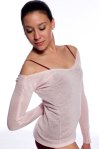
Professional ballerinas, fashion models and movie stars are just a few who reach for K.D. Dance sweater AC03DB when they want to throw something on that will flatter no matter what.
The “03” as it’s called is beloved for its soft touch and figure-balancing wide v-neck, which can be worn off the shoulder or on. Either way, it’s perfect for showing off tank or camisole straps and your elegant neckline. The length is flattering as well, falling just to the hip. This acrylic top is available in eighteen of K.D. Dance’s lush colors and would be great paired with your favorite leo or with your favorite jeans.

Dancewear en l’air: The Plush Velour Long-Sleeve Leotard

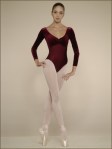
Ok, so winter isn’t exactly here yet, but it will be soon! What better way to stay warm when the chilly days come than with a luxiouriously velvety velour long-sleeved leo, like Grishko’s DA44VL?

I just love the look of velvet on a leotard. This one is done beautifully with an empire seam dividing the stretch bodice and the velour bust and sleeves. The pinched front creates the slightest hint of a sweetheart neckline. And this leotard is available in all the right colors for bringing out the richness of its fabrics – midnight blue, bordeaux and black.

Tutu Talk (Plus – Where to Get the Tutu Goods!)

If you are getting to an advanced stage in your training, chances are you have already worn or will soon wear a tutu. I’m not talking about those mass-made recital costumes that arrive crumpled up in plastic bags – I’m talking about a fully or partially handmade tutu carefully constructed with hoops, high-quality tulle and a corset-style basque and bodice. (Insert high-pitched squeal of girly joy!)

If you’ve been dancing for a while, you probably already know the basic tutu cuts. The romantic style is easy to spot because of its ankle or below-the-knee length in voluminous layers of soft net and tulle. The classical tutu usually refers to the pancake or platter style with its flattened shape that is hooped to stay straight out from the hip.

There are three common subcategories of the classical tutu. The original is the pancake described above. The Balanchine or Karinska tutu, also called a powderpuff, is obvious from its loosely tacked softer tulle or net that is shorter in length than the pancake and not hooped.  The bell tutu is similar to the pancake, but bells slightly downward with no hoop and has more layers than a pancake style.

Practice or rehearsal versions are available in all the styles above, but are most common for pancake tutus. If you are purchasing a rehearsal tutu of any kind, it is best to spend more if you can to get a professional version because that will give you the versatility to alter it into a performance piece. Most professional tutu-makers make practice versions based on the same construction as their performance versions. Ordering from one of them is the easiest way to ensure you have a tutu you can use for practice and potentially for performance. This will require some careful measuring with the help of a friend and some patience for the creation of your tutu. Each maker can tell you the specifics of their ordering process and often has a page on their website devoted to this information.

Practice tutus are most versatile in white but much easier to keep clean-looking in black. Cleaning any tutu can be a difficult process. Chemical dry cleaning destroys their delicate frills, hoops can rust in water, and the delicate decorations and beading can be harmed by any cleaning method. Foregoing an overall cleaning in favor of spot cleaning and deordorizer (think Febreze) can be a good solution, though sweat and grime may eventually break down the fabric. Ideally, design the tutu as best you can so that embellishments can be removed for cleaning. This makes it much more versatile anyway.

If you need to go a less expensive route, there are some decent options out there. You’ve may have noticed that most discount dance suppliers have tutu sections, and those can be great resources. Try not to buy really cheap and ill-made tutus; that’s just throwing away money. Even if you can’t afford a pro-made tutu, you should still look for something with good quality tulle and a corset basque. Some decent practice tutus are made by Bloch, Star Styled, Body Wrappers, Main Street Dancewear, Sansha, Algy Performs, Wear Moi and Mondor. A few also sell bodice-style leotards that can be matched to the tutu for a very simple performance piece. Most of these styles are available through discount dancewear retailers.

Once you have your prized tutu, you should keep it in primo condition by storing it a proper tutu bag to protect it from crushing. Tutus should never be folded, but if you must, picking it up from the crotch and gently folding it upside down can minimize damage. If you pack it right-side-up, your tutu will flatten and the look will be ruined. Hanging tutus should be upside-down as well. Pancake tutus can be stored flat on a shelf provided they are not stacked one top of the other so that air can circulate.

Now that you are armed with the scoop on tutus and how and what to buy, here is a list of some of today’s best professional tutu makers for U.S. shoppers:

Class Act Tutu

Primadonna Tutus

Winthrop Corey Designs

Tutu Etoile

Grishko

Cameo Dancewear

Tutu.com

Classic Dance Costumes

Tutus Divine

Prima Fashions

Tutus.com

Rosetti Costumes

Theatre Ballet

Tutus by Edna

Aurora Dancewear

The Costume Lady

Dancewear en l’air: The Pretty Lace Skirt

Skirts make ballet more fun, don’t you think? That’s exactly what I think when I see a 32 Fouettes skirt. They are nothing if not fun, girly, and perfect for dancing around.

Skirts by 32 Fouettes are unique because of the stretchy lace band around the waistline, which they say eliminates the annoyance of a wrap skirt’s self-tie. What’s most interesting about this skirt to me though is the variety of colors and patterns available. They also offer customizable lengths, flouncing and fabric combinations. These skirts would be lovely for variations and I’d be curious to see how they stand up to a partnering class.

Foot Envy and Falsies for the Feet – Um, Ew!

Have you ever looked with awe and envy at the highly arched banana feet of famous dancers like Paloma Herrera and Svetlana Zakharova? Have you been tempted to sport one of those gelatinous contraptions called “arch enhancers” to increase the look of your own foot? The CBT is here to tell you: Don’t waste your money.

Why? Let’s break this down, shall we –

  1. Numero uno – You are beautiful the way you are. You can disagree if you like, but facts are facts. The next time you feel like comparing your arches (or extension or turns …) to another dancer – especially to a professional – STOP. Remember that a) you are still a developing student b) you have many wonderful qualities that you have worked hard to achieve and that others might not have. Despite what glossy ballet photographs might make you think, no single dancer “has it all”.
  2. Do professional dancers use arch enhancers? Sadly, yes. And you’ve probably even oohed and aahed over one of them before. But all that this achieves is perpetuation of the idea among students that you all must have an exagerrated arch in order to succeed in ballet – which is not true; a low arched dancer can certainly become a professional if she maximizes her ankle range and her intrinsic articulation. (What are those? I’ll address them in an another post.) Also, high arches are more prone to injury, partly because low arches are better shock absorbers.
  3. There is so much more to a beautiful classical line than a highly-arched foot. I’d much rather see a strong average foot than a weak banana-style. Quality of movement makes a huge difference in ballet as well, and can easily make a low-arched dancer vastly more appealing than a high-arched dancer.
  4. Arch enhances do not enhance your arch; they only change the look of your instep. The arch and instep are two different aspects of the foot, and these contraptions deal exclusively with the latter. There isn’t a single add-on out there that can do a darn thing about your arch – but proper battements can!
  5. Arch enhancers usually look cartoonish. Sorry, but teachers like me can usually spot them pretty easily due to the awkward, hump-backed look that they can give to the foot. (Do you see it in the pic above?) And they can look extraordinarily strange when the foot is flat or in soft shoes! Watch this video for an example. The closest any company has come to a natural look is an Australian company called Dance Arches, but even their product is pretty easy to spot. The only time you might get away with it is during performances when your viewers are far away. But Lord knows what you’ll do when you have to dance with no tights or no shoes!
  6. Arch enhancers can cause discomfort and be annoying. They can crumple up on the arch, cause unwanted bulk in the shoe and irritate the skin. Um, that’s not exactly great for dancers – people who need their feet to be as healthy and articulated as possible!

The bottom line is that the only way to really enhance your arch is by good quality training. High arches are a dime a dozen, but gorgeously strong, articulated and controlled feet? That’s a truly beautiful rarity!

Kiddos, what bugs me most about this as a teacher is that all this fuss over arches keeps you all from addressing issues that you do have control over – and which can be far more important than your feet. Try rechannelling your energy into advancing your musicality, your port de bras, or mastery of your balance point. Those are the things that will really have a huge positive impact on your dancing and that you won’t have to take off at the end of the day!

Dancewear en l’air: The Evening-Style Halter

Flaunt Bodywear’s teardrop leotard KB-31201 is so elegant it looks ready for … a night at the ballet! This halter-style leo is cut to minimize discomfort at the neck strap and features a formal-looking mesh layer above the bust, around the back and coming to a point on the chest.

This beautiful cut would look lovely in black with classic pink tights and pointe shoes, and the red version would be great for a jazz or contemporary class.

Ballet in Print: Belyaevsky Ballet Photography

Former principal dancer with the Kirov Stanislav Belyaevsky is an incredible photographer who understands how to capture the dynamism, drama and virtuosity of Russian ballet all in a single still image.  Most of his collections can be viewed on his site and include recent and breathtaking shots of the Vaganova Academy, the Varna Competition, the Helsinki Ballet and the Finnish National Ballet and School.

You will be inspired and in awe by these stunning ballet images. Belyaevsky currently has a few books of his work available for purchase, but you won’t find them on Amazon. These books are currently only sold on Belyaevksy’s official website.

Choices, Choices – Plus Some Great Ballet Videos!

So now you have the basic scoop on the most popular techniques in this U.S. But there’s more! The other major methods that you should know of are:

Bournonville (pronounced BOR-non-vill) technique is a lovely iteration that evolved through the Royal Danish Ballet and is known for its quick footwork, kind expression and minimized show of effort. Bournonville ballets can be easy to spot from the pairing of busy feet and a calmly graceful port de bras. While the technique is not often taught in the U.S., the choreography is. Many Bournonville ballets are still performed regularly, including La Sylphide, Flower Festival in Genzano and Napoli.

Royal Academy of Dancing from England is an amalgam of French, Cecchetti, Vaganova and Bournonville styles and is known for its purity of line. RAD students are examined yearly and are recognizable by the strict dress code with belts and satin ribbons on girls’ soft satin ballet shoes. RAD cannot be taught by dancers not certified and schools not accredited. It is not as popular in the U.S. as some other techniques but is enormously popular in Europe and other continents.

Cuban ballet is also a blend other techniques but with a strong Vaganova influence and is noted for its joyful sensuality. Until very recently, Cuba was the only country where you could learn this technique, but a few schools have opened in the Miami area. The home of Cuban ballet is the Cuban Ballet School.

It is also worth mentioning that while not recognized widely yet, American Ballet Theatre is creating its own through the ABT National Training Curriculum. They recently settled on there own system of arabesques, which appear similar to the Cecchetti versions.

You should be prepared now, baby ballerinas, to recognized the techniques when they are named and understand some of their differences. Most good teachers are usually specialized in teaching one or two specific techniques and are educated on the existence of the others. Can you tell the differences in style? Which one is your favorite?

ABT Sample Video (Scroll to page bottom.)

Balanchine Sample Video

Bournonville Sample Video

Cecchetti Sample Video

French Sample Video

RAD Sample Video

Vaganova Sample Video

Ballet in Film: Katia & Volodia

The incredible husband and wife duo of Ekaterina Maximova and Vladimir Vasiliev are two of the very best-loved Russian ballet dancers. Katia & Volodia reveals clips of their early training, rehearsals as pros, performance snippets and clips of them coaching younger dancers.

Partnered together as small children in ballet school, the leading pair were wed in 1961. Maximova passed away last year at the age of 70 and was survived by her husband. In March of this year, a gala was given in honor of Vasiliev for his 70th birthday.