The Sensationalizing of Classical Ballet

The lingering effects of Darren Aronofsky’s dark creation, Black Swan, have become the bane of many dancers’ (and teachers’) conversations. Non-ballet goers now often react with shock when meeting a dancer or former dancer and may post outlandish questions about his or her lifestyle, thoughts and training. Though the majority of dancers only think of Black Swan as the imaginative fiction tale that it is, it has created an opportunity for dissatisfied dancers to capitalize on their unhappiness as one former student, “Hannah”, chose to do through Seventeen Magazine. (Check out School of Aspen Santa Fe Ballet director Melanie Doskocil’s thoughtful analysis of the article here with a link to Hannah’s article as well.)

Black Swan is not about ballet. It’s about a disturbed young woman with a dysfunctional life and the effects of those features as they play out against the backdrop of her career. Because ballet dancers often sacrifice typical teenaged pasttimes to reach their goals and are usually very focused, ballet became a target for the grand exaggeration the filmmakers wanted. Keep this in mind as you field questions from non-dancers and digest inflammatory articles.

There are happy and unhappy stories in all walks of life. Your ballet training has a lot to do with choices you make. If you look for a school that has the best interest of each student in mind, you will not find what Hannah described. And if you love ballet whether or not you want to go pro, you’ll dance instead of doing other things because you find that makes you happy – not because someone is making you or you have an obsessive disorder. The main character in Swan would probably have had just as tragic an end whether she made her living as a doctor, lawyer or pet groomer. Similarly, it is very likely that Hannah -due to her personality, emotional issues, upbringing or a combination – would have had the same issues that she experienced whether she was in ballet, football, piano or any other activity at an intense, pre-vocational level. Pre-professional training in any sport or art is not for everyone. If you find that it makes you miserable, you are probably best to move on or pursue it only recreationally – but that doesn’t mean that the sport or art is to blame.

Let’s talk about Hannah’s specific complaints, like exhaustion, dancing on serious injuries, excessive dieting, and abusive teachers. Unfortunately, these problems are not unique to ballet training, but they are not typical of ballet training either. A quality school, while selective or even competitive, will still nurture and safely train its students in a positive environment. That is not to say that there will not be stressors, but abusive language and encouragement of unsafe nutrition are insupportable and should never be accepted as “how things are” in ballet training. And no good school would allow or encourage a dancer to sacrifice a badly-injured limb for the sake of role promotion, though it sounds like the dancer here took it upon herself to make that bad decision. When you are injured, you do not have to “just suck it up” – You have understudies.

And I have to mention the feet thing – bruised toenails and blisters are usually the result of badly fitting pointe shoes and technique issues. (Click herehere and here to learn how to avoid that.) Occassional blisters, however, will not “deform” you.  I got as many blisters on my hands from having to sweep my driveway as a kid as I did on my feet from pointe shoes. Blisters are not fun, but if they caused deformity I wouldn’t be able to type this article.

As for the “cutthroat dancers” and “crushing competition”, there certainly are schools where animosity between students results from the school’s strict policy of ‘up or out’ systems, though that is far more common in the state-sponsored European schools. All I can say is, as a former student in a local school and later in national summer intensives, I only happy memories of my fellow students. We were intensely supportive and encouraging of each other, sometimes to a fault, because for those who really wanted to be there, we had a group of peers who we knew understood us.

Training to dance professionally is not all rainbows and hearts. It can definitely be very tough, but it’s certainly not a psychotic or masochistic practice unless you turn it into that for yourself. When ABT corps de ballet dancer Skylar Brandt was asked by The Rye Record about her training commitment as a younger teen, she said, “Socially, I have given up a lot of things other kids have, like parties, sleepovers and sports. There are just so many hours in the week, and to follow my dream, I have to be disciplined. It doesn’t bother me. I like doing ballet more than anything else.” And that’s exactly the point.

Dancewear en l’air: The Thumb-Loops Shrug

Shrugs were all the rage when I was a young dancer, but they gave way to off-the-shoulder, retro sweaters and modern, zip-front fleece jackets in the years that followed. Thanks to Black Swan, shrugs are back!
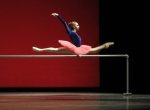
I’ve always loved shrugs because they offer warmth without covering up your pretty leotard. I posted on the Lydia shrug by Bloch some time ago. Mirella’s black shrug style M1105 is slightly looser in the arms for increased ease of movement and a more casual look. This warm-up also features thumbholes at the wrists for security no matter your port de bras. The long arms are great for a slight bunching. Get cozied up by pairing this piece with similarly bunchy legwarmers.

Inspiration: Nicole Ciapponi

At 16,* SFB corps de ballet dancer Nicole Ciapponi is only just beginning her professional career, but she captured the attention of dedicated ballet fans years ago. National attention initially revved up for a young teenaged Ciapponi when videos of her superb performances of demanding variations like second shade in La Bayadere, second peasant from Swan Lake’s pas de trois and a tough contemporary ballet piece set to Bach’s enrapturing Cello Suite No.1 in G were posted on YouTube.

Canadian-born Nichole was initially trained in Surrey, British Columbia, and in 2007 spent a year at the Goh Ballet Academy. At 15 in 2008, she moved to the Pacific Northwest Ballet School. Ms. Ciapponi accepted a traineeship with SFB the following fall, and was invited to join the corps de ballet in early 2010.

In addition to passing all RAD exams with distinction and earning the solo seal at 14, medal placements at international ballet competitions punctuated Nichole’s final training years. To name just a few, she won a silver at the Genee IBC, a top twelve distinction at Youth American Grand Prix in New York and a gold at the Dance World Cup. She was awarded full scholarships to all of her summer programs, which included Royal Winnipeg Ballet School, San Fransisco Ballet School and Pacific Northwest Ballet School.

Reviews for Ciapponi by Bay Area balletomanes have been very positive so far, particularly for her performance in William Forsythe’s The Vertiginous Thrill of Exactitude. In an interview earlier this month with Geri Jeter of the California Literary Review, she called it her favorite ballet to work on this year and said, “It was truly amazing to have the opportunity to perform this piece and hope that I can perform it again in the near future.” So do we, Ms. Ciapponi, so do we!

*It is very possible that Ciapponi has turned 17 by the time of this post.

What’s in a (Ballet School) Name?

Whether it’s alphabet soup – SAB, ABT-JKO, SFB, PNB, BBS  – or one-name-celebrity-style – Kaatsban, Joffrey, Rock – major U.S.-based ballet schools often attract young auditionees by their name alone. But what is the actual worth of attending a big-name school? Will it help in your chances to dance professionally? Let’s do a reality check.

The most common misperception about ballet training that I encounter is the idea that attending at a “big-name” school will make or break whether the dancer will be able to secure a professional contract. This is simply not the case. But in order to understand why this is and what can make attending a famous school good, you first need to understand the process of auditioning for a professional ballet company.

The primary concern of most artistic directors when auditioning potential company members is the auditionees dancing ability, plain and simple. For serious consideration for a company position, you will usually need to get invited to a closed audition or a company class. The first step is to send an audition tape package, which may be very similar to an SI audition package, or to attend an open call. Whether you attend a cattle-call (open call) or send a DVD, the primary focus of the initial cut is your dance ability. More often than not, your résumé will just get a quick glance or perhaps not be reviewed at all before that cut.

Once you have auditioned live and in person, the AD (or more likely, the ballet master or mistress), will choose who they would like to speak to or see again. It is usually at this point that only those résumés will be reviewed with any real attention. What’s important to realize from this process is that the résumé is not something you want to count on for getting your foot in the door. The chances of it getting more than a passing glance in the initial stages are very, very small. (That said, your résumé is still an extremely important part of your audition package that should be planned carefully.)

So what’s the point of attending an expensive, famous school in a far-away city if it can’t guarantee you a job – or at least an audition? As you hopefully realized from the audition description, this is all about your dance ability. A high level of technique, artistry and quality of movement are what artistic directors want to see – and a big-name school just might get you there… or it might not.
You see, elite ballet schools across the country, whether big or small, have individualized strengths, features and areas of focus. One school might have small, mostly classical classes that focus on artistry and expression, while another school might have large classes where competition for attention and an apititude in a wide range of dance genres are required. A shy dancer that dreams of performing classic story ballets may not thrive at all in the latter school, but could potentially blossom and find her full potential in the former. The opposite might be true for an outgoing, naturally expressive dancer who is interested in exploring contemporary ballet or mixed-rep ballet companies.

Do you see where I’m going with this? It’s not at all about the name, it’s about the quality of instruction and finding the learning environment that will best accellerate your dance abilities. What you need at the end of the day is not some mythically ideal resume, it’s an ability to perform in class, auditions and on the stage very, very well. And the school that is going to help you do that is the school you should want to attend, regardless of how recognizable their name is.

In fact, name-recognition can and does prevent some young dancers from getting the best possible dance education. I’ve unfortunately seen more than one student pass on opportunities to train at smaller schools with great reputations for personal mentoring and instead jump on offers at glossy, national-level SIs or satellites. Sadly, these students quickly got lost in the crowd and came home challenged, but not as improved and inspired as they should have been.

There is another important caveat about the largest schools that is important to take into calculation. Whether intentionally or not, they will often take credit for a beautifully trained dancer who they did not truly create. That happens most often when an advanced dancer from a small-town school goes to a major school for a final year of finishing. (Remember Center Stage?) In these cases, the bigger school might indeed transform the dancer from a student into an artist (which the smaller school perhaps could not) but usually have nothing to do with the meat and potatoes of the dancer’s training. Recognizable names attract lots of auditionees, so that some schools are able to recruit dancers that are virtually fully trained and place them in their highest levels. (This is also a great testament to the quality of many smaller schools across the U.S.) Ask yourself how many of the advanced dancers were actually trained by the school’s lower classes.

Finally, for company schools, be sure you are not improperly associating the reputation of an affiliated company to the school. Certain companies only rarely hire from their own school, so that the company could be a completely unrelated picture of the school’s capabilities. You should also consider that a regional company’s school might provide more realistic opportunity for future employment than a national one.

Should all famous schools be avoided as expensive wastes of time? Of course not! Well-known schools have the very important benefit of attracting the very, very best staff. What’s important, though, is to take into consideration the many other factors that are important for good training. There are definitely U.S. schools that have built their huge reputations by simply offering only the highest quality training, however you still must be aware that not all programs are right for all dancers. Think carefully about what you need as a dancer, and then find out where to get it!

Dear CBT: Choosing My Daughter’s SI

Dear CBT,

In choosing between the NYC and Georgia Joffrey, Point Park University and CPYB, what do you recommend? My 14 year old will also be doing a 3 week instensive at her own studio in August, so no summer vacation for us if we send her to CPYB’s 5 week program.  How would you rank these options?  I don’t want her to over exert herself, but I’d like her to make notable progress this summer.  Thank you for any insight you might offer.

Undecided Parent

Dear Undecided:

I received a bounceback from the email address you provided, which is why your message is being posted.  I understand your desire for your daughter to improve without overexerting herself, but keep in mind that she’s probably not going to improve much if she does not push beyond her comfort zone a bit! The whole idea of summer intensives is that the dancers, devoid of school obligations, can devote double or triple the time to dance that they normally would. Of course you do not want to push her past what her health can handle, but six or eight weeks of dance will not over exert the average healthy dancer if they are kept properly fed and hydrated.

The conservatory-style programs you are considering are all very good. Your selection should be guided by your goals for your daughter. I will not rank the programs for you, but I will let you know what I know of them so you can decide which one aligns best with your daughter’s goals. Please read through Choosing Your SI and take full advantage of the resources I link there.

Point Park is a small program that has actually has had some success sending its year-round students into professional work on Broadway and in modern dance, though I don’t know if its had any success training professional ballet dancers. I understand that its summer session is comparable in intensity and hours per day to many bigger name programs. I don’t think dancers as young as your daughter can board with the other students there, however. Joffrey NYC has a great ballet program, though they also require modern and jazz. NYC is the most revered location. CPYB has an excellent ballet-focused program that also offers other classes but is really known for honing classical technique in ballet students.

Good luck with your selection. I hope your daughter has a wonderful summer.

Ballet in Film: Male Voices

A new documentary is in the works from Rhee Gold of The Gold School. This six-part series, titled Male Voices will feature the stories of nine teenaged male dancers. The makers of Male Voices followed the young dancers for three months of their training and heard candid narratives about their daily life as well as issues facing male dancers today.
The Male Voices series will premier on March 18 on DanceLifeTV.com with additional episodes each Friday. Don’t miss this important new dance film!

The Right Leo Size, Every Time!

As much fun as dancewear shopping can be, it can also be frustrating. There is a surprising amount of variation across brands. Pulling a bunch of leos on and off to see what flatters is trouble enough without the added complication of figuring out how the different brands are designed to fit.
As a dancer with a long torso, I found that taking my measurements and doing a little research on size schemes (and I have done that work for you as you’ll see!) took the hassle right out of dancewear shopping.

When it comes to leotard fit, you will need at least four basic measurements: bust, waist, hips and girth. To measure the first three, align a soft measuring tape parallel to the floor and wrapped snugly – but not too tightly – around the fullest level of your bust, the slimmest portion of your waist, and your hips at the hip bone level.* Wear the least bulky top and bottom possible (but nothing so tight it will change your natural size) and make sure you are standing in proper ballet posture with shoulders down and a square alignment for the truest measurements possible. Use a mirror to make sure the tape is wrapped properly for each measure.

Now for the research – which as I mentioned I have done for you! I have created a chart of all the major manufacturers’ ladies’ sizing guidelines for all brands that use a S/M/L sizing structure. (So no Sansha or Grishko, sorry!) You can download it by clicking here: BalletScoop Adult Ladies Sizing Guide. Once you have your measurements taken and written out, you can easily compare them to the chart and circle what size in each brand will suit you best. Voilà – sizing guesswork gone!!

*For pants, shorts and unitards, the hips will often need to be measured at their absolute fullest circumference, usually an inch or two below the hip bones. The waist measurement for pants should be taken at the level where the waist of the pants are expected to hit – that’s usually an inch or two below your actual waist.

Update: If you had trouble printing this size guide earlier, sorry! It is now on letter-sized paper, so should be easy printing now!

Spendin’ Cheese: Affording Your Passion for Dance

Unless you’re regularly receiving full scholarships for your dance tuition and sponsorships for your dance gear and other expenses, you may have heard your parents grumble more than once about the high cost of paying for your ballet (or jazz, or contemporary …). There are lessons, shoes, practice clothes, travel expenses, costumes and many other items to pay for in order to keep you in training.
First, the bad news: Your parents are right to question the worth of your many dance-related expenses. Don’t underestimate how burdensome it can be to support this kind of training on an average family’s salary. Good dance training and supplies cost serious money – often thousands and thousands of dollars each year. A proper dance education is a financial extravagance, and raising a family is financially challenging enough without this additional expense.

Some dancers are fortunate to have parents that can – and zestfully do – contribute to their talented offsprings’ pursuits, but more than half of the aspiring dancers I have known came from average financial backgrounds. So how can you make it all work? What do you do if your parents threaten to stop paying for your training?

There is some good news…

YOU can help.

That’s right, you probably have a lot more influence over this situation than you might think. There is a way that you can ease the financial burden, impress your parents with your dedication to your dancing and encourage them to contribute to your training. How you ask? By working!

Ok, ok, don’t click away just yet. Working doesn’t have to mean slaving away at American Eagle for a few bucks an hour. Though that is certainly an option! (Ah, the zen of folding a gazillion skinny jeans into neat stacks.) As a young dancer, I had a few sponsorships and scholarships, but I paid for a lot of my own training and gear as teenager with money I earned babysitting, teaching the children’s classes at my studio and even cleaning houses.

You don’t need three jobs on top of school and dance to impress your parents and be helpful though! Consider taking two babysitting jobs a week. If you charge $8 per hour, you could easily make over $100 per month. Agree with your parents that if they will pay for your tuition, you will pay for your dancewear, shoes and costumes – but you have to stick to the deal. Make sure you can pay for necessities like pointe shoes first and save up for any extra training programs and travel expenses before buying fun leotards and warm-ups.

If you can’t bring yourself to start working or to use your hard earned dollars to help your family with your dance expenses, it might be time to reevaluate whether dance is truly your passion or just a pursuit. If you enjoy it immensely but decide that you don’t want it enough to make sacrifices like this, you might find that you are happier just taking a weekly class for fun instead of a daily schedule. And that’s worth knowing for your own sanity’s sake! If it is your passion, you will probably find that you feel motivated to contribute and excited to be able to start taking charge of your own dance training.

As a final note: Money is very tight for a lot of people these days. My heart goes out to you if your family is dealing with a loss of employment or other financial hardship. There are undoubtedly situations where young dancers in this economy simply will not be able to continue to train regardless of how much they are able to help out. If this is your situation, know that there is a world of dance waiting for you when you are all grown up and on your own. There is a whole universe of people who started or continued dance after high school due to issues like this, and many of them love and enjoy taking class much, much more than they ever would otherwise.

Ballet in Print: In the Company of Stars

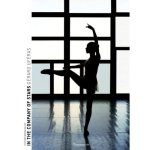
In this lavish 125-photo collection, Gérard Uféras takes the reader on a journey to observe the spectacular beauty of the ubiquitious Opéra Garnier and the intimate world of the Paris Opera Ballet dancers. Uféras spent a year observing the POB, and In the Company of Stars is the result of his brief immersion in their focused world.

Originally a French publication, the English version of this book is currently on sale for about 25% off at Amazon.

Dear CBT: Too Late for Pointe?

Dear CBT,

I’m 21 and studied ballet from the age of 4 until 13. However I gave up and returned at 19 but had to stop due to lack of funds! I have my Bloch pre-pointe shoes and my flat ballet shoes which I do practice on, and I’d never buy pointes without a teacher’s instruction.

I’m looking to getting into training soon again, but do you think its too late to work for pointe?

– Ballerina Interrupted

Dear Ballerina,

Good for you for returning to your passion despite setbacks! First, I just want you to know that pointework is certainly not the be-all end-all of dance or even ballet. Ballet can be beautiful, striking and extraordinary without pointe shoes. I’m pointing this out because, not knowing your health nor seeing your feet, I cannot guarantee that you are eligible, but I will give you the parameters so that you can get going in the right direction.

Provided that a dancer is physician-approved for exercise, the only age-related barriers would really be related to bone strength – too young could mean the bones have not sufficiently ossified, and too old could mean they had reached a point of brittleness. There are other possible roadblocks to your success – genetic predisposition to ingrown toenails, limited flexibility in the tendons and ligaments to make an arch sufficient to get over the box of a pointe shoe and other such issues that are best assessed by a well-qualified teacher and your physician in-person.

Provided that you have no such limitations, the most important thing is for your pointe preparation is to get a quality teacher, preferably someone who has taught adults long enough to understand limitations that they run into and how to relay information in a way that makes sense to them. A good teacher for any age group will enforce a minimum of two ballet technique classes per week leading up and for at least the first year of pointe. You should expect at least two years of re-training to prepare, possible more. If you get there in less time, consider it lagniappe.

If you’ll go to my website homepage, look on the black menu bar and click Pointe Shoes. Read those articles. Then check out the Adult Beginner Pointe link on my blogroll to read about one adult ballet students foray into her first year of pointe. Finally, create an account at BalletTalk for Dancers, where you will find message boards moderated for professional dancers with forums for adult student technique issues and adult student support. Search those two forums for “pointe” – there are some great threads there. I think you’ll find these resources inspirational and substantively helpful for understanding what to expect as a potential adult pointe student. Let me know if you have any more questions after checking them out!

You be the Judge: Choosing Your SI

Have you been accepted to more than one SI? Congratulations! If your parents are considering allowing you to attend but you (or your parents!) are feeling clueless about how to choose one, read on to hear how to find your best summer training experience.

During your SI auditions, not only are the judges assessing you – You should be assessing them as well. Often, the audition is the first stage of substantive contact that a student has with a potential summer intensive school. Whether or not the audition class is also a master class, you should be able to get a feel for the teacher and whether they represent the kind of school you would like to attend. Ask yourself these questions during the audition:\

  • Are they working from a technique that I enjoy and want to learn more about?
  • Is the teacher/auditioner likeable and someone that I would like to be around for six weeks?
  • Is the teacher good at managing the class?
  • Does their audition process foster a professional and efficient learning environment?

You can extrapolate a lot about a school from your audition experience, just the same way that they are extrapolating a lot about you from the same brief encounter. Not every student is the right fit for every school – and vice versa! The audition is both their opportunity and yours to assess whether your talent and level will be best cultivated in their environment.

Nowadays, acceptances are more quickly available than ever. Many SI programs will post them online. Once you know what your options are, it is time to employ your power of choice. Using your audition experience and an easy activity, you can ge a clearer picture of your favorites and not-so-favorites. Before assessing the schools who have accepted you though, you need to take some time to decide what you are looking for in a school.

Because consistency in training is absolutely essential for younger dancers, I recommend that dancers stay with their home studio until they reach 13. For students between the ages of 13 and 15, I recommend that SIs be chosen first and foremost for individual attention and nurturing developmental environments, like many rural, suburban and smaller regional programs offer. Conservatory SIs are excellent for this and have the added appeal of offering a taste of their year-round program. Also for younger dancers, splitting the summer between two different programs can be a more realistic option than for older dancers.

From the age of about 15-17, I recommend that students push themselves to attend more competitive programs, perhaps in urban areas farther from home where there may be greater chance of exposure to directors/choreographers and increased development of the students personal responsibility. When the students get to the age of 17 and older, I recommend that they seek out programs that are commensurate with their ability in terms of potential employment – so no SIs without professional affiliations unless they are specifically looking to enter a conservatory year-round. I also recommend that students give special consideration to programs extending scholarship money, which may mean the company has interest in potentially employing the student in the future. At any age, if the student is interested in a conservatory prep school, the appropriate SI should be chosen in order to serve as an audition for the year-round program. (Don’t know whether you want a company school or conservatory? Check out this great article from Dance Magazine.)

Once you’ve decided what kind of program you need, create a spreadsheet or handwrite a chart with your SI options listed down the left side of the page. At the top, make columns with these headings:

  • Techniques:
  • Audition Experience (Poor/Average/Excellent)
  • Location (Rural/Suburban/Urban)
  • Distance from Home (Close/Mid-range/Far)
  • Supervision (Tight/Medium/Light)
  • Environment (Nurturing/Average/Competitive)
  • Class Sizes (Small/Average/Large)
  • Teachers (Good/Excellent/Unknown)
  • Pro/Prep Programs (Trainee/Apprentice/Conservatory)
  • Level (Local/Regional/National)
  • Reputation (Good/Excellent/Top)
  • Scholarship Offered (Yes/No)
  • Performance Opportunity (Yes/No)

These list is not exhaustive, so be sure to make columns for features of interest to you that I may not have included. Next, indicate the response that you prefer for each feature. For example, a young student leaving home for the first time and her parents might want the options I’ve placed in bold here:

  • Techniques: Cecchetti Ballet, Partnering, Modern & Jazz
  • Audition Experience (Poor/Average/Excellent)
  • Location (Rural/Suburban/Urban)
  • Distance from Home (Close/Mid-range/Far)
  • Supervision (Tight/Medium/Light)
  • Environment (Nurturing/Average/Competitive)
  • Class Sizes (Small/Average/Large)
  • Teachers (Good/Excellent/Unknown)
  • Pro/Prep Programs (Trainee/Apprentice/Conservatory)
  • Level (Local/Regional/National)
  • Reputation (Good/Excellent/Top)
  • Scholarship Offered (Yes/No)
  • Performance Opportunity (Yes/No)

Once you’ve decided what your preferences are for each feature, fill in the boxes for each school by reviewing the information made available by the school website, in the brochures and if necessary by phone call. Once you have everything filled in, look at what schools have all of your preferred features and which ones are easily ruled out.

It may not be possible to find all the information you need from the school’s publications. If you are looking for real dancers’ and parents’ descriptions of the particular SIs that you review, check out my favorite resource for chatting on all things ballet, BalletTalk for Dancers. Create a free account to view their substantial and comprehensive message boards for virtually all 2011 Summer Intensives. All BalletTalk message boards are moderated by respected ballet professionals.

These activities should narrow your list considerably and give you a better understanding of what you want to get from your summer investment of time and perhaps significant money. The idea is to find the best program for you personally – what’s best for you might not be what’s best for your friend – but don’t stress if you end up with more than one awesome SI option. That’s a good thing! Most known SI programs offer great instruction in a safe environment, so there aren’t many wrong answers when it’s time to choose. And the sheer number of hours you will put in at such a program will virtually ensure that you will see some very decent improvement over the summer. With a little bit of research and effort though, you can help to ensure that you won’t just be headed to a great summer intensive – you’ll be headed to the program of your dreams!

Dancewear en l’air: Elasticized Pointe Shoe Ribbons

I used to cut my pointe shoe ribbons and add an elastic strip to the spot that landed at the Achilles. The extra flex gave some room for the ribbons to expand and contract going from plié to relevé and vice versa. Thanks to Bunheads Flexors, there’s no need for such arduous work on top of all the attachment sewing you have to do!

Flexors come four to a pack (enough for one pair of shoes) and come in two versatile shades of peachy-pink to match practically any pointe shoe. These ribbons are recommended by dance teachers (like me) and physical therapists.

Ballet in Film: Dancing Across Borders

Dancing Across Borders is the story of a young Cambodian dancer plucked from his home in a small fishing community to be trained at SAB. If you haven’t seen it yet … go watch it right now! This film is one of my new favorites, if only for the much-deserved coverage of Black Swan set coach Olga Kostritzky, one of the best teachers I ever had (as one of my level’s main teachers at the 2001 Rock SI), and for the extensive footage of Balanchine style and choreography, since there’s isn’t a ton of the stuff on DVD.

But there is much more to this film than footage of SAB teacher-gods like Ms. Olga, Jock Soto and Peter Boal. It is the story of Sokvannara “Sy” (pronounced “See”) Sar, a young man with a remarkable spirit who is plucked from his home country and thrust into the world of pre-professional ballet training by the hand of an intentionally benevolent (though perhaps difficult to like) New York socialite Anne Bass.\

This film might as well be dedicated to honor international ballet students everywhere, as it does an excellent job of talking openly – often through Sy’s own words – about the inevitable emotional consequences of being so far from your home, your family, your language and everything you’ve known. In this case, the scarring was exacerbated by Sy’s lack of control over his fate for the first few years of his training. Unlike some international students, he did not really choose to leave his country for ballet training, ballet chose him. He knew it was a chance to support his family that he couldn’t possibly turn down, though he neither spoke English nor had seen ballet before Bass brought him a ballet film and radically suggested that he leave everything he’d ever known for this bizarre, western pursuit.

Sy’s journey is simply fascinating. He was entered into the Professional Children’s School for academics but was not instantly accepted to SAB despite the pleas of Anne Bass to Peter Martins. Instead, Sy falls into the singularly capable hands of Ms. Olga, who takes on the task of molding the 16-year old Cambodian through private classes from basically a pedestrian into a SAB-level phenom. You’ll have to watch the film to find out what happens from there, but suffice it to say his future would include a little town called Varna.

Dancing Across Borders is available streaming on Netflix and can be purchased, along with t-shirts and posters, at the official site. Proceeds from the official shop go directly towards Nginn Karet Foundation for Cambodia’s “Give a Future to a Child of Angkor”, a program that helps children fulfill their dream to follow in the footsteps of dancers and musicians seen on Angkor Wat and other ancient Khmer temples. Please consider making a purchase from the Dancing Across Borders official shop.

Spoiler Alert! I noticed that the Washington Post article that I linked above mentions rather forebodingly that Sy quit PNB recently. I didn’t want you left hangin’ on where he is now so I did some searching, and it appears from Saint Louis Ballet’s facebook page that he will be joining them for the Spring 2011 season.

Finding The Best College Dance Program for You

Dancing in a great college program gives you the opportunity to refine your dancing to a professional level through one major while preparing for a “back-up” career with a second major – or to continue doing what you love while pursuing your academics. But as a student making plans for dancing in college, you have more to think about than the average teen. What program is right for me? How tough will it be to find what I need from a college program? Can I find the same or better quality training than what I’ve had up to now? Are there programs that focus seriously enough on my dance genre that I can have a chance to turn pro after college? How do I begin researching good dance college programs?\

According to College Matchmaker, which provides links to and info on thousands of colleges, there are 254 four-year colleges in the U.S. with majors for ballet, dance or musical theater. That’s a lot to consider, especially if you don’t even know what you should be looking for. An excellent place to start your planning is by reading through Dance Advantage’s college guide. This section of the DA website provides invaluable information from how to decide what you are looking for in the first place to how to excel once you are there, plus a nice list of external articles and websites to get you well on your way creating and narrowing down your list of colleges.

There is a lot to be gained by pursuing a higher education while refining yourself as a dancer. If you are not sure whether to even continue dancing while in college or whether to skip college altogether and pursue a career in dance immediately, researching your options thoroughly before deciding can give you a more realistic picture so that you can fully assess all the pros and cons.

What makes the “best” college for you will depend on a variety of factors, including your goals in dance, whether you want to get to a pro level via college or go recreational, and what kind of college dance programs are available to you financially. If you have professional contract offers already and are considering accepting one, you should seriously research your options for pursuing your education in that city, though you may not opt for a dance program at all. During your research, don’t get too hung up on terminology for dance programs (B.A. vs. B.F.A, for example). Focus on the instructor quality, the program’s intensity, class offerings, performance opportunities, facilities and of course where the alumni are now. Good programs will require an audition.

Lastly, consider whether to treat your college education and your dance education as separate pursuits, just as you may have done during your high school years. If you have access to a superior dance school, there may not be a college program available to you that will surpass it, so that it is certainly worthwhile to consider enrolling in the dance conservatory or school to continue with dance while taking non-dance college courses. There is a wide variety of quality in U.S. college dance programs today, but for an idea of what to expect, check out this article from Dance Informa Magazine.

As you can tell, there are many, many options to consider even before you start examining college dance programs. But it’s not as daunting as it might seem! Take control of your college future by delving into the articles and links I’ve provided, and before you know it you’ll be well on your way to planning your college career.