Dancewear en l’air: The Pretty Lace Skirt

Skirts make ballet more fun, don’t you think? That’s exactly what I think when I see a 32 Fouettes skirt. They are nothing if not fun, girly, and perfect for dancing around.

Skirts by 32 Fouettes are unique because of the stretchy lace band around the waistline, which they say eliminates the annoyance of a wrap skirt’s self-tie. What’s most interesting about this skirt to me though is the variety of colors and patterns available. They also offer customizable lengths, flouncing and fabric combinations. These skirts would be lovely for variations and I’d be curious to see how they stand up to a partnering class.

Foot Envy and Falsies for the Feet – Um, Ew!

Have you ever looked with awe and envy at the highly arched banana feet of famous dancers like Paloma Herrera and Svetlana Zakharova? Have you been tempted to sport one of those gelatinous contraptions called “arch enhancers” to increase the look of your own foot? The CBT is here to tell you: Don’t waste your money.

Why? Let’s break this down, shall we –

  1. Numero uno – You are beautiful the way you are. You can disagree if you like, but facts are facts. The next time you feel like comparing your arches (or extension or turns …) to another dancer – especially to a professional – STOP. Remember that a) you are still a developing student b) you have many wonderful qualities that you have worked hard to achieve and that others might not have. Despite what glossy ballet photographs might make you think, no single dancer “has it all”.
  2. Do professional dancers use arch enhancers? Sadly, yes. And you’ve probably even oohed and aahed over one of them before. But all that this achieves is perpetuation of the idea among students that you all must have an exagerrated arch in order to succeed in ballet – which is not true; a low arched dancer can certainly become a professional if she maximizes her ankle range and her intrinsic articulation. (What are those? I’ll address them in an another post.) Also, high arches are more prone to injury, partly because low arches are better shock absorbers.
  3. There is so much more to a beautiful classical line than a highly-arched foot. I’d much rather see a strong average foot than a weak banana-style. Quality of movement makes a huge difference in ballet as well, and can easily make a low-arched dancer vastly more appealing than a high-arched dancer.
  4. Arch enhances do not enhance your arch; they only change the look of your instep. The arch and instep are two different aspects of the foot, and these contraptions deal exclusively with the latter. There isn’t a single add-on out there that can do a darn thing about your arch – but proper battements can!
  5. Arch enhancers usually look cartoonish. Sorry, but teachers like me can usually spot them pretty easily due to the awkward, hump-backed look that they can give to the foot. (Do you see it in the pic above?) And they can look extraordinarily strange when the foot is flat or in soft shoes! Watch this video for an example. The closest any company has come to a natural look is an Australian company called Dance Arches, but even their product is pretty easy to spot. The only time you might get away with it is during performances when your viewers are far away. But Lord knows what you’ll do when you have to dance with no tights or no shoes!
  6. Arch enhancers can cause discomfort and be annoying. They can crumple up on the arch, cause unwanted bulk in the shoe and irritate the skin. Um, that’s not exactly great for dancers – people who need their feet to be as healthy and articulated as possible!

The bottom line is that the only way to really enhance your arch is by good quality training. High arches are a dime a dozen, but gorgeously strong, articulated and controlled feet? That’s a truly beautiful rarity!

Kiddos, what bugs me most about this as a teacher is that all this fuss over arches keeps you all from addressing issues that you do have control over – and which can be far more important than your feet. Try rechannelling your energy into advancing your musicality, your port de bras, or mastery of your balance point. Those are the things that will really have a huge positive impact on your dancing and that you won’t have to take off at the end of the day!

Dancewear en l’air: The Evening-Style Halter

Flaunt Bodywear’s teardrop leotard KB-31201 is so elegant it looks ready for … a night at the ballet! This halter-style leo is cut to minimize discomfort at the neck strap and features a formal-looking mesh layer above the bust, around the back and coming to a point on the chest.

This beautiful cut would look lovely in black with classic pink tights and pointe shoes, and the red version would be great for a jazz or contemporary class.

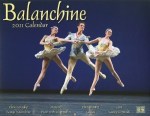
Ballet in Print: 2011 Balanchine Wall Calendar

NYCB twelve months of the year? Who could resist? Calendars are one of the easiest ways to perk up your room, kiddos, so here’s a lovely, inspirational option for you ballerinas-in-training.

Published in June of this year, this calendar includes gorgeously crisp full-color shots, much cleaner than some of those generic ballet calendars with hazy, out-of-focus photos of students and trainees. You’ll be looking at some of the best dancers in the country performing famous Balanchine choreography. I know what’s going on my holiday list!

Dancewear en l’air: The Balanchinian Skirted Tank

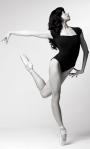
In classic Balanchine style, this tank dress from Body Wrappers has clean lines and minimal fuss. The back is not too high or too low, and the attached skirt is just the right length for class or performance. Even the model here is sporting a Balanchine-esque pose.

Ideal for a variations or partnering class, this leo, P717, comes in four beautiful shades. Wear your bun high with this modern classic style and you’ll really be channeling the Balanchine ballerina.

Dancewear en l’air: The Ruched-Front Leotard

Studying a Giselle variation this year? You’ll look ready for the title role in this lovely peasant-top style, DA53, from Russian dancewear company Grishko. This leotard features the rustic loveliness of a straight-cut, ruched-front empire line. A modern touch is added with spaghetti straps that meet together to form a contemporary V-shape at the mid-back.

This leo’s youthful shape is cut from fabric that is specially brushed to a soft finish on the inside to make a long day in rehearsal no problem at all. DA53 would look awfully cute with a short floral skirt but looks great one its own, too.

Dancewear en l’air: The Cross-Bust Camisole Leo

Nothing beats gorgeously simple Italian design, and here to prove it is Deha with model No. T02105. This leotard features excellent fit with a shape-accentuating cross-bust empire bodice and is available in eight interesting colors.

The CBT loves that the simple but stunning design of this piece is exactly what makes it so compelling – no skirt or embellishment necessary. And that makes it perfect for class.

Update: The link to the Deha leo has been having problems all day, so here’s a link to the English main page. Once you are there, click “Deha Ballet shop on-line” and you’ll see this leo on page two of the Donna (Ladies) section. Sorry for the inconvenience!

Dancewear en l’air: The Twist-Back Tank

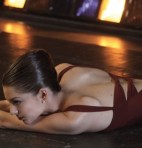
From the French brand Wear Moi, here is a wearable piece of art for your next class or audition. Wear Moi’s Isaline leo brings attention to your back with two lateral knotted strips of tulle to match the stretch tulle front and straps.

This leotard comes in four lovely shades, but its drama seems best suited to the rich maroon or ink black versions. Isaline would pair nicely with a simple black roll-waist knit tight or a matching skirt that won’t take steal attention away from its über-refined and understated details.

Dancewear en l’air: The Sporty Zipper Unitard

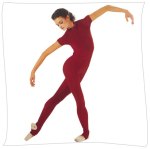
Unitards can be fun for rehearsals and even auditions, especially for contemporary ballet, and Sansha’s mock-neck unitard #503 is a modern change from the usual unembellished tank and long-sleeved versions.

This unitard features a zipper from the neck to right below the bust so you can customize your look. Stirrups at the feet keep the leg lines as long as possible and accentuate pointe shoes particularly well.

Dancewear en l’air: The Figure-Flattering Camisole Leo

Camisole leotards are the most popular leotards on the market, which is why there are so many available – good, bad and ugly. But when you’re searching for a classic, picture-perfect camisole that will flatter every shape, look no further than Mirella’s M210L.

This camisole is beloved by dancers for its shape enhancing princess seams and pinch-front, which together create a classic hour-glass effect. This leotard also comes in nine beautiful shades including Mirella’s unique Seafoam color as shown, which looks great on blondes and fair-skinned ballerinas.

Dancewear en l’air: The Backseamed Pink Tight

Ballet tights in an unflattering shade of pink are one of the CBT’s pet peeves! Choosing a pink that clashes with your pointe shoes or ballet shoes will shorten your lines and just look wrong.

Pinks can vary depending on the amount of blue and yellow in the dye formula. Generally, classical or ballet pink tights look best with the more salmon-y shoes, like Freeds and Capezios, while theatrical pink looks better with truer pinks and paler shoes, like Grishkos and Russian Pointes. You may need to purchase one shade to match your soft shoes and one for pointe.

Non-mesh tights are usually very soft and appear to be a pretty pale pink in the package, but they often look white, yellow or purple once their on. Mesh tights can be almost scratchy sometimes, but usually have better pinks. (Steer clear of Capezio #9 in classical pink, though, it’s famous among dancers for looking bright orange!) A backseam makes alignment checks easier and visually lengthens your lines dramatically.

One of the best ballet tights on the market currently is the Body Wrappers A45, a convertible mesh version with a backseam available in ballet pink and theatrical pink. Its designed to feel super soft against the skin so you’ll get the best of both fabric worlds, and you’ll look polished and professional.

Dancewear en l’air: The Cap-Sleeved Retro Leo

Looking for a leotard that covers without looking dowdy? The Bombshell leotard by Vala has just the right amount of allure without exposing excessive skin.

The Bombshell is great for dancers who prefer to wear a bra in class. The retro neckline covers nicely, and the sultry cut and silky Supplex fabric are anything but boring. Princess seams and shaped inserts enhance your lines and create a gorgeous silhouette. A classic black cap-sleeve leotard looks great in any season, but especially when its done this right.

Bun 101

Does your ballet class hairstyle stand up to the force of chaines and multiple pirouettes? Nothing screams “amateur” like hair and hairpins flying. Oh, the embarrassment of the undone bun! But with just a little effort, you can put those pedestrian days behind you.

I expect students to start doing their own hair for class by around age ten. It can take some time to learn how to master the technique on yourself, but not half as long as you might think – usually a few hours of practice is all it takes. Today, you’ll get the 411 from the CBT on how to master this essential skill for dancers.

The basic bun style begins with a ponytail at the crown of the head. This step has to be done correctly in order for the bun to take shape properly. Use a good brush to sweep the hair evenly and smoothly into the pony. Dampening the hair can make it more manageable. Secure it with an elastic that is not too bulky, which will get in the way of hairpins and cause bumps, nor too flimsy, in which case it will need too many wrap-arounds and may break easily. Try to find elastics that are close in color to your hair. Use a light spray of hairspray (Elnett is a favorite of celebrity stylists and is available in a travel size.) to sleeken your wispies, or wait until the bun is complete and use clips to take care of them. Once the pony is in place, brush the hair in the tail to re-smooth it. DO NOT to coil the hair into a bun and then try to wrap a scrunchie or elastic around the bun … Seriously, just don’t!

The next part is the where it all usually goes wrong – here’s where you twist the ponytail and start to coil it around its base. What makes or breaks this part is whether the bun is kept close to the head with one hand each time the tail is coiled. If you don’t use a hand to secure the bun against the head as its coiled, you’ll end up with a cone-shaped thing that sticks out and looks, well, absurd.

After one full coil is made around the ponytail base, start inserting hairpins horizontally from the outer edge of the coil into the base, every inch or so of the circumference. Make sure to grab a bit of bun hair with each pin and a bit of hair from the scalp beneath the bun. That’s what connects the bun to your head. If you don’t feel a bit of resistance, the hairpin is probably just sitting in the bun and is not connecting anything to anything. As with the elastics, try to find pins that are similar in color to your hair. I find that U-shaped pins work better than “bobby” pins.

When you reach end, tuck the tail in and secure with a hairpin. Remember to secure wispies with clips; clip your bangs too if your studio requires. Voilá, a respectable bun!

Many dancers opt to also wrap a super-fine hairnet, again matched to the hair, around the bun to lock in bun wispies. Hair spray may be all that is needed for some, though others find these steps to be overkill. Whether you choose to do these steps may depend on the culture of your studio and your personal preferences, but both are must-dos for performances and auditions.

The ballerina bun isn’t just one style, it has many variations depending on the height wear the bun is fixed and what is done with the surrounding hair. A bun that sits very high on the head is generally associated with Balanchine technique, and a bun that sits low is often associated with more old-school techniques and, if the surrounding hair covers the ears a bit, with romantic-era ballets.

Once you’ve mastered the basic technique, play around with different configurations to find the style that suits you best. It’s a commonly held belief that the high bun is preferred for auditions, but the truth is that what’s best for auditions is dependant on what style the company or school is and what you feel most comfortable in. For class, its fun to experiment by adding a braid to your hairline, inverting the pony, braiding the pony or accessorizing with ribbons or flowers. There are tons of options out there – go have fun with your bun!

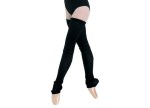
Dancewear en l’air: The Cashmere-Feel Thigh-High Warmers

Legwarmers are an absolute staple for ballet dancers. You can throw them on with practically anything to keep your gams toasty and cozy in a chilly studio, and they come in a wide variety of lengths and fabrics. Perfect for barrework and stretching, the Bloch Francessca W0948 thigh-high style is an ideal option.

The CBT loves the stirrup-free long length of these warmers, which protects you from achilles to quad in a soft acrylic blend while allowing you to accessorize with a skirt or a pair of cute shorts. Or wear them alone for a clean, unencumbered look that your teacher will love.

When Awkward Leos Attack!

I’ll never forget my first ballet class away from home, standing at a barre in the middle of a huge ballroom with strips of marley duct-taped over red and blue carpeting. I’ll also never forget the sheer relief of realizing that the master class teacher’s annoyed comments after the first exercise were not directed to me, but to the dancer next to me who had been yanking her leo up in the front and down in the back incessantly. “Tell your mother to buy you a leotard that fits before you come to another class,” he said with complete seriousness. “If you have to pull it up and pull it down all the time, it doesn’t fit you!”

It had never occurred to me that adjusting a leotard was noticeable, let alone that it could turn into enough of a distraction for a teacher to ban it! We’ve all had That Leotard though … The one that you know will look totally gorgeous, if you can just have another sec to situate it just right …

Just like in street clothes, different cuts are made for different shapes. If you have a leo in your closet that bugs you no end, ask yourself why you are bothering with it? Endless tugging and yanking and wedgie picking – that’s right, I said it! – isn’t only a distraction to your own concentration, it’s annoying to your teachers and can make you seem unprepared and unprofessional. Um, not worth it!

Rest assured, the issue has nothing to do with you or your body. It has everything to do with one simple fact. Are you ready for this revelation?

People come in different shapes!

Shocking, I know. My longer torso was the cause of all my leotard tugging. Certain brands and cuts will never sit right on me – but others look simply fabulous!

Teacher annoyance aside, if you aren’t comfortable in your dance gear, you can’t put your all into your training. Don’t waste your time fussing with an awkward leo. Next time you’re shopping for dance clothes, try on as many different cuts, brands and fabrics as possible until you find what combinations look and feel great – so you can stop thinking about your gear and just focus on your dancing.