 Now that you know what you will perform for your video audition, it’s time to think logistics. When will you record you DVD? How? Who can help you? What if you don’t have a video recorder? What should you wear? What do you do once you have the footage? What should you include in the package with your disk? What else should you know about DVD auditions?
Ok, let’s start at the top…
All schools want to see recent footage taken at or perhaps soon after the time of their audition tour. Check their sites for deadlines. Make sure to record your footage no more than two months prior to the date that you mail your DVDs. Do not splice taping sessions from different days onto one audition DVD, and never try to make edits within a single exercise or splice two versions of an exercise together! I have seen some very embarrassing videos from young dancers who try to fool adjudicators into thinking that they finished an exercise as strongly as they finished it by editing two different tapings of a single exercise together. It is always completely obvious.
A lot of families own a DVD recorder. If your family has one that you are allowed to use, you are a lucky duck. If not, you still have a few options. Check with classmates to see if you can borrow one, or look online for local videographers to see what they charge to make a professional DVD. Even if you do own a DVD recorder, a professional DVD can be easier (since you don’t have to deal with editing) and cleaner looking (since they have excellent editing software and high-resolution recorders) than a do-it-yourself DVD, if you can afford it. Alternatively, and perhaps best, ask your teacher if she has a recorder. Whether she does or doesn’t, ask if she would consider recording you and, as I mentioned in my last post, helping you choreograph and rehearse your audition exercises.
Often, the format of the DVD files are not important, so that an mpeg file from your iPod Nano, for example, might be perfectly sufficient. Resolution is important though – the footage needs to be clear and good quality. If you can play the files on a DVD player or on a computer with basic software, so can they. Just let them know what program or device to use if they will not be able to play it on a DVD player. You can always call ahead to work this out with the school.
You will be expected to dress properly for your video audition. That means you should follow the regular audition dress code guidelines for each school. They will tell you in their video requirements if there are any further attire rules specific to DVD auditions. You can’t really go wrong by wearing your best outfit of black leo, pink tights and pink shoes. Some schools will require you to pin an audition number card to your leotard, and they will tell you how to acquire or print it. [If a printed card is required, print it on the thickest paper you have, cut it down to a proper size (about 6”x7”) and pin it to the front of your leo below your bust with a safety pin at the top and at the bottom.] Wear your hair in a bun or French twist and apply full makeup – just make it a little less dramatic than stage makeup. Do not wear a costume, even if you are performing a variation. Do not include any performance footage for your audition video unless specifically and unmistakably requested by the school.
Most schools receive many DVD auditions, plus they have to review all the live auditionees. Respect your auditioners time by staying safely within the time limit for your DVD audition. If the specs say no more than 10 minutes, don’t decide that your introduction shouldn’t count just so you can fit in an extra 15 seconds of piqué turns. Ten minutes maximum is the most common request by the way, though Ballet Austin Academy, for example, asks for about 15 minutes of material.
Speaking of the introduction, you should either use a short portion of the DVD for a recording zoomed to your face where you state your name, age and city/state, or you should have a text page of this info inserted on a plain background to have up on the screen for a few seconds before your exercises begin. Either way, deduct the time that these items play on the screen from the total time allotted for your DVD so that you won’t go over the time limit.
Also on the subject of taping technique, make sure that a) your full body is visible at all times, b) each individual exercise is recorded in one “take” with no cuts or splices and c) the camera is held very steady so the footage is not shaky. For barre, stay with one perspective (record from directly side or straight on from the front) for each exercise. For center, it’s ok to pan and take a diagonal perspective if necessary as long as your whole body is in the frame at all times. For jumps, be sure that you are zoomed out enough that they can easily see your jump height in relation to the floor. Use a similar zoom setting for exercises that travel across the studio and variations, perhaps starting with a tight full-body zoom and zooming out gradually as you travel across the floor. A good videographer or teacher can help with these decisions. Record a performance of each exercise at least twice to the left and right.
Let me reiterate from Part 1: make sure you read the requirements of each school. Most of them just want a short barre and center and will give you a lot of leeway on the exercises, but there are some outliers. For example, the American Academy of Ballet does not want any barrework on video auditions. Also make sure you look for caveats to video audition acceptance. You don’t want to send in a video to San Francisco Ballet School only to have it rejected because you actually live within a 200 mile radius of one of their audition tour locations, their minimum distance for video audition eligibility.
Once you have your footage all done – including a spoken introduction if you want that instead of text – you’ll need to decide which side (left or right) to show for each of the barre exercises. You want to show your best execution of each one, but you also want some consistency with the format of your video, so you’ll have to decide which grouping of exercises looks best: all to the right, all to the left or alternating right and left evenly. Depending on the requirements of each school, you may have to do the same for the center exercises. Your videographer or teacher can help you select which exercises to include and splice them together in the right order using editing software. If you are sending videos to multiple schools, you might need to make different versions of the video for each one.
Once you DVD is finalized, burn a copy for yourself, a copy for whomever helped you and a copy for the school. Label each disk with your name, the date, your age, you city/state and your phone number. Some schools have a video audition card that you need to print out, complete and attach to the DVD or slip into the disk case. The properly labeled and encased DVD is the first item for your audition package.
The second item for your audition package is your audition fee. Video auditions are often $50 payable by check or money order, considerably more than live auditions.
Third is your paperwork. A video application form needs to be printed and completed for most schools. A few schools require a dance résumé instead of a form. Atlanta Ballet Centre for Dance Education has what they call an Absentee Audition Form – but they ask for a résumé also. I would also recommend a brief cover letter (on a business letter format) introducing yourself, explaining your interest in the school and thanking the adjudicators for reviewing your video audition application package. Once you have your paperwork together, make a complete copy to keep for your own record.
Fourth, you will need to include a few photos. Unfortunately, the schools can vary widely on what they need, more so than when it comes to live auditions. You may have to have quite a few poses photographed. You’ll just have to – you guessed it – refer to each school’s guidelines.
Finally, include an SASE (that’s a self-addressed and stamped envelope, kiddos!) that has enough postage for the weight of your video, unless the school does not wish to return videos.
You are now ready to mail your audition package! Check and double check that you have the proper mailing address for video audition packages, the properly labeled and correctly compiled DVD, the appropriate enclosures. Then, take your package to the local USPS, UPS or FedEx/Kinko’s to have it weighed, stamped, and sent on to its destination by trackable service. Now breathe a sigh of relief and begin your patient wait… Before you know it, you’ll be holding a response envelope in your hands!
 If you haven’t been regularly checking
  A long-sleeved turtleneck leotard can be a lifesaver on wintery days, especially if you have a dress code that does not allow warm-ups. These styles can look a bit plain, however, which is why I love this mesh-inset version,
  There was frost on my windshield this morning down here in the deep South – which means mukluk season is officially upon us! For those of you that aren’t familiar with the comfy, knit foot and calf warmers called mukluks (pronounced muck-lucks or mook-looks, depending on who you ask), these little guys are totally perfect for keeping your feet warm between classes. (But please, please, please do not dance or go on pointe in them!) They a perennial fashion favorite at many
 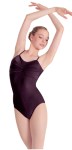 Mirella’s artists are at it again with super pretty options in their Holiday Fashion 2010 and Fall Fashion 2010 collections, which feature fabric knots, belts, corset lacing and pleating. While all the styles are very creative, their are a few definite standouts, including
  You have reviewed the
  This thoughtfully cut leo features criss-crossing panels of fabric that narrow towards the hips making a flattering hourglass effect and creating a small diamond in the center bust. The criss-cross pieces wrap low around the back of the leotard creating a cute hip-skimming accent.
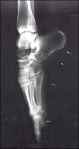 The American Orthopaedic Foot & Ankle Society agrees: pointework is a serious undertaking. They endorse several tried-and-true dancer exercises that you will find enormously impactful for your oh-so-important foot and ankle training to enhance stabilization, strength and articulation. Add these simple, technique-cleansing routines to your regimen today (You’ll thank me later!):
 An 80’s retro top is perfect for dance inspiration, and
  Hello dancers! The Fall/Winter semester is already about half over. Now is a great time to check in on yourself and your training. What’s working for you? Are you making progress in the areas that you need to?
 Let’s beat those Monday blues with some fashion today. If you’re in the mood for a stylistic pick-me-up,
 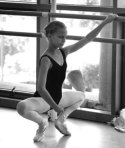 First position, arm in second. Core engaged, neutral pelvis. Long neck, shoulders down. Elbow below shoulder, inside of elbow faces front. Wrist below elbow, inside of hand faces front. Fingers slightly curved, thumb tucked in. Chest open, rib cage closed. Rotate the legs from the hip socket. No rolling in. Energy through your limbs, but don’t grip. Now breathe, smile, look effortless and … grand plié!
 BalletScoop
