Etiquette Shmetiquette?

Does it really matter what your hair looks like in ballet class or if you forget your shoes every once in a while? It’s not like its an audition, right? Um … wrong! Every day you set foot in the studio, you are presenting yourself for potential casting decisions, promotions and recommendations by your teachers.

Most schools have an annual recital, but few hold auditions for stage placement and casting. How do you think those decisions are made? They are made based on the technique, work ethic, attitude and etiquette that you show in class every day to your teachers. Class is of course not the same as an audition – it should be seen as a safe place where you can explore and expand your dance vocabulary, take chances and feel comfortable asking questions. But it is important that in daily class you hold yourself to a high standard not only when it comes to your dedication and technical work, but also how you present yourself in general. So what does that mean exactly?

Simply put, you never want to detract from the 110% effort you put into your technique (which I assume you are putting in!) by coming across as lazy, rude or irresponsible. A teacher will have a hard time promoting or recommending any student if the student is technically proficient but simply not up to par when it comes to grooming, manners or dress code. Showing that you are on top of these things can help show that you are ready to take on more, which can solidify a level promotion or lead to an important new understudy role, an assistant teacher position or even a lead role – but I guarantee this works the opposite way as well. (If you read my recent post on promotion to pointe class, you know just how directly it can affect level promotion!)

Setting a personal standard for yourself for class time can be tough sometimes – Remember that you are in total control of it. Especially at an advanced level, it’s easy to get comfortable and start believing that you have earned the right to wear your PJs to class or throw your hair up haphazardly, but I promise this will always detract from your hard work.

In the future, I’ll post on specific things you can do to manage the impression you make and to present yourself in the best light possible. Stay tuned for the details on how to master the hairstyles, look your best in your leos and impress with your professionalism.
Back to Ballet Class

Fall is nearly here – Are you ready physically and mentally to get back to dance class? Here is some excellent advice by venerated classical ballet teacher Victoria Leigh on how to digest your summer training, set goals and prepare yourself to be at the top of your game this fall.

Batman Tandoo? You mean Battement Tendu!

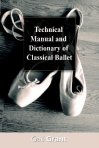
Ever wanted to write, better pronounce, or better understand a term in ballet? Then you must grab yourself a copy of Gail Grant’s Technical Manual & Dictionary of Classical Ballet. This small book is an absolute must-have for anyone interested ballet professionally or for college.
Considered in the dance world to unquestionably be the best reference for ballet terms, this little tome is fairly inexpensive (just about $10 in the listing on Amazon) and is simply an A-Z reference for virtually every ballet term used or in use.

Part of what makes the Gail Grant Dictionary such a standby is its inclusion and cross-reference of terminology across ballet techniques. For instance, if you go to a summer intensive and hear the word raccourci, looking it up in Grant’s Dictionary would tell you that it is as a term of the French School. The definition then cross-references you to the Russian term retiré, so you will learn the interchangeability of the terms. (I’m sure you know that ballet originated in France and was exported to other countries where it further evolved. Thus the development of varying techniques from the Italians, the Danes, the Russians, the Americans and the Cubans. These have all made their way to the United States. With so many techniques here, it is common to hear different terms from different teachers, even within the same school.) You would also learn that it means shortened – referring to the bend at the knee which “shortens” the leg – because this position is actually a variation on a développé a lá seconde!

If you are looking for books to support your training and develop you into a knowledgeable dancer, Gail Grant’s Dictionary just can’t be beat. There are quite a few other books that are invaluable for dancers, but you’ll find that this one stands firm at the top of the list for professional dancers, serious students and seasoned teachers.

When Can I Go on Pointe, CBT?

Every beginning female ballet dancer dreams of going on pointe, but that dreamy day can and will be ruined by pain and injury if you are not prepared. I don’t want to scare you but I have witnessed the pain and frustration of an ill-prepared beginner pointe student! It is far more difficult to overcome poor pointe technique resulting from ill-preparedness than to simply wait until the dancer’s strength and technique are ready.

It is your ballet teacher’s job to know from experience and education when his or her students are ready, but surprisingly few ballet teachers actually share that information with their students. There can be many reasons for this. Some teachers are concerned that if they explain the details of why, students and parents will be encouraged to argue about whether their daughter fits the parameters. Other teachers like to encourage a certain mystique about the whole affair (though they’d never admit this), thus generating further suspense and excitement for the students and parents and securing the teacher’s perceived status as a guru of super secret sacred ballet info.

I do not subscribe to either of these philosophies. In fact, I believe that transparency in these matters is vital for the dancer’s education! It is with that in mind that I share with you my guidelines for pointe preparedness. Mind you, these are not hard and fast rules, and it does take the teacher’s expertise to know if the dancer has actually met a given requirement. So without further ado:

  1. A student must be 11 years minimum to allow proper bone ossification. When children are young, the growth plates are soft, and repetition of improper technique in something as strenuous as pointe can deform the feet and body in short order. It is common for dancers to have to wait until they are 12 or older so their technique and bones can strengthen.
  2. A student must have at least 2 consecutive years of quality training immediately prior to promotion. Length of training is not an estimation of pointe readiness, however.
  3. A student must be in good health and able to take a whole class. This includes being of healthy weight. If the student frequently needs to rest because of illness or injury, she is not strong enough for the extra demands of pointe work.
  4. A student must consistently take a minimum of two classical ballet technique classes a week. Daily class is preferred and necessary for students training for ballet as a profession. Class frequency makes a significant difference in development.
  5. A student must pay attention in class and work well. Going on pointe is a big step and requires commitment on the part of the student.
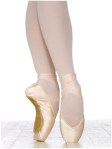
  6. A student must be responsible enough to bring all the gear she will need to class. Pointe shoes require extra care and accessories.
  7. A student must habitually use her core muscles properly and have a strong, proper posture while dancing and standing. Pointe requires that the student use the muscles in her torso, legs and feet to stand en pointe and not use the shoes as a crutch. Core weakness will throw the student off balance and will make it difficult to dance.
  8. A student must use correct plié while dancing and exhibit supple calf and leg muscles.
  9. A student must hold turnout from the hip while dancing. Turnout makes it possible to do steps that could not otherwise be done. If the student does not maintain their turnout, they are not strong enough for pointe.
  10. A student must keep the heels forward. (No sickling, a sure sign of improper technique.) The most stable position for pointe work is to have the weight slightly forward between the big and second toes. Improper center will make it more difficult to stay en pointe, and will increase the chances of strain and injury.
  11. A student must point the whole foot from the ankle and instep with toes pointed but long while dancing. These muscles need to be strong enough to support the body weight. If the student is not in the habit of articulating the foot muscles properly, they will not be able to support themselves en pointe.
  12. A student must have enough of an arched instep to stand on pointe. Dancers with very high arches often have weak alignment or weak muscles that they must first master.
  13. A student must execute properly 16 relevés in the center without stopping and 8 at the barre on one leg without stopping, right and left. There should be no pumping action through the upper body during this execution. Strength for pointe work is achieved by repeating exercises. Relevés are excellent for building calf and leg strength, which is vital for pointe. If foot and leg strength is an issue, Theraband exercises can improve this deficiency.
  14. A student must pique passé/retiré with straight leg and proper alignment. Student should have enough strength to push themselves onto half-pointe. This step is harder to do en pointe and a bent leg is a sign of weakness or improper step preparation.
  15. A student must hold a retiré balance on half-pointe. The student should be well-placed (hips square, back straight, legs turned-out), and have the strength to balance on half-pointe. This pose is more difficult to correct en pointe, as the surface area for balancing is smaller and the turnout strength requirements are greater.

Most syllabi dictate that working properly in ballet class is sufficient preparation for pointework. As mentioned above, special exercises may be prescribed to help the dancer who is behind her classmates. Some schools devote whole classes to this preparation, called Pre-Pointe. There are varying philosophies on its appropriateness  – but that is a topic for another day!

College Bound Ballerina

You’re in high school, you love dancing, but you want to have a solid back-up plan in case you can’t make it your career. The CBT commends you on your smart thinking, especially in this economy!

If you want to dance in college, where do you start? If only there was one place where you could check out dance programs side by side to compare what they have to offer … especially when it comes to scholarships. Well, there is! Click over to www.DanceU101.com for an easy to use and comprehensive searchable database of college dance programs.

Have your cake and eat it, too – dancing in college can help make both you and your parents very happy: You can double major to get that business degree your parents want you to have and dance yourself to a BFA (that’s a Bachelor of Fine Arts, kiddos) so you don’t have to give up your passion. And in the words of Mr. Balanchine: “If you work really hard and say your prayers” – you might just land a scholarship to boot. Won’t that please the parents?