 Whether it’s alphabet soup – SAB, ABT-JKO, SFB, PNB, BBS – or one-name-celebrity-style – Kaatsban, Joffrey, Rock – major U.S.-based ballet schools often attract young auditionees by their name alone. But what is the actual worth of attending a big-name school? Will it help in your chances to dance professionally? Let’s do a reality check.
The most common misperception about ballet training that I encounter is the idea that attending at a “big-name” school will make or break whether the dancer will be able to secure a professional contract. This is simply not the case. But in order to understand why this is and what can make attending a famous school good, you first need to understand the process of auditioning for a professional ballet company.
The primary concern of most artistic directors when auditioning potential company members is the auditionees dancing ability, plain and simple. For serious consideration for a company position, you will usually need to get invited to a closed audition or a company class. The first step is to send an audition tape package, which may be very similar to an SI audition package, or to attend an open call. Whether you attend a cattle-call (open call) or send a DVD, the primary focus of the initial cut is your dance ability. More often than not, your résumé will just get a quick glance or perhaps not be reviewed at all before that cut.
Once you have auditioned live and in person, the AD (or more likely, the ballet master or mistress), will choose who they would like to speak to or see again. It is usually at this point that only those résumés will be reviewed with any real attention. What’s important to realize from this process is that the résumé is not something you want to count on for getting your foot in the door. The chances of it getting more than a passing glance in the initial stages are very, very small. (That said, your résumé is still an extremely important part of your audition package that should be planned carefully.)
 So what’s the point of attending an expensive, famous school in a far-away city if it can’t guarantee you a job – or at least an audition? As you hopefully realized from the audition description, this is all about your dance ability. A high level of technique, artistry and quality of movement are what artistic directors want to see – and a big-name school just might get you there… or it might not.
You see, elite ballet schools across the country, whether big or small, have individualized strengths, features and areas of focus. One school might have small, mostly classical classes that focus on artistry and expression, while another school might have large classes where competition for attention and an apititude in a wide range of dance genres are required. A shy dancer that dreams of performing classic story ballets may not thrive at all in the latter school, but could potentially blossom and find her full potential in the former. The opposite might be true for an outgoing, naturally expressive dancer who is interested in exploring contemporary ballet or mixed-rep ballet companies.
Do you see where I’m going with this? It’s not at all about the name, it’s about the quality of instruction and finding the learning environment that will best accellerate your dance abilities. What you need at the end of the day is not some mythically ideal resume, it’s an ability to perform in class, auditions and on the stage very, very well. And the school that is going to help you do that is the school you should want to attend, regardless of how recognizable their name is.
In fact, name-recognition can and does prevent some young dancers from getting the best possible dance education. I’ve unfortunately seen more than one student pass on opportunities to train at smaller schools with great reputations for personal mentoring and instead jump on offers at glossy, national-level SIs or satellites. Sadly, these students quickly got lost in the crowd and came home challenged, but not as improved and inspired as they should have been.
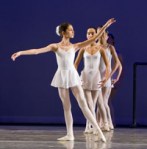 There is another important caveat about the largest schools that is important to take into calculation. Whether intentionally or not, they will often take credit for a beautifully trained dancer who they did not truly create. That happens most often when an advanced dancer from a small-town school goes to a major school for a final year of finishing. (Remember Center Stage?) In these cases, the bigger school might indeed transform the dancer from a student into an artist (which the smaller school perhaps could not) but usually have nothing to do with the meat and potatoes of the dancer’s training. Recognizable names attract lots of auditionees, so that some schools are able to recruit dancers that are virtually fully trained and place them in their highest levels. (This is also a great testament to the quality of many smaller schools across the U.S.) Ask yourself how many of the advanced dancers were actually trained by the school’s lower classes.
Finally, for company schools, be sure you are not improperly associating the reputation of an affiliated company to the school. Certain companies only rarely hire from their own school, so that the company could be a completely unrelated picture of the school’s capabilities. You should also consider that a regional company’s school might provide more realistic opportunity for future employment than a national one.
Should all famous schools be avoided as expensive wastes of time? Of course not! Well-known schools have the very important benefit of attracting the very, very best staff. What’s important, though, is to take into consideration the many other factors that are important for good training. There are definitely U.S. schools that have built their huge reputations by simply offering only the highest quality training, however you still must be aware that not all programs are right for all dancers. Think carefully about what you need as a dancer, and then find out where to get it!
 A new documentary is in the works from Rhee Gold of The Gold School. This six-part series, titled
  Trienawear’s Extensions collection is known for it’s super supportive, all-around shelf bra and pretty satin elastic trim. For fuller-busted dancers, this collection is a dream come true. A particularly flattering cut in the Extensions collection is
  Unless you’re regularly receiving full scholarships for your dance tuition and sponsorships for your dance gear and other expenses, you may have heard your parents grumble more than once about the high cost of paying for your ballet (or jazz, or contemporary …). There are lessons, shoes, practice clothes, travel expenses, costumes and many other items to pay for in order to keep you in training.
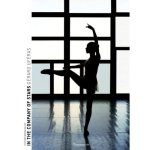 In this lavish 125-photo collection, Gérard Uféras takes the reader on a journey to observe the spectacular beauty of the ubiquitious Opéra Garnier and the intimate world of the Paris Opera Ballet dancers. Uféras spent a year observing the POB, and
  Have you been accepted to more than one SI? Congratulations! If your parents are considering allowing you to attend but you (or your parents!) are feeling clueless about how to choose one, read on to hear how to find your best summer training experience.
 Dancing in a great college program gives you the opportunity to refine your dancing to a professional level through one major while preparing for a “back-up” career with a second major – or to continue doing what you love while pursuing your academics. But as a student making plans for
  Dance Teacher Magazine is seeking student submissions for their 2011 Dance Teacher Awards. Exceptional teachers may be honored by a Dance Teacher Award at the 2011 Dance Teacher Summit! Click
  A brand new series will soon be presented by Dance(212)! And this time they’ll be focusing exclusively on ballet students’ summer intensive experiences. Check out the preview
 To pair with the
  Looking for something new and fun to wear for rehearsals and auditions? Check out
  BalletScoop