Ballet in Film: Dance Academy

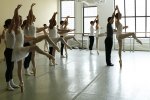
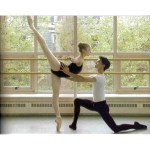
If you liked Center Stage, you’ll love the Australian series Dance Academy, which follows heroine Tara Webster (Xenia Goodwin) from her rural home to the fictional National Academy of Dance in Sydney. In each episode, Tara faces (mostly) believable challenges as she pursues her dream of becoming a principal ballet dancer. A former big fish in a small pond, she discovers quickly that her fantasies about life at the Academy must be discarded as the realities of intense competition and a higher standard become part of her daily life. She and her newfound friends – and frenemies – together manage the challenges of the Academy and the complexities of teen life with humor and, often, guts.

This is a must-see show for any aspiring dancer. The dance scenes are choreographed well and in a variety of styles, the characters are enveloping and the costuming is great. It’s slightly bubblegum feel keeps the show fun when topics get heavy. The downright addictive Season 1 (trailer below) has concluded but can be purchased at the ABC shop. Season 2 starts in December.

Is My Class Schedule Pre-Professional?

The word “pre-professional” is thrown around a lot. I mean a lot. There are a huge range of schools in the U.S. that use the word in their advertisements – sometimes when it shouldn’t be.  What does it really mean to be pre-professional? And what is a solid schedule for a pre-professional dancer?

First let’s define this somewhat over-used word. Pre-professional is used to describe dancers who are training specifically for a professional dance career. Pre-professional training programs are designed for dancers who show promise for professional careers. Admittance is typically by audition and these dancers are trained separately from those who train recreationally so that the classes can keep an accelerated or advanced pace. Pre-pro training is also sometimes called vocational training.

So how many classes are enough? How much is too much? Friends, there are many paths to Rome. I am going to lay out for you an ideal progression with an eye towards the female dancer with an above-average natural facility, but there are exceptions to every rule. If you read this and find you are not where you should be, think about what you want to change – and then figure out how to get there! I started late myself by many standards and in a small town. First I had to catch up to those my age, and sometimes I had to piece together a good schedule from multiple schools. Very often it’s up to you to make it happen!

It all begins with the first dance class (after finding a the right school of course!) There are varying philosophies on the age for starting ballet class. Personally I believe that the earliest age for ballet should be seven. In Russia, the national schools accept students for formal training at around ten. Whether starting at seven or ten, by the age of eleven pre-pro students may be taking daily ballet classes. Pilates, Gyrotonics, or another strength and conditioning program can begin at this age too. When I say daily ballet though… I don’t actually mean every day,  I mean six days per week. No dancer should train seven days per week – the body requires a day of rest to rebuild and recover the muscles!

By age 12, well-trained and naturally apt girls should be ready for weekly or bi-weekly pointe training. As a part of an advancing curriculum, character dance is a terrific add-on in this year for beginning to train in expression, acting and a bit of dance history in a different classical dance form. Hours should range between 9-12 per week. Also at this point, it is time to start auditioning for summer intensives. This will help students to get their faces further out in the dance world, network and explore other schools and potential companies.

With the beginner year of pointe behind her, a dancer at thirteen is ready for more classes and more challenge! Pointe should be studied 2-3 times a week now, always split across the week as evenly as possible. (Guys will often start strength training for partnering at this point.) Also the addition of newer dance forms like modern, jazz and hip-hop are great. The body should be technically ready to build off a solid classical base, and adding non-classical forms of dance as early as possible after that foundation is prepared will ensure that you become a much more versatile dancer. (Some extremely traditional teachers believe these classes are at best a waste of time and at worst harmful to classical training. I disagree with that very much.) A typical schedule at this level would be 12-16 hours per week.

By fourteen on this path, training can take 15-18 hours of classes per week. Girls should continue to work towards daily pointe classes by upping their schedule to 3 or 4 pointe classes per week. Increased mental maturity means that variations and repertoire classes can be added to the mix. These classes can be some of the most valuable for a dancer with her eye on a career in ballet. The choreography learned in variations and rep classes often follows a dancer for the rest of her career!

At fifteen, it is time for daily pointe classes… and pas de deux! (Many European schools begin partnering in early character classes and some U.S. school begin as young as 13, but typical U.S. training and also culture makes 15 a better choice here.) Twice weekly is great for pas classes, but weekly is certainly fine. A dancer at this stage should be training for about 20-25 hours a week.

In the last two years of training, cross-training might be introduced. (Think cardio and special exercises done during the dancer’s free time.) Training hours should increase to 24-30 per week. At the same time, performance opportunities should increase as technique becomes more established and artistry takes increasing focus. If you’ve been keeping track, our theoretical dancer now takes daily ballet class, daily pointe class, partnering, character, modern, jazz, hip-hop, variations or rep and a conditioning class – This translates to three to four classes per day, six days per week! And that’s not counting rehearsals (which don’t count towards technique training, in case you’re analyzing your own schedule), which would then be added on at the end of the day. I’m sure you can see why preparing for a professional career is considered such a serious commitment.

Now you’ve got a full-cycle layout of a training load for a pre-professional dancer. Does it sound exciting and wonderful? Or exhausting? Not everyone knows from the start if they want to pursue dance as a career. We can’t all be like Susan Jaffe, who dreamed about being a dancer and was sure from that day on! But if you are considering it, it’s really valuable to know what pre-professional training is like. Not only can you take a look at how much your would-be future competition is training, you can analyze whether you are getting what you need yet… and whether you want it at all!

Ballet Shoe Review: Body Wrappers A45 “Wendy”

Dancers are always looking for a reliable ballet shoes that will show clean lines and provides optimum comfort. The Body Wrappers A45 Wendy is a good start and tries to incorporate a lot of good new ideas, but overall it missed the mark for me.

The last, constructed of what they called TotalStretch canvas, was not as supple and comfortable to me as I had hoped but instead seemed just average. Which is fine, but I’m not sure why they marketed it as special. They say that it “supports and protects muscles.” While they did line it with a thin foam, I wish they provided info on what they are basing that claim on. They also claim to be antibacterial, which I do really like and I’m guessing was achieved by incoporating a chemical treatment to the fabric.

The last is curved for a right and left fit. The peachy pink color matched BW’s theatrical pink tights pretty well. It’s a prettier color than a lot of other brands have created. I liked how that extended the line, but they were still too light a pink to keep from looking gray after a few classes got them dirty.

I found the elastic drawstring to be a bit too thin, made thinner by its own stretchiness. I am not a fan of elastic drawstrings because they never seem strong enough to actually do anything. (Not that I love cotton either, considering that they offer almost no give – can’t we have a happy medium?) The problem was the same here. I did like the “lingerie elastic” binding and found that part really soft and pretty – it has a hint of shimmer to it. It did get a little fuzzy and frayed in the course of normal use.

My main gripe with these shoes had nothing to do with these superficial issues though and everything to do with the foam-padded heel. I love a shoe that incorporates impact absorption, but this heel pad was a huge impediment to proper fit of the shoe. It seems that BW did not calculate properly for the additional fabric at the heel that would be needed to include the heel pad, so the heel sat about an eighth of an inch below where is should – perfectly placed to irritate the Achilles tendons as much as possible and cause the shoe to come off the heel during jumps. This is just a terrible construction issue. What are the two main things a shoe must do? Stay on the foot and allow proper movement. Because of the poorly thought-out construction of this shoe, it could do neither. Tightening the drawstring only worsened the irritation and loosening the drawstring at all meant the shoe would pop off even more easily. Ironically, the packaging instructs that the shoes fit so well that most dancers won’t even need elastics.

All of this said, if you are a dancer who needs a lower heel – and I know there are plenty of you out there! – this might be the ideal shoe for you. Body Wrappers certainly had some great ideas, and I look forward to checking out their next try. I will continue to post reviews of the many shoes I have worn. Have you tried the Body Wrappers A45 Wendy shoe? What did you think?

Dear CBT: Does No Scholarship Now = No Contract Later?

If a student is accepted into the last two years of a selective company school without a scholarship, is she less likely than those who did get scholarships to be considered for the company? Is it more likely that she will mostly serve to benefit the school as a paying student? Or will she be considered to have equal potential for entrance into the company or second company?

I have been warned that only scholarship recipients move up into the company past graduation from these prestigious schools and have noted that most biographies of company dancers list their scholarship wins. My daughter was not present for the summer session that would have made her eligible for a scholarship. She was offered a scholarship for two consecutive years at another program but did not attend.

How important are acquiring scholarships and making it to the YAGP finals for determining whether a company will seriously consider a student at their school for their company? If these accolades are not in place, will the student be overlooked for advancement, no matter how hard she tries??

Thanks,

– Concerned Mom of a Determined Dancer

Dear Concerned Mom,

The short answer is: No, going to a company school without a scholarship or competition placement does not generally affect a student’s chances for employment overall. And here’s the longer answer! –

Scholarships are only one indicator of a school’s interest in developing a student and their belief in her potential at that specific point in time. We cannot extrapolate that out to years in advance because future events depend on the student’s continued development. Students who are expected to do great things will sometimes disappoint, and students who seem average sometimes work their tails off and take the lead. While many pros list scholarships, many do not. Finally, artistic direction can change in a heartbeat, leaving former favorites looking elsewhere for jobs.

YAGP and the various IBCs are a subject onto themselves. There is an endless amount of debate on their worth. Suffice it to say that they are one method that is great for particular types of dancers in particular situations (Vague enough for you? I’ll do a post on sometime to explain.), but a huge segment of the professionals did not participate in those competitions during their training.

Accolades like these indicate how the student performed during a snapshot in time. Certainly, those that succeed habitually tend to continue to succeed – that is why you see so many pros with such records. But these are not prerequisites to a good career, just indicators of possible career potential. Scholarship or YAGP placement or not, a dancer must continue to work hard, show her worth and improve. At the conclusion of training, the directors will decide whether the dancer should enter the company based on her capabilities at that time. I have cautioned people before that scholarships are great indicators of a school’s enhanced interest and the projected potential of a student at a particular moment in time – but they are far from a guarantee of anything. The same goes for the your situation. Getting into a top school without a scholarship (which is great on its own, by the way, and still show interest), is a valuable opportunity.

Not getting a scholarship has no bearing on whether a dancer will be accepted into the company. Grimly perhaps, all students are facing those slim odds from an equal standing. What matters at the end of the training road is: Is the dancer fully prepared to give the current artistic director what the AD wants and needs in a performer at the same time that a contract spot is available?

Summer Training: Workshop, Intensive or Camp?

Summer programs come in many varieties for all sorts of dancers, but they can usually be categorized as one of three types: intensive, workshop or camp. What defines each? Let’s take a look at each type of  program.

  • Camps – Dance camps usually accept a range of abilites and experience levels and offer classes geared less to professional aspirants and more to those interested in dance to expand their life experience and for the sheer joy of it. The focus is usually on improving technique with a few classes a day while leaving time for lots of fun activities and events for socializing and enjoying the summer. These programs can be as short as one week or as long as all summer. Examples of dance camps include Just for Kix Summer Dance Camps, Brant Lake Dance Camp and American Dance Training Camps.
  • Workshops -Workshops can have the same daily intensity as intensives, but they usually last just 1-2 weeks. Workshops often take place in university settings, regional schools or as add-ons to summer intensives. For commerical dancers and students working towards high-level versatility, putting together a workshop tour of multiple programs that span the summer is a great tool for training. Some workshops are dedicated exclusively to younger dancers or for choreographic experimentation. Examples of workshops include the Broadway Dance Center Summer Workshop Series, the Florida State University Summer Intensive Dance Workshop, the Regional Dance America National Choreography Intensive and the School of American Ballet’s Los Angeles Workshop for Young Dancers.
  • Intensives – Summer intensives (or SIs for short) are designed for professionally-oriented students and generally consist of 4-6 weeks of all-day lessons. They can be competitive and are usually associated with professional companies or residency conservatories. SIs may be based off of regional, national or international programs. Examples are the Boston Ballet School Summer Dance Program, the University of North Carolina Summer Intensive, the Harid Conservatory Summer School and the School of American Ballet Summer Course.

Any of these types of summer programs may offer guest teachers for a few days or weeks out of the program. If you are looking for an intensive, notice that the presence of the word “intensive” does not necessarily mean that the program falls within the above guidelines. On the other hand, true intensive programs may choose not to use the word “intensive” in their title. Take the time to look closely at the daily schedule, faculty and duration of each program to decide where each program falls.

How can you decide what type is right for you? That depends on many factors, including your available funds and scholarships, your dance goals and the specifics of the program’s training schedule and faculty. Make a list and consider your realistic goals and desires in dance. At the higher levels, an audition will certainly be in order, which could possibly limit your options.

Don’t assume that higher level programs are beyond your reach financially – I’ve seen many high quality intensives that cost the same as some smaller workshops. But note that the quality of one is not necessarily higher than the other based on cost, size or other single factors.

There are tons of options out there, and I’m sure you already have ideas about what’s ideal for you. If you’re heading to a summer program right now, think about your experience so you can decide if the program worked well for you. Think about what you want next year. There are tons of options out there, and there really is something for everyone. You have the power of choice, so exercise it!

Prepping for Summer Partnering

Partnering in ballet is one of the most exciting classes for many students – but it can be a little intimidating for sure. Students in local schools often find that their partnering opportunities are limited to conventions, rehearsals for specific shows and summer programs. For students seriously interested in ballet who do not have much access to partnering during the year, I encourage attendance at an SI where it’s offered three times per week or daily. (Some otherwise good programs offer it only once or twice a week – or not at all.) When its time to actually take the classes though, the initial excitement may morph into anxiety. What will pas de deux work be like? What if I mess up or can’t do what is asked? What if I don’t like my partner or he doesn’t like me? What if I do like him?

I promise you that you’re not the only one who feels this way. At many SIs, the majority of female dancers you are with will not have much partnering experience. And trust me, the guys are nervous too – they feel a lot of pressure to “be there” for the girls, and the less experienced ones may be very intimidated by those high expectations. Not to mention that they too have worries about getting steps right and getting along with their partners. Everyone is feeling pressure and nerves, but good pas teachers will do a few things to ease the tension for both sides.

First off, the pairing up will start the class. As you get more advanced, teachers may ask students to pair up on their own, but in the beginning and intermediate levels, the accepted practice is to line up the men and women separately by height and set pairs that match in stature. Some men may be asked to take more than one partner and execute each combination once for each girl. Partnerships might be set for the day, the week or the whole summer program.

In order to get the students comfortable with each other and to ease the tension, the teacher will usually start off with some very basic and often fun trust exercises. (This may be the case even with more advanced classes who are working with new partners.) These should also help both the women and the men feel comfortable with where the guy’s hands will be on the girl’s torso and extremeties. This is often done in a humorous, fun way, and you’ll have an opportunity to get to know each other better, experiment with the exercises and laugh-away some of that initial awkwardness.

From there, exercises will progress slowly with some basic hand-held walks and supported bourees. You might feel like these exercises are not what you came for, but as they say: you have to walk before you can run -or be spun and lifted! So don’t be dissappointed if you aren’t whirled around above the guys head in the first 15 minutes. Trust me that you will greatly benefit from mastering these nuanced exercises. And I think you’ll find that holding an audience rapt while gracefully walking across the stage and maintaining a connection with your partner is much harder than it looks.

Combinations will gradually add difficulty, with supported bourrees becoming preparations for supported pirouettes. Walking hand in hand across the floor may evolve into walking into a supported pique arabesque, which may in turn become a supported promenade. Jumps will start with basic entrechats in place and develop into well-coordinated lifts with running preparations. Before you know it, you will be pulling off multiple pirouettes, finger turns and a variety of fun, basic lifts. All in a day’s work for a dancer, right? By the end of the summer, you may be able to try your hand at some more intricate combinations and harder lifts or perhaps a small piece of classical grand pas choreography.

Dance Spirit recently published an excellent article with a collection of the best tips for partnering newbies from established principal dancers. I am loving this article because it gets down to the nitty-gritty of exactly what it’s like to deal with real-life partnering complications like accidentally hitting your partner and the difficulty of attempting to act as if you’re in love with a guy you barely know! Even many advanced students could stand to learn something from reading it; I remember a lot of women in my advanced classes who just loved to wear those tie-skirts with the ribbons out – not a good idea. So check it out for more details on what partnering class are really like and lots of do’s and don’t’s so you can be totally prepared, calm and collected when you get paired with that cute guy from Iowa for the summer!

Ballet in Print: The Dancer’s Book of Ballet Crafts

Summer is here! And with it long days of sleeping in, outdoor activities and barbecues – at least until summer dance classes begin. What better way to entertain yourself whether hanging out at home or in the dorms at an SI than with a packed book of ballet-specific crafts. The Dancer’s Book of Ballet Crafts: Dancewear, Accessories and Keepsakes is a lovely book including upwards of 30 projects for budding ballerinas to enjoy. (Click the link above and view the table of contents for the full list of projects.)

Projects in this book are cleverly divided by dance use, like warm-up, rehearsal and performance. Famed dance photographer Rosalie O’Conner lends her expertise to photos of student models from Stanford Ballet, School of American Ballet and Manhattan Youth Ballet that pose with the craft creations. Inspiring ballet facts and quotes accentuate the pages.

From ballet warm-ups to tiaras, this book contains not only step-by-step instructions for a range of projects from beginner to advanced, but also space for scrapbooking and journaling, making it the perfect place to entertain yourself, get inspired and keep track of your summer ballet adventure all in one place!

Follow Me!

That’s right, birdies, you can now follow me for musings, posts and all the ballerina-in-training news that’s fit to tweet! Check out the instant feed at right and click the “Follow Me” button below it to get in the loop.

As always, thanks for reading!!

BalletScoop Visits Dance Advantage for a Guest Article!

If you aren’t familiar with Dance Advantage, you are in for a treat today. I just contributed a teacher’s article to DA about my favorite ballet movies – I hope you’ll check it out!

Nichelle Strzepek makes sure to keep great dance articles coming at Dance Advantage. There’s something for everyone – teachers, choreographers, students and professionals. Click around while you’re there and you’ll find technique tips, dance history, dance news, dance games and way more for students. I always keep a link to this great site on my blogroll for you guys. Enjoy!

Dear CBT: How to Fix Popping Hips?

Dear CBT,

I used to dance. When I was about thirteen I got less serious, and I quit at fourteen. I am sixteen now and getting back into ballet, and an old problem I had is still around and annoying me.

When I extend my leg to the front, there is a point at which my hip will pop. It is not a subtle pop, but one that can make my leg shake and jar me out of alignment slightly for a split second. It’s not violent, but it isn’t gentle. (It doesn’t hurt, it just feels like stuff is getting rearranged. The pop is mostly felt from underneath but isn’t quite in the butt.)

I don’t remember having this problem when I was young and my hips were narrow, so I somewhat suspect that this has to do with the different angle after my hips widened, if that makes any difference. I don’t know if I should be stretching, strengthening, or both, or how to get at the muscles most effectively.

All I do now is sit on the floor with “butterfly legs,” lean forward with a straight back, and slowly straighten my knees while trying to delay the pop as long as I can. The right leg always goes first. I can get it to about half a demi plié’s worth of bend with effort, but just beyond that there is a pop.

What should I be doing to minimize this problem? It’s distracting and uncomfortable, and I feel like it inhibits extension that my flexibility would otherwise allow.

Thanks for your time. 🙂

– Snap, Crackle, Pop

Dear Snap,

I answered this question a while back in email, but I am posting a modified response now due to a recent increase in very similar questions. Hip popping is all too common in dancers. It is usually related to technique problems and overcompensation for a technical weakness through improper placement or alignment. Most of the cases I’ve seen have been tendon rolling over bone. Untreated, it can go from painless annoyance to painful, inflammed hindrance.

The most common diagnosis for this issue is “snapping hip syndrome”, which usually refers to popping on the outside of the leg when the iliotibial (IT) band snaps over the greater trochanter. Massaging the length of the IT band with a foam roller, careful stretching and (if needed) physical therapy can usually correct this problem. I personally battle with this issue, though it goes away when I care for it how I am supposed to!

Hips are complex systems, and sometimes snapping occurs at the front or, as in this case, behind the hip. Again massage and careful stretching can assist by releasing nerve and myofacial tension, though CAUTION must be taken not to massage the direct front portion of the hip without professional assistance, as this area can be very delicate and may be seriously harmed with improper pressure!

Clicking underneath or at the back of the hip to me indicates a possibly more serious issue, as this would imply development of a disability deeper within the hip socket, not around the outside of it. Forcing turnout could cause this sort of issue. In order to better understand these and other variations of hip popping, please read through these articles:

http://dancers.invisionzone.com/index.php?showtopic=22506.

http://www.theballetblog.com/q-a-a/newsletters/117-is-it-normal-for-a-dancers-body-to-crack-and-pop.html

http://blog.thebodyseries.com/uncategorized/16-dancing-smart-newsletter-62008

http://blog.thebodyseries.com/hips-knees/3-dancing-smart-newsletter-122807

http://blog.thebodyseries.com/uncategorized/462-snapping-at-hip

http://blog.thebodyseries.com/hips-knees/379-hip-pops-sounds-of-trouble

http://blog.thebodyseries.com/hips-knees/14-14

I recommend that you also have this page of anatomy handy in order to better understand the info:

http://students.clinicalbodyworkers.com/students/frame_page/muscle_chapter_3_hips.htm

Bottom line, I definitely recommend that you get a professional medical opinion on this from someone that has dealt with dancers before so they can determine exactly what movements are contributing and what technique problems you have that are encouraging the problem. Also, make your teacher fully aware of the issue. S/he should be able to work with you and your doctor to spot alignment and technique issues that may be contributing and help determine whether there is some greater anatomical problem.

Above all, listen to your body. These clicks and pops are direct feedback that your body is being harmed. Please don’t wait until your are in pain to figure out how to stop a damaging progression.
Inspirations for Late Beginners

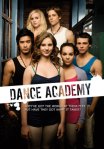
Good teachers are careful to caution teen beginners and young dancers generally on the harsher realities of professional prospects combined with beginning “late”, as we very well should. But today I’d like to spend a moment to highlight some great late-beginner success stories of our day. (Female dancers often encounter a higher standard of technique in the professional world and require more years of preparation than men, so we’ll focus on ballerinas here. Also, when you read that a dancer began “formal” or “serious” training at a certain age, that usually indicates that they took recreational dance classes before that.)

Recently highlighted on Dancing With the Stars (a show that recently has recently done a nice job promoting classical dance and its relevance to modern entertainment), Patricia Zhou began serious dance training at about 13 years old. Now 17, Ms. Zhou has made a splash in the international competitions and climbed all the way to the professional ranks of her dream company, The Royal Ballet. Her extraordinary gifts coupled with dedication, hard work and luck have catapulted her into a world that her parents would have had her forego for academics, making the Zhou a testament to passion and perserverance. Enjoy this clip of her on national television:
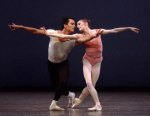
Kristi Boone, soloist with ABT, also began at thirteen. She had natural facility for ballet’s demands and talks about her first experiences in this ad for Gaynor Minden.

Superstar principal of New York City Ballet Wendy Whelan didn’t start serious training until relatively late, though she did take dance as a youngster. You can listen to her talk about her training path here.

Vannesa Sah, of the tech-savvy pre-professional company Anaheim Ballet, didn’t begin ballet until college. She has some lovely words of encouragement and advice for late-starters here.

Recently retired darling of The Royal Ballet Darcy Bussell began her formal training at the school at White Lodge at 13. Bussell did have some prior dance training then. Her epic career has been an inspiration to aspiring ballerinas of all levels.

Carmen Corella,  Artistic Director and principal dancer with the recently founded Corella Ballet Castilla y León, began her training at around 13 as well. After a successful career reaching to a soloist position at ABT, Corella followed her brother, ABT principal Angel Corella to found their new company with a little help from another later beginner you may have heard of, Natalia Makarova.

Most recently seen in the national campaign for BlackBerry, Misty Copeland is not only a late beginner, having started at 13, but is also the first African-American in two decades to achieve soloist rank at American Ballet Theatre. She has also significantly helped broaden acceptable and appreciated body-types in professional ballet. Clearly Ms. Copeland has multiple broken barriers in the ballet community through her undeniable excellence.

Naturally, I am still going to caution you that a professional contract is a mighty goal even for a female dancer who began at a proper age for it! But like Vanessa Sah, you can certainly find a happy ending for your dance training if your goals are to learn how to express yourself enjoyably through movement in a challenging classical vocabulary. Or would that be a happy beginning?

Update: A reader has pointed out that Zhou’s own résumé indicates that she attended a summer program in 2005 (six years ago) and has taken many Cecchetti exams. I generally try to respect artists wishes to exclude training that they feel was not of a level sufficient to designate it as part of their education. While Zhou indicates that she attended summer dance camp in 2005, I would be suspect of any summer dance program with the word “camp” in it. In fact, the current program is advertised as less than two weeks of instruction.

Zhou does not mention any other ballet training on her resume before Kirov in 2007, so I have chosen to respect her implication that whatever took place before then was too low-quality to have influenced her career to any possible degree. In fact, in this article, Zhou discusses that she didn’t even know that Sleeping Beauty was a ballet, leaving one to wonder if her original school did more harm than anything. As you know, it is much harder to undo bad training than learn from scratch. That said, I do not know anything about her former school personally, so feel free to research it (named in that article) and decide for yourself. I’m also sorry to say that from what I have witnessed, Cecchetti exams in the US do not necessarily provide any indication of whether a student has learned ballet. I have seen many passing students who were wholly pedestrian. Read this post on BalletTalk to understand more about the risks of poor schools, even those who may talk of their Cecchetti exams. This is an important topic that probably deserves its own post, but that will have to wait for another day! The reader has brought a very important issue to the table, and I hope I have done the matter justice for the time being.

SIs For the Not-So-Early Bird

Hopefully you are all set to attend the summer intensive of your dreams in just a few weeks! But if your summer plans fell through or you simply got a late start this audition season, all is not lost – You still have time to submit DVD auditions to a handful of summer programs with later deadlines. Some are smaller, “regional” intensives, or those just starting out. A few are tied to college dance programs, which makes them an excellent way to try a campus and its faculty on for size. Check out these options:

University of North Carolina School of the Arts (May 13, 2011)

The School Ballet Noveau Colorado (June 1, 2011)

Princeton Ballet School (space available basis)

University of Indiana (May 13, 2011)

North Carolina Dance Theatre (space available basis)

Virginia School of the Arts (space available basis)

BalletMet Columbus (space available basis)

San Diego Ballet (May 21, 2011)

Florida State University (space available basis)

Ballet Royale Minnesota (May 1, 2011)

Be ready to get waitlisted if programs have filled. Also, a few intensives may be willing to accept late applications, particularly in a tough economy like this where not all registrants may be able to come up with tuition money. Call around to see if this is the case for specific programs that you are interested in, but note that it never makes a particularly good impression to ask for such an allowance.

Know of a late-acceptance summer intensive that I missed? Please post it in the comments to help out your fellow dancers!

The Sensationalizing of Classical Ballet

The lingering effects of Darren Aronofsky’s dark creation, Black Swan, have become the bane of many dancers’ (and teachers’) conversations. Non-ballet goers now often react with shock when meeting a dancer or former dancer and may post outlandish questions about his or her lifestyle, thoughts and training. Though the majority of dancers only think of Black Swan as the imaginative fiction tale that it is, it has created an opportunity for dissatisfied dancers to capitalize on their unhappiness as one former student, “Hannah”, chose to do through Seventeen Magazine. (Check out School of Aspen Santa Fe Ballet director Melanie Doskocil’s thoughtful analysis of the article here with a link to Hannah’s article as well.)

Black Swan is not about ballet. It’s about a disturbed young woman with a dysfunctional life and the effects of those features as they play out against the backdrop of her career. Because ballet dancers often sacrifice typical teenaged pasttimes to reach their goals and are usually very focused, ballet became a target for the grand exaggeration the filmmakers wanted. Keep this in mind as you field questions from non-dancers and digest inflammatory articles.

There are happy and unhappy stories in all walks of life. Your ballet training has a lot to do with choices you make. If you look for a school that has the best interest of each student in mind, you will not find what Hannah described. And if you love ballet whether or not you want to go pro, you’ll dance instead of doing other things because you find that makes you happy – not because someone is making you or you have an obsessive disorder. The main character in Swan would probably have had just as tragic an end whether she made her living as a doctor, lawyer or pet groomer. Similarly, it is very likely that Hannah -due to her personality, emotional issues, upbringing or a combination – would have had the same issues that she experienced whether she was in ballet, football, piano or any other activity at an intense, pre-vocational level. Pre-professional training in any sport or art is not for everyone. If you find that it makes you miserable, you are probably best to move on or pursue it only recreationally – but that doesn’t mean that the sport or art is to blame.

Let’s talk about Hannah’s specific complaints, like exhaustion, dancing on serious injuries, excessive dieting, and abusive teachers. Unfortunately, these problems are not unique to ballet training, but they are not typical of ballet training either. A quality school, while selective or even competitive, will still nurture and safely train its students in a positive environment. That is not to say that there will not be stressors, but abusive language and encouragement of unsafe nutrition are insupportable and should never be accepted as “how things are” in ballet training. And no good school would allow or encourage a dancer to sacrifice a badly-injured limb for the sake of role promotion, though it sounds like the dancer here took it upon herself to make that bad decision. When you are injured, you do not have to “just suck it up” – You have understudies.

And I have to mention the feet thing – bruised toenails and blisters are usually the result of badly fitting pointe shoes and technique issues. (Click herehere and here to learn how to avoid that.) Occassional blisters, however, will not “deform” you.  I got as many blisters on my hands from having to sweep my driveway as a kid as I did on my feet from pointe shoes. Blisters are not fun, but if they caused deformity I wouldn’t be able to type this article.

As for the “cutthroat dancers” and “crushing competition”, there certainly are schools where animosity between students results from the school’s strict policy of ‘up or out’ systems, though that is far more common in the state-sponsored European schools. All I can say is, as a former student in a local school and later in national summer intensives, I only happy memories of my fellow students. We were intensely supportive and encouraging of each other, sometimes to a fault, because for those who really wanted to be there, we had a group of peers who we knew understood us.

Training to dance professionally is not all rainbows and hearts. It can definitely be very tough, but it’s certainly not a psychotic or masochistic practice unless you turn it into that for yourself. When ABT corps de ballet dancer Skylar Brandt was asked by The Rye Record about her training commitment as a younger teen, she said, “Socially, I have given up a lot of things other kids have, like parties, sleepovers and sports. There are just so many hours in the week, and to follow my dream, I have to be disciplined. It doesn’t bother me. I like doing ballet more than anything else.” And that’s exactly the point.

Dancewear en l’air: The Thumb-Loops Shrug

Shrugs were all the rage when I was a young dancer, but they gave way to off-the-shoulder, retro sweaters and modern, zip-front fleece jackets in the years that followed. Thanks to Black Swan, shrugs are back!
I’ve always loved shrugs because they offer warmth without covering up your pretty leotard. I posted on the Lydia shrug by Bloch some time ago. Mirella’s black shrug style M1105 is slightly looser in the arms for increased ease of movement and a more casual look. This warm-up also features thumbholes at the wrists for security no matter your port de bras. The long arms are great for a slight bunching. Get cozied up by pairing this piece with similarly bunchy legwarmers.

Inspiration: Nicole Ciapponi

At 16,* SFB corps de ballet dancer Nicole Ciapponi is only just beginning her professional career, but she captured the attention of dedicated ballet fans years ago. National attention initially revved up for a young teenaged Ciapponi when videos of her superb performances of demanding variations like second shade in La Bayadere, second peasant from Swan Lake’s pas de trois and a tough contemporary ballet piece set to Bach’s enrapturing Cello Suite No.1 in G were posted on YouTube.

Canadian-born Nichole was initially trained in Surrey, British Columbia, and in 2007 spent a year at the Goh Ballet Academy. At 15 in 2008, she moved to the Pacific Northwest Ballet School. Ms. Ciapponi accepted a traineeship with SFB the following fall, and was invited to join the corps de ballet in early 2010.

In addition to passing all RAD exams with distinction and earning the solo seal at 14, medal placements at international ballet competitions punctuated Nichole’s final training years. To name just a few, she won a silver at the Genee IBC, a top twelve distinction at Youth American Grand Prix in New York and a gold at the Dance World Cup. She was awarded full scholarships to all of her summer programs, which included Royal Winnipeg Ballet School, San Fransisco Ballet School and Pacific Northwest Ballet School.

Reviews for Ciapponi by Bay Area balletomanes have been very positive so far, particularly for her performance in William Forsythe’s The Vertiginous Thrill of Exactitude. In an interview earlier this month with Geri Jeter of the California Literary Review, she called it her favorite ballet to work on this year and said, “It was truly amazing to have the opportunity to perform this piece and hope that I can perform it again in the near future.” So do we, Ms. Ciapponi, so do we!

*It is very possible that Ciapponi has turned 17 by the time of this post.