Dancewear en l’air: The Sunray Pleat Leotard

Mirella’s artists are at it again with super pretty options in their Holiday Fashion 2010 and Fall Fashion 2010 collections, which feature fabric knots, belts, corset lacing and pleating. While all the styles are very creative, their are a few definite standouts, including M2013L.

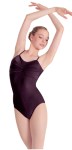
The signature of this leo is diagonal pleating which forms beautiful arrays across the bust. (If you can’t see it on the pic at left, click it once to see a large view.) The blackberry shade shown looks simply lush and accentuates the dimension of the pleating perfectly. This leo is also available in a dynamic garnet red which is bright but at the same time deep.

Two modern fabric options are available: a Diablo/Nylon/Lycra and a Meryl/Spandex combo. So lux, I would pair the blackberry leo with cashmere-feel thigh-high black legwarmers over theatrical pink tights.

DVD Auditions for the Distance Dancer – Part 1

Uh-oh! One of your top summer intensive choices isn’t auditioning anywhere near you this year, and you can’t travel to them. No worries – DVD auditions are accepted by many national and regional ballet schools. (Though some, like SAB, only accept videos from foreign students.) And with a few tips, you’ll be well on your way to an audition-worthy disk.

This post is in two parts because there are so many tips on this that I’d like to give you. Today, I’ll focus on the content – what you are going to perform for your video audition. In Part 2, we’ll talk logistics, filming style, how-to and putting together the audition packet.

Just as with live auditions, most schools devote at least one page on their website to video auditions: what to wear, what steps to include, what papers to include and how long it should be. Find this for each of your video audition schools and print out the pages for easy reference and comparison. In order to prevent yourself from having to make more than one audition video, read through the requirements of all your schools of interest to see if you can make one DVD to satisfy all of them. Usually, the only time this won’t work is when one school requires a you to send a variation – many schools will not want variations on your video, so you will need to make a separate disks for the two types.

Most schools will simply want a short barre and center class, but with special modifications. If you read all requirements carefully, you will find that most modifications can be combined and do not conflict with each other, so that you can make one class DVD to use for all your auditions. If you can’t however, don’t try to buck the rules. If you need to make different tapes, just go ahead and make different tapes. Run a single taping session and use editing to pick and choose what portions should be included for each school. Then, make darn sure not to mix up those different DVDs.

While some of us (ahem, moi) might make perfectly successful SI DVD auditions without rehearsing, that is not the recommended protocol! I only made my tapes with no rehearsal as a young dancer because I didn’t know any better, and that’s the very reason I created this blog – So other dancers won’t be as clueless as I once was!

You want to decide ahead of time exactly what exercises you will perform, which side you will perform for each, what music you will use for each, etc, and then practice, practice, clean, clean. Make yourself a list so you don’t accidentally forget to perform one during your taping. If you forget to perform a step, it will be impossible to tape a new session and splice it into your DVD without the details of your hair, makeup and background giving away your cheat.

One of your teachers can help you put together exercises that conform with the audition requirements. Make sure to provide them with the requirements well in advance. If all it says is to include barre and center, here are some sample (Vaganova) exercises you might include for the barre:

Pliés – Just do something straightforward like demi, demi, grand, and a port de bras or port de corp in first, second, fourth and fifth.

Tendu – Three battement tendus (from fifth, first, and then fifth again) ending the third one in demi plié. Instead of en croix, perhaps go front, side, back, and then balance in fifth or rétiré before your reversal. I would also recommend using a full port de bras in each direction to show your understanding of the lines involved there.

Jeté – Two quick battement jetés and one pas de cheval, perhaps with the arm in second and ending with a relevé rétiré balance with arms in first or, if you are advanced enough, with a single pirouette from fifth. Perform this devant, a lá seconde, and devant with your inside leg to jazz it up before reversing, but realize how that will change the pirouette directions.

Rond de Jambe – To a waltz: two slow ronds par terre, two quick ronds, degagé to 90 degrees, demi rond at 90 to a lá seconde, one rond de jambe en l’air, demi rond to derrière 90, close fifth. Reverse. Since this is an audition, I would save time and not include a port de corp if you have already included one with your plié exercise.

Frappé – Two (Cecchetti) frappés devant, one relevé, repeat a lá seconde, repeat derrière, then frappé a lá seconde into relevé and petit battements. Reverse and balance in relevé sur le coup de pied before closing fifth.

Adagio/Fondu – Developpé devant, battement fondu simple to 90 degrees en relevé, hold or balance for a moment and close fifth. Repeat a lá seconde. Repeat derrière/arabesque. Instead of repeating to the side, hold the balance in arabesque for the final counts. Do not reverse.

Grand Battement – Keep it simple with two grand battements en croix with arm in third for devant and derrière.

You’ll note that this is a very short barre with few balances and port de corps. Remember that your adjudicators need only a snapshot of a class.

Center should include an adage, pirouettes, petit allegro, grand allegro and pointework for ladies so advanced. Some sample exercises:

Adagio – Beginning croisé, developpé croisé devant, passé through rétiré to attitude éffacé, stretch to second arabesque, relevé to pas de bourée into demi plié fifth, developpé écarté devant, promenade to écarté derrière, relevé and tombé into balancé to the right, devellopé the left leg through sur le coup de pied to chassé croisé en avant on the left and close the right leg back. Repeat left.

Tours – On the diagonal in fifth croisé with right foot front, chasse croisé en avant to prepare. Tombé pas de bourée to the right, piqué to first arabesque, land in fourth position with left leg front, single pirouette en dehors to fourth, double pirouette en dehors to fourth. (Or balance in retiré and then a single pirouette if that better suits your level.) Perform once right and once left, preferably without a break – Just rond the right leg around at the end of right side.

Petit allegro – From fifth en face, right foot behind: Glissade, jeté right, glissade, jeté left, balloté devant éffacé, balloté derrière éffacé, coupé and brush to assémblé side with the left leg, closing back. Peform right and left, with battu on the jetés and assemblé if you are advanced enough.

Grand allegro – Same preparation as pirouette exercise. Sauté first arabesque, glissade, pas de chat, sauté first arabesque, glissade, grand jeté, pas couru and piqué into third arabesque, chasse into grand jeté en tournant entrelacé landing in fourth arabesque, small devellopé through to devant and chassé into chainés, chassé out and into first arabesque a térre.

If you are over 13, you may be required to perform the whole video en pointe in addition to the next section.

Pointework 1 – En face: two echappés changée to second, one to fourth, and one passé through retire; repeat that phrase to the left; pique with the right leg into pas de bourée suivi traveling right, continue into a small circle around yourself, changée fifth in sous-sous, chassé an avant croisé on the left foot and close right foot behind to fifth. Repeat to the left.

Pointework 2 – En diagonale: pique first arabesque, tombé over, coupe under to renversé, pas de bourée en tournant, coupé over on the left foot into piqué pas de bourée closing in fifth position demi plié, and chassé en arriére to croisé devant in prep for left. Repeat to the left.

Pointework 3 –  Piqué turns en diagonale.

Pointework 4 – If you have enough room on your tape, show off any pointe strengths that you would like in a set of 16 or 32 counts. I always added hops on pointe to my audition videos. Fouetté rond de jambes en tournant (foutté turns) are rarely requested, but do include them if they are a specialty of yours.

Remember to finish each exercise cleanly. And check those requirements – San Fransisco and Miami City have very specific DVD choreography specifications that would not be satisfied by the above sample.

If a variation is requested, make sure you don’t include something so long that you can’t also fit your barre and center while accommodating the time limit. Two of my favorite short variations for pre-pro dancers are Bluebird from Sleeping Beauty and Kitri’s (second) first act variation from Don Quixote. Each one is only about a minute, and both feature jumps, turns and pointework.

See? This won’t be so bad. Videos let you a) audition in the comfort of your home-field-advantage studio, b) create exercises that present you at your very best, c) practice the exercises ahead of time and d) take multiple recordings from which to choose your best execution. In the next post, I’ll help you get this awesome DVD made and help you put together your best video application packet.
Preparing Your SI Audition Season

You have reviewed the summer intensive audition tours for this season and know what schools are visiting your area… You have been taking classes for a few years at least and are excited to see what the student audition circuit will be like… Visions of acceptance letters are dancing in your head! But wait – how do you get from sitting in front of your computer to opening one of those promising envelopes?

Preparing an optimal audition season for yourself takes thoughtfulness and preparation. You are going to have to be very proactive and responsible. There are a lot of to-dos, but it’s all very straightforward. And wouldn’t you know, I’ve got it all laid out for you in a nice checklist!

_____ 1. Get organized! Open a Word document and start a numbered list of the auditions you want to attend. Include all of the auditions that you are interested in, even if you’re not sure you can make it. Note the date, time and location (studio and city) for each one.

_____ 2. Rearrange your list by date, placing the earliest audition at the top. Look for conflicts. Inevitably, two good schools will overlap on one date, and you will have to choose between the two. If this happens, take a good look at the schools and talk to your teachers to decide which one you prefer.

_____ 3. Go down your list and ask yourself – What auditions are coming within easy traveling distance of your hometown? Which ones would require significant travel? Are those auditions worth a road trip? Can you get together a group of other dancers for a carpool to some of the auditions that are farther away? Make notes about this for each audition.

_____ 4. Share the list with your parents. Talk to them about your desired audition schedule and which auditions they will drive you to or that you will be allowed to drive to. Mark all of those auditions on your calendar and on your family calendar.

_____ 5. For those auditions that your parents either cannot drive you to (or that you are not allowed to drive to), ask if you would be permitted to go with a friend or with another dance parent. Contact dance friends that might be interested in carpooling and see if they (or their parents) can take you together or with a group, and then put these auditions on your calendar and your family calendar. (If you are unable to get to an audition that you really wanted to attend, don’t worry – a DVD audition is a good alternative. I’ll talk about those in a later post.)

_____ 6. You should now have your final schedule! It’s time to preregister. Quite a few schools have made preregistration available on their websites. Carefully check each school’s site to see if this option is available. Some schools have made online preregistration mandatory! It would be very embarrassing to get turned away for overlooking this step.

_____ 7. It’s time to get prepare your audition materials. Most schools have a page on their website describing the audition requirements in detail. Print out this out for each of your auditions.

_____ 8. Let’s talk about photos first. Each school has unique photo requests that are usually listed on their website, but you will be pretty much set for anything if you take the following shots in pink tights and a black leo (no skirt) with full stage hair and makeup and in pointe shoes (if you are that advanced): 1) a close-up headshot from the collarbone up, 2) full body first arabesque, 3) full body tendu a lá seconde with arms in second, 4) full body favorite pose. Professional photos are not necessary and are not the norm for students, but a teacher may be able to better than a parent for taking photos that show you to your best advantage. A size of 5×7″ is usually preferred. Write your full name and age on the back of each print.

_____ 9. Next is money, honey. SI auditions usually cost between $30 and $35 payable in cash, check or money order. You will have to check the audition information for each SI to find out which payment methods are preferred for each. Be up front with your parents from the get-go about this if you are relying on them to cough up these fees. If they cannot or will not subsidize your auditions (or any other aspect of your training for that matter), you are going to have to decide how important this is to you and, if it is truly important, how you can earn the money you need perhaps by becoming an assistant teacher or offering to clean the studio for your directors.

____ 10. Finally, there’s always random stuff that schools will want. (For example, SAB requires proof of birth at the audition.) You need to carefully read the websites and maybe even make a few phone calls to make sure you collect what you need to have.

You’ll notice that as a student, résumés, professional photos and recommendation letters are not a part of most auditions. Not only that, such materials will often be turned away by schools that do not specifically ask for them.

Now that you have your materials, go back to your list and create an audition packet for each school. Pay special attention to photo size and type specifications, payment preferences and preregistration. If you have read each school’s website carefully, you will be a-okay.

You have now prepared an excellent SI audition season for yourself – Well done! In my next post, I’ll let you know what to do on the day of an audition – and what to expect.

Dancewear en l’air: The Diamond Leotard

This thoughtfully cut leo features criss-crossing panels of fabric that narrow towards the hips making a flattering hourglass effect and creating a small diamond in the center bust. The criss-cross pieces wrap low around the back of the leotard creating a cute hip-skimming accent.
I hesitated to feature this interestingly cut leotard because, since Bloch’s recent purchase of Mirella, not all of their leotards are featured on either site. This particular leo is tough to find anywhere, but if you know the model number (MJ7115) you can find it in online discount stores, particularly if you’re willing to order from the UK. It’s available in a slate-like indigo, true red and classic black.

The 360 design of this leotard is what makes it so gorgeous. I’d pair it legwarmers or just pink tights so as not to obsure its pretty and flattering shape.

Supercharge Your Pointework!

The American Orthopaedic Foot & Ankle Society agrees: pointework is a serious undertaking. They endorse several tried-and-true dancer exercises that you will find enormously impactful for your oh-so-important foot and ankle training to enhance stabilization, strength and articulation. Add these simple, technique-cleansing routines to your regimen today (You’ll thank me later!):
Doming Exercise

The dancer sits on a chair with knees bent to 90 degrees and feet flat on floor. The dancer then tries to make an arch under the metatarsal heads while keeping the toes flat and long, not allowing any curling of toes. Hold for count of ten, repeat 5 times with each foot. This helps strengthen the intrinsic muscles (the small muscles between the metatarsal bones.

Marble Exercise

Place 20 marbles on the floor. Pick them up one at a time by curling the toes around them. Move each marble to a jar and when dropping in the jar, spread the toes apart as widely as possible. Repeat with other foot.

Alphabet Exercise

Write A to Z with each foot, using the foot and ankle and not the leg to draw the letters. This is a good overall ankle strengthening exercise.

Theraband (Sport Cord) Exercise

Dancers should move their ankle in 4 directions against the theraband. Flex (dorsiflexion), pointe (plantarflexion), sickle (inversion) and wing (eversion). Dancers should first point their foot followed by trying to turn the foot in (“sickle”) against the resistance of the theraband. A dancer should be able to see the tendon just behind the inside of their ankle working. This tendon is the tibialis posterior which is crucial for rising up on the toes.

Releves

The dancer should do calf raises with their feet in a parallel position, otherwise known as a releve. After barre work, it is good to do 24 single leg releves in parallel on each leg. This will help strengthen the Achilles tendon and calves.

Ballet in Film: Only When I Dance

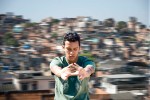
Only When I Dance is an award-winning documentary presented this year that follows two desperately underprivileged dance students, a girl and boy, from one of the most violent and tragic favelas in Rio. The odds of these two young people succeeding are stacked strongly against them. Find out what happens when two children dare to dream of escaping to a better life through dance.

Click here to find out how you can help the Vida Ballet Fund. This organization provides grants to young people from disadvantaged backgrounds of Rio and the surrounding favelas who would not otherwise have access to dance school or an opportunity to pursue dance as a career.

Dancewear en l’air: The Flashdance Top

An 80’s retro top is perfect for dance inspiration, and K.D. Dance FAL1143034 captures the era perfectly with its drapey style. This Flashdance-inspired top is cut oversized (but is also available in a more close-cut fit) and comes complete with the original’s signature off-the-shoulder neckline that casually shows off your collarbone.
Created from K.D. Dance’s beautiful shadow stripe acrylic blend fabric, this sweater is available in some basic shades as well as an assortment of rich purples and wines. Lovely for a ballet warm-up or just to and from class, this is also a great piece for modern, contemporary and jazz classes. What a feeling!

We All Start Somewhere

Hello dancers! The Fall/Winter semester is already about half over. Now is a great time to check in on yourself and your training. What’s working for you? Are you making progress in the areas that you need to?

When this season started, I challenged you to be strategic about your new training year. That entailed setting specific goals and putting together a plan of attack for each. Mid-semester is the perfect time to review your progress and re-assess your plan.

What were your goals when the semester began? Have you been able to focus on them while you train, or did you forget about them and just “get through” your classes? Have you been consistent with any special exercises or stretches you needed to do outside of class? Be honest. And remember, New Year’s isn’t the only time to make resolutions! If you’ve been slackin’, resolve now to get refocus your efforts and rededicate yourself to your goals for this year.

Don’t forget that your teachers are there to help you, too. If you aren’t sure how you’re doing, talk to your teacher about your progress. Above all, stay focused and keep your eye on the ball. Watch dance movies that inspire or motivate you to enjoy your training. If you’re lucky enough to have good performances taking place in your city, try to make it to a live professional show. While you’re watching the pros, remember that they were once students too, trying to apply corrections and become the real artists that they now are. Just like you one day could be.

Dancewear en l’air: The Vibrant Wrap Skirt

Let’s beat those Monday blues with some fashion today. If you’re in the mood for a stylistic pick-me-up, Capezio’s 1290, a printed chiffon wrap skirt, is just the thing for your next class.
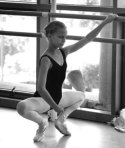
I really like the length of this skirt for pointe classes in particular – the gently tapered hem gives a nice length to the leg without looking – ahem – “hoochie” short.  And the floral pattern of teal, burgundy, pink and black will pair nicely with a basic black or with your bolder leos in similar hues.  I think it would look great over a unitard, too. All in all, an elegant but very fun pick.

I’m just a dancer, not a miracle worker!

First position, arm in second. Core engaged, neutral pelvis. Long neck, shoulders down. Elbow below shoulder, inside of elbow faces front. Wrist below elbow, inside of hand faces front. Fingers slightly curved, thumb tucked in. Chest open, rib cage closed. Rotate the legs from the hip socket. No rolling in. Energy through your limbs, but don’t grip. Now breathe, smile, look effortless and … grand plié!
Does it feel sometimes like there are too many things to think about in ballet at one time, even in the simplest of steps? That’s because there are! The corrections I just listed would be impossible for a beginner to keep in mind all at the same time. So how can you master a step when there are so many corrections to deal with?

The answer is: Don’t think about them! More specifically, your mission is to get corrections so ingrained in your muscle memory that you can “forget” about them and focus on other, new corrections. What’s the secret to that? Like the tortoise and the hare – slow and steady wins the race.

Your teacher is responsible for providing only as many corrections at a time as you can properly process and apply. Then, like a careful gardener, she must patiently remind you and even reteach the info in different ways. You must keep focused and stay dedicated. Finally, it “clicks” and muscle memory has made it a habit. Tada!

You are certainly capable of handling a multiple new corrections at one time, but there is also a limit. Your teacher might focus particularly on one part of the body for a few weeks or on a certain movement quality. As you become familiar with a correction, she may only need to say one or two words before you instantly know what adjustment to make. This means the brain is learning! She might then introduce you to a brand new correction or two, though it could take some months before the prior step or correction is really solidly learned. Even after a correction is solidly learned, occasional reminders may be necessary. Be patient with yourself if you notice this, particularly if you are having to “retrain” aspects of your technique.

Your teacher is responsible for providing you with corrections that are challenging but also achievable – A good teacher won’t ask you to do anything you are not capable of but won’t push you beyond your limit either. Keep focused, don’t be afraid of new information, and be patient if you are hearing the same corrections for a while.

You’ll be surprised what you can achieve with diligence and patience. Don’t forget that a dancer’s education is never truly complete – we are all always striving for improvement.

Ballet in Print: Cuban Ballet

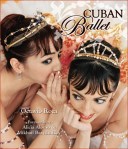
In order to reach their full potential as artists, many Cuban ballet dancers leave their country to escape the complicated politics of Cuba. And that nation’s loss has become the world’s gain as pointed out by noted dance critic and this book’s author, Octavio Roca. Cuban Ballet explores this evolution and is gorgeously illustrated with both vibrant full-color and dramatic black and white photographs of current and former Cuban ballet dancers.
Cuban Ballet provides an exceptional portrait of Cuban ballet’s history, including stories of select Cuban ballet stars. This book also features a forward by Mikhail Baryshnikov and by Alicia Alonzo, who you might have guessed is one of the dancers featured most prominently. Released only last month, this exciting and beautiful new book is available at a significant discount through Amazon.

Dancewear en l’air: The Tiger Leotard

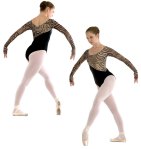
This leo is so outrageous I just had to feature it for fun today! The Tiger Leotard (scroll down on their long-sleeve leos page to find it) by London-based Wear Moi International – not to be confused with French dancewear company Wear Moi – makes this arresting tiger stripe ballet leotard, which seems reminiscent to me of Oleg Vinogradov’s Knight in a Tiger’s Skin ballet from the Kirov!

Like many of Wear Moi’s leos, this item is created in two different fabrics, in this case a black lycra bottom and the striking tiger print on top. An asymetrical seam connecting the two and extra-long sleeves set off the tiger print with a haphazard and exotic vibe. This style is not for the faint of heart!

The Barre is Your Friend!

Ah, the ubiquitious ballet barre. But is it really needed for developing good technique? Why don’t other forms of dance use a barre? Where on earth did it come from?

As you know from this site, ballet originated from court dances that look almost nothing like the ballet technique of today. And as that dancing evolved, steps got more difficult and more balance was required for them. Eventually, dance teachers had their students hold on to the backs of chairs while learning the tough steps, and so the ballet barre was born. It’s hard to imagine ballet without it now – imagine beginner pointe in the center! Continue reading

Technical Tricks of the Trade: Advice from an Amateur (via You Dance Funny, So Does Me)

How about some technical tricks and tips today, kiddos? Here is an excellent (and funny) article with a by a male dancer and amateur dance historian with a concise list of some of the best quick technique tips!

You’d be surprised what you can learn from a set of new eyes, even when they may not be the most experienced.  The fact that people read this blog has given me an inflated sense of ego, and I feel impudent enough to offer some advice when it comes to taking class.  I believe that our flaws shape our perceptions, and as someone with bad feet, bad turnout and no natural flexibility, I’m always looking at how people use such things.  One of the teac … Read More

via You Dance Funny, So Does Me