Dancewear en l’air: The Corset-Style Camisole

This striking two-tone leotard, 107-ROY from By Marisa, flatteringly mimics of the bodice of a tutu. What makes this item special is the contrasting black trunk and trimming combined with corset-style seaming on the bodice.

This isn’t an item that you want to cover up with a skirt or sweater – add it only to your favorite pink tights to avoid an overly busy look and just let the leotard’s lines accent your own. This leotard is also available with a white or red top by different model numbers.

Dancewear en l’air: The Multi-Color Cross-Front Leo

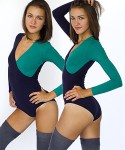
Are you a dancer who likes to buck tradition with a unique look? Fly that fashion freak flag with this cute but different leotard from American Apparel, RSA8328.

This rebellious little number sets a sporty tone with a half-color cross-body design in mixy-matchy colors. Pair it with black tights for a look that’s contemporary and bold, and prepare to be noticed.

Dancewear en l’air: The Knit Bolero Shrug

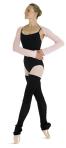
Looking for a warm-up top that won’t hide your beautiful leo? A bolero-length shrug is your answer. Lydia, by Bloch, is a beautiful and well-made option in Bloch’s signature cashmere-like knit blend.

This long sleeve top features ribbing detail at the cuffs and covers you from shoulders to wrists in one of four classic colors. Accessorize with legwarmers or a pretty chiffon wrap skirt to balance this look.

Dancewear en l’air: The Figure-Flattering Character Skirt

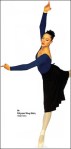
Impossible you say? How can a frumpy character skirt possibly flatter your figure? When its a sleek and not ridiculously long wrap style. Thanks to Bal-Togs, you have just such an option with 86, available through On Stage Dancewear.

This style is conveniently available in multiple lengths. I think character skirts look best when they just cover the knee – anything longer is too cumbersome and mature looking. You can’t play the part of a young European peasant if you look like an elderly marm! Also, the wrap cut of this skirt eliminates the frumpy, schlumpy gathers that the elastic-waist versions often have and which can add unattractive volume to the hips. Just make sure a wrap style is allowed in your character class, and then get ready to mazurka!

Ballet for the Teen Beginner – Part 2

You have selected a dance school and signed up for ballet lessons. Now its time to shop for your ballet clothes!

Your dance school should provide you with a dress code and a list of stores to purchase the items you need. Don’t go online to buy your first ballet clothes – you will need to try things on and get help selecting styles and sizes. You will need at least one basic leotard, a pair of pink tights, and a pair of pink ballet shoes. If you will be taking more than one class weekly, you may need another set or two of tights and a leotard. Depending on the dress code, you may also wish to purchase a basic short wrap skirt and some simple warm-ups or cover-ups for walking in the halls between classes or for warming up before class. So let’s talk about what to shop for.

Before we get started, be forewarned that you may feel a bit strange in a leotard and tights at first. They look and feel very different than street clothes! A question that new female dancers are often too shy to ask is: Should I wear underwear and a bra under a leotard and tights? Most dancers consider the tights to be the underwear and most leotards are made with a lining or shelf bra attached. (Wearing dancewear is very similar to wearing a bathing suit.) If you are not comfortable with this and prefer additional layers, there are many options available specifically for dance that you may choose from. Body Wrappers, Natalie and Capezio offer boyshorts, thongs, bikini cuts, bra tops, leotard-cut underliners and unitard-cut underlines. These are all designed in fabrics and colors that fit discreetly under leotards or costumes and that are moisture-wicking. Do yourself a favor and don’t try to wear streetwear underclothes with your dancewear. Street styles are way too bulky and noticeable, and they can trap moisture and heat that can cause, ahem, issues.

Now for the fun stuff. For your first pink tights, ask for a convertible foot. These tights have a slit on the bottom of the foot so they can be rolled up to the ankle. This is invaluable if you are planning to take other dance classes, like modern or jazz. I would recommend choosing Body Wrappers, Capezio, Gaynor Minden or Bloch tights. These brands offer various fabric choices, so ask the sales person to let you feel the different fabrics and help you choose the proper size.

For your ballet leotard, you should choose something simple in a comfortable fabric and cut. A short sleeve or tank version with a high back is usually best for your first leo to avoid feeling too revealed and to be able to wear a bra if you prefer or need to. Some good leotard brands are Mirella, Body Wrappers, Capezio, Bloch, Grishko, Freed, Sansha and Natalie.

Next your pink ballet shoes. Soft ballet shoes are made in satin, leather and canvas. If your dress code does not specify, try leather or canvas which are what most students wear. Ballet shoes should cover the toes, sides of the foot and heel. The sales person should help you find a size that does not bag around your foot but does not cramp your foot either. For advanced students, I like to see elastic criss-crossed from heel to arch, but on a beginner, I recommend just one elastic across the arch of the foot. Ask the sales person if they sell any shoes with elastic pre-sewn. Look for ballet shoe brands like Fuzi, Angelo Luzio, Capezio, Bloch, Sansha, Freed, Grishko and Principal.

Ballet shoes come in split-sole and full-sole. That refers to the leather pad on the bottom of the shoe. A full-sole shoe has a strip of leather in a footprint shape while a split sole has a pad on the ball of the foot and one on the heel. The idea is that a split-sole highlights and enhances the look of the foot’s arch while increasing ease of motion. It does, but note that a full-sole offers resistance on the arch that can be useful for pointe preparation.

Now to accessorize. Does your dress code allow for a short skirt? If so, make sure you know what colors are acceptable and if there is a minimum or maximum length. If the dress code just says “short”, look for a one-layer skirt no shorter than ten inches and no longer than fifteen. Basically, you want a length that covers the bottom of you leotard when you are standing still, maybe an inch or two longer if you like the look. The most common cut of a ballet skirt is a wrap style that you will cross in the front and tie in the back. If you don’t want that hassle, some pull-on styles are available. Look for delicate chiffon, georgette or tulle fabrics that flow when you move and swirl when you twirl!

Now for your warm-ups. Most teachers do not allow warm-ups during class, but they are great for protecting the muscles after class during cool down and between classes. They also protect against cold A/C. Some warm-ups double as cover-ups. Warm-up options are so numerous, I can’t possibly list them all, but some options include legwarmers, wrap tops, shrug tops, tunics, knit tights, warm-up dresses, knit skirts and shoulder wraps. Try on different styles to find what you like best.

At any age, it is really inappropriate to walk to or from the studio in nothing but a leo and tights. You should bring either a change of clothes or cover-up outfit to wear to and from the studio. A simple cotton dress that you can slip over the head works well for this, as does a sweatsuit.

If you have a gym bag, that should be suitable for your ballet gear. If not, you will definitely want to purchase a medium-sized bag that can fit a change of clothes, a water bottle, your purse and your ballet shoes and warm-ups.

Lastly, your hair. Most ballet schools require that females wear their hair pulled up off the face in a bun or french twist. You should can pick up hairpins, elastics, hairnets and anything else you need at a local drugstore or at the store where you purchase your dancewear.

You have everything you need for your first ballet lesson! Be sure to allow enough time before your class to change into your dancewear and style your hair. And get ready to enter an exciting world of art, emotion, strength and unparalleled beauty. In my next post, I’ll tell you what to expect during your first class!

Dancewear en l’air: The V-Neck Ballet Sweater

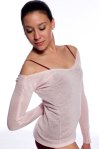
Professional ballerinas, fashion models and movie stars are just a few who reach for K.D. Dance sweater AC03DB when they want to throw something on that will flatter no matter what.

The “03” as it’s called is beloved for its soft touch and figure-balancing wide v-neck, which can be worn off the shoulder or on. Either way, it’s perfect for showing off tank or camisole straps and your elegant neckline. The length is flattering as well, falling just to the hip. This acrylic top is available in eighteen of K.D. Dance’s lush colors and would be great paired with your favorite leo or with your favorite jeans.

Tutu Talk (Plus – Where to Get the Tutu Goods!)

If you are getting to an advanced stage in your training, chances are you have already worn or will soon wear a tutu. I’m not talking about those mass-made recital costumes that arrive crumpled up in plastic bags – I’m talking about a fully or partially handmade tutu carefully constructed with hoops, high-quality tulle and a corset-style basque and bodice. (Insert high-pitched squeal of girly joy!)

If you’ve been dancing for a while, you probably already know the basic tutu cuts. The romantic style is easy to spot because of its ankle or below-the-knee length in voluminous layers of soft net and tulle. The classical tutu usually refers to the pancake or platter style with its flattened shape that is hooped to stay straight out from the hip.

There are three common subcategories of the classical tutu. The original is the pancake described above. The Balanchine or Karinska tutu, also called a powderpuff, is obvious from its loosely tacked softer tulle or net that is shorter in length than the pancake and not hooped.  The bell tutu is similar to the pancake, but bells slightly downward with no hoop and has more layers than a pancake style.

Practice or rehearsal versions are available in all the styles above, but are most common for pancake tutus. If you are purchasing a rehearsal tutu of any kind, it is best to spend more if you can to get a professional version because that will give you the versatility to alter it into a performance piece. Most professional tutu-makers make practice versions based on the same construction as their performance versions. Ordering from one of them is the easiest way to ensure you have a tutu you can use for practice and potentially for performance. This will require some careful measuring with the help of a friend and some patience for the creation of your tutu. Each maker can tell you the specifics of their ordering process and often has a page on their website devoted to this information.

Practice tutus are most versatile in white but much easier to keep clean-looking in black. Cleaning any tutu can be a difficult process. Chemical dry cleaning destroys their delicate frills, hoops can rust in water, and the delicate decorations and beading can be harmed by any cleaning method. Foregoing an overall cleaning in favor of spot cleaning and deordorizer (think Febreze) can be a good solution, though sweat and grime may eventually break down the fabric. Ideally, design the tutu as best you can so that embellishments can be removed for cleaning. This makes it much more versatile anyway.

If you need to go a less expensive route, there are some decent options out there. You’ve may have noticed that most discount dance suppliers have tutu sections, and those can be great resources. Try not to buy really cheap and ill-made tutus; that’s just throwing away money. Even if you can’t afford a pro-made tutu, you should still look for something with good quality tulle and a corset basque. Some decent practice tutus are made by Bloch, Star Styled, Body Wrappers, Main Street Dancewear, Sansha, Algy Performs, Wear Moi and Mondor. A few also sell bodice-style leotards that can be matched to the tutu for a very simple performance piece. Most of these styles are available through discount dancewear retailers.

Once you have your prized tutu, you should keep it in primo condition by storing it a proper tutu bag to protect it from crushing. Tutus should never be folded, but if you must, picking it up from the crotch and gently folding it upside down can minimize damage. If you pack it right-side-up, your tutu will flatten and the look will be ruined. Hanging tutus should be upside-down as well. Pancake tutus can be stored flat on a shelf provided they are not stacked one top of the other so that air can circulate.

Now that you are armed with the scoop on tutus and how and what to buy, here is a list of some of today’s best professional tutu makers for U.S. shoppers:

Class Act Tutu

Primadonna Tutus

Winthrop Corey Designs

Tutu Etoile

Grishko

Cameo Dancewear

Tutu.com

Classic Dance Costumes

Tutus Divine

Prima Fashions

Tutus.com

Rosetti Costumes

Theatre Ballet

Tutus by Edna

Aurora Dancewear

The Costume Lady

Dancewear en l’air: The Pretty Lace Skirt

Skirts make ballet more fun, don’t you think? That’s exactly what I think when I see a 32 Fouettes skirt. They are nothing if not fun, girly, and perfect for dancing around.

Skirts by 32 Fouettes are unique because of the stretchy lace band around the waistline, which they say eliminates the annoyance of a wrap skirt’s self-tie. What’s most interesting about this skirt to me though is the variety of colors and patterns available. They also offer customizable lengths, flouncing and fabric combinations. These skirts would be lovely for variations and I’d be curious to see how they stand up to a partnering class.

Foot Envy and Falsies for the Feet – Um, Ew!

Have you ever looked with awe and envy at the highly arched banana feet of famous dancers like Paloma Herrera and Svetlana Zakharova? Have you been tempted to sport one of those gelatinous contraptions called “arch enhancers” to increase the look of your own foot? The CBT is here to tell you: Don’t waste your money.

Why? Let’s break this down, shall we –

  1. Numero uno – You are beautiful the way you are. You can disagree if you like, but facts are facts. The next time you feel like comparing your arches (or extension or turns …) to another dancer – especially to a professional – STOP. Remember that a) you are still a developing student b) you have many wonderful qualities that you have worked hard to achieve and that others might not have. Despite what glossy ballet photographs might make you think, no single dancer “has it all”.
  2. Do professional dancers use arch enhancers? Sadly, yes. And you’ve probably even oohed and aahed over one of them before. But all that this achieves is perpetuation of the idea among students that you all must have an exagerrated arch in order to succeed in ballet – which is not true; a low arched dancer can certainly become a professional if she maximizes her ankle range and her intrinsic articulation. (What are those? I’ll address them in an another post.) Also, high arches are more prone to injury, partly because low arches are better shock absorbers.
  3. There is so much more to a beautiful classical line than a highly-arched foot. I’d much rather see a strong average foot than a weak banana-style. Quality of movement makes a huge difference in ballet as well, and can easily make a low-arched dancer vastly more appealing than a high-arched dancer.
  4. Arch enhances do not enhance your arch; they only change the look of your instep. The arch and instep are two different aspects of the foot, and these contraptions deal exclusively with the latter. There isn’t a single add-on out there that can do a darn thing about your arch – but proper battements can!
  5. Arch enhancers usually look cartoonish. Sorry, but teachers like me can usually spot them pretty easily due to the awkward, hump-backed look that they can give to the foot. (Do you see it in the pic above?) And they can look extraordinarily strange when the foot is flat or in soft shoes! Watch this video for an example. The closest any company has come to a natural look is an Australian company called Dance Arches, but even their product is pretty easy to spot. The only time you might get away with it is during performances when your viewers are far away. But Lord knows what you’ll do when you have to dance with no tights or no shoes!
  6. Arch enhancers can cause discomfort and be annoying. They can crumple up on the arch, cause unwanted bulk in the shoe and irritate the skin. Um, that’s not exactly great for dancers – people who need their feet to be as healthy and articulated as possible!

The bottom line is that the only way to really enhance your arch is by good quality training. High arches are a dime a dozen, but gorgeously strong, articulated and controlled feet? That’s a truly beautiful rarity!

Kiddos, what bugs me most about this as a teacher is that all this fuss over arches keeps you all from addressing issues that you do have control over – and which can be far more important than your feet. Try rechannelling your energy into advancing your musicality, your port de bras, or mastery of your balance point. Those are the things that will really have a huge positive impact on your dancing and that you won’t have to take off at the end of the day!

Dancewear en l’air: The Balanchinian Skirted Tank

In classic Balanchine style, this tank dress from Body Wrappers has clean lines and minimal fuss. The back is not too high or too low, and the attached skirt is just the right length for class or performance. Even the model here is sporting a Balanchine-esque pose.

Ideal for a variations or partnering class, this leo, P717, comes in four beautiful shades. Wear your bun high with this modern classic style and you’ll really be channeling the Balanchine ballerina.

Dancewear en l’air: The Ruched-Front Leotard

Studying a Giselle variation this year? You’ll look ready for the title role in this lovely peasant-top style, DA53, from Russian dancewear company Grishko. This leotard features the rustic loveliness of a straight-cut, ruched-front empire line. A modern touch is added with spaghetti straps that meet together to form a contemporary V-shape at the mid-back.

This leo’s youthful shape is cut from fabric that is specially brushed to a soft finish on the inside to make a long day in rehearsal no problem at all. DA53 would look awfully cute with a short floral skirt but looks great one its own, too.

Dancewear en l’air: The Cross-Bust Camisole Leo

Nothing beats gorgeously simple Italian design, and here to prove it is Deha with model No. T02105. This leotard features excellent fit with a shape-accentuating cross-bust empire bodice and is available in eight interesting colors.
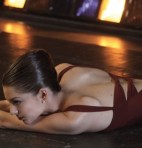
The CBT loves that the simple but stunning design of this piece is exactly what makes it so compelling – no skirt or embellishment necessary. And that makes it perfect for class.

Update: The link to the Deha leo has been having problems all day, so here’s a link to the English main page. Once you are there, click “Deha Ballet shop on-line” and you’ll see this leo on page two of the Donna (Ladies) section. Sorry for the inconvenience!

Dancewear en l’air: The Twist-Back Tank

From the French brand Wear Moi, here is a wearable piece of art for your next class or audition. Wear Moi’s Isaline leo brings attention to your back with two lateral knotted strips of tulle to match the stretch tulle front and straps.
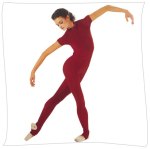
This leotard comes in four lovely shades, but its drama seems best suited to the rich maroon or ink black versions. Isaline would pair nicely with a simple black roll-waist knit tight or a matching skirt that won’t take steal attention away from its über-refined and understated details.

Dancewear en l’air: The Sporty Zipper Unitard

Unitards can be fun for rehearsals and even auditions, especially for contemporary ballet, and Sansha’s mock-neck unitard #503 is a modern change from the usual unembellished tank and long-sleeved versions.

This unitard features a zipper from the neck to right below the bust so you can customize your look. Stirrups at the feet keep the leg lines as long as possible and accentuate pointe shoes particularly well.

Dancewear en l’air: The Backseamed Pink Tight

Ballet tights in an unflattering shade of pink are one of the CBT’s pet peeves! Choosing a pink that clashes with your pointe shoes or ballet shoes will shorten your lines and just look wrong.

Pinks can vary depending on the amount of blue and yellow in the dye formula. Generally, classical or ballet pink tights look best with the more salmon-y shoes, like Freeds and Capezios, while theatrical pink looks better with truer pinks and paler shoes, like Grishkos and Russian Pointes. You may need to purchase one shade to match your soft shoes and one for pointe.

Non-mesh tights are usually very soft and appear to be a pretty pale pink in the package, but they often look white, yellow or purple once their on. Mesh tights can be almost scratchy sometimes, but usually have better pinks. (Steer clear of Capezio #9 in classical pink, though, it’s famous among dancers for looking bright orange!) A backseam makes alignment checks easier and visually lengthens your lines dramatically.

One of the best ballet tights on the market currently is the Body Wrappers A45, a convertible mesh version with a backseam available in ballet pink and theatrical pink. Its designed to feel super soft against the skin so you’ll get the best of both fabric worlds, and you’ll look polished and professional.