 Summer Intensive auditions are now in full swing, and I’ve gotten tons of great questions from you guys lately about what the SI adjudicators will be looking for! I know you all sometimes feel a lot of pressure about these auditions, but you should know that the adjudicators will make it as positive an experience as possible. Often, your audition fee will be a “master class” fee, and you will have the benefit of instruction and correction from exceptional teachers during the audition class.
I know what you’re really interested in, though, is the nitty-gritty of how your are being judged. Many factors are considered in your evaluation. I like to divide these factors into two categories: physical attributes and performance attributes.\
By physical attributes, I am referring to the body of the dancer. Dancing is a sport (and of course an art), and just like any sport you must have a body that is physically capable of doing the work required. Your adjudicators will be looking for dancers of a healthy weight who have a suitable physical facility for ballet. By facility, I mean dancers with:
- Good rotation for turn-out
- Long, flexible limbs
- Supple muscularity
- Balanced proportions
- An overall good “look”
Of particular interest to auditioners might be:
- Longer limbs combined with a shorter torso
- A small head
- High but strong and controlled arches
- A touch of hyperextension in the knees
Of course, we can’t talk about ballet bodies without getting to the touchy question of weight. I am not going to sit here and tell you that SIs never accept underweight dancers. Sadly, some SIs might overlook an underweight dancer who is able to hobble through an audition, but these dancers generally do not make it far in ballet (or sometimes even that SI) due to their sheer inability to physically keep up. Without a proper muscular structure and proper food intake these dancers inevitably cannot perform as required. One of the saddest things I saw as an SI student was when dancers were sent home from a program for concerns of being underweight or unable to physically keep up. It goes without saying that being overweight will be similarly inhibiting, and that an athleticly slim figure is often preferred. So the most important thing is to be of a healthy athletic weight, and that means being neither over nor underweight.
Physical attributes are secondary to performance attributes, however, and these attributes include movement quality and the dancers ability to … dance! Performance attributes include:
- Quality training commensurate with age
- Good basic placement and core strength
- Coordination
- Musicality
- Proper use of plie
- Good lines
- Strong and articulated feet
- Quality port de bras
- Extension appropriate for age
- Strength on pointe, if appropriate
- Ability to understand corrections
- Ability to apply corrections
- Ability to pick-up choreography quickly
- Style and artistic expression
- Great mental attitude
- Passion for and enjoyment of dancing
You probably notice that the first ten items on this list are all related to technique. Remember that these adjudicators are not looking for perfection. In fact, up to the age of about 14, they are giving quite a bit of consideration to the dancer’s potential. If you are lacking in technique due to inadequate instruction for example, you can show through your ability to pick up corrections and choreography that you are very teachable and therefore perhaps an excellent candidate. As you get a bit older, however, adjudicators will be looking for a more finished product. By the age of 17 or 18, you will want to present yourself as a dancer who has most of her technique and movement quality at a professional level. They will want someone at that age to be working mostly on artistry with perhaps some technical fine-tuning remaining to be done.
Do not underestimate the importance of the last two items I’ve listed. Showing your love for dance through enthusiasm for learning and enjoyment of movement can and often does cause an adjudicator to give a student a second, third or even fourth look. Avoid the “deer in the headlights” look at all costs! Be present in the moment, attentive, focused mentally and with your eyes, and remember why you are there in the first place … because you love, love, love to dance!
Merde, ballerinas! May you all have an exciting and educational audition season!!
 Day in and day out you take class, hear corrections, try to apply them, go to rehearsals, wear out practice clothes and shoes and basically invest countless hours and dollars into your dance education. What’s it all for? For some of you, it’s an excellent way to become physically proficient at a fun sport and art while developing a close group of friends. For others, it’s a stepping stone to your ultimate goal: a professional dance career.
 I do not like when students try to wear junk in my classroom (Hellooo, demerits!), but also can’t stand scantily clad students dallying between classes even more. For pete’s sake, put on some pants! – Or an adorable dancer t-shirt like this one from
 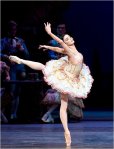 Happy New Year, dancers! You’ll be getting back to class soon and preparing for spring shows and recitals, so here’s some inspiration for your busy New Year. Remember that this year will be whatever you make of it!
 If you haven’t been regularly checking
 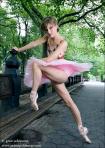 It’s impossible to not be inspired by Keenan Kampa. As the first American to graduate from the Vaganova Academy in St. Petersburg, Keenan, 21, has just accepted a position in the corps de ballet of Boston Ballet.
 A new film is in the works documenting 2002 Prix de Lausanne winner Maria Kochetkova, now principal dancer with San Fransisco Ballet, in rehearsals and performances of a brand new ballet. Maria trained at the Bolshoi Ballet Academy for eight years before joining the Royal Ballet and then the English National Ballet. Kochetkova graced the cover of this year’s April/May Pointe Magazine and has been awarded four International Ballet Competition gold medals in addition to one silver, one bronze and the jury prize.
 People, it’s time. Time to get prepared for the 2011 Summer Intensive audition season!! For serious dancers – whether aiming for a pro or college career out of high school, summer intensives with top schools are a vital part of thorough dance training. And top SIs do not admit students without an audition.
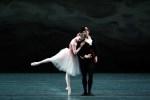 Young NYCB soloist Kathryn Morgan hails from Fayetteville, North Carolina, and received her initial training from Mobile Ballet in Alabama, where she recently returned to perform as a guest artist. In 2004, Kathryn went to the legendary School of American Ballet, moving into an apprenticeship with NYCB in 2006 and a corps de ballet post in 2007. Her promotion to soloist happened just over a year ago, in October of 2009.
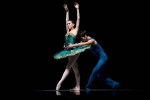 Sarah Van Patten has been a principal dancer with San Francisco Ballet for three years and is an exceptional talent and an elegant ballerina with artistic sincerity.
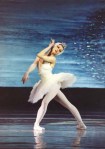 Sometimes it’s tough to remember what you are working towards with the endless classes, rehearsals and corrections. Every dancer could use some inspiration to keep focused and excited about dance, so with that in mind, I thought I’d take some time to feature for you some of today’s elite ballet artists.
 In order to reach their full potential as artists, many Cuban ballet dancers leave their country to escape the complicated politics of Cuba. And that nation’s loss has become the world’s gain as pointed out by noted dance critic and this book’s author, Octavio Roca.
  BalletScoop