Dancers Wanted: Finding Professional Ballet & Dance Auditions

Day in and day out you take class, hear corrections, try to apply them, go to rehearsals, wear out practice clothes and shoes and basically invest countless hours and dollars into your dance education. What’s it all for? For some of you, it’s an excellent way to become physically proficient at a fun sport and art while developing a close group of friends. For others, it’s a stepping stone to your ultimate goal: a professional dance career.
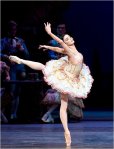
For you special young vocational dancers, I thought you might like a heads up on one of the most vital and constant parts of a professional dancer’s life: Auditions! Auditions may be a part of your career for a very long time, if not all of it. It can be a constant struggle to keep on top of where they are, who’s holding them and what dancers are needed. So in addition to the RSS feeds (on the right) from Voice of Dance and Backstage, I have now added a special blogroll on the right-hand side of this site titled Auditions. Take a look by scrolling down and checking below the regular Blogroll.

On this list, you’ll see links to audition notices from all around the country and the world and links to official audition sites for major dance employers. It’s not all ballet – not every serious ballet dancer finds that there is a place for them or that they even want to be in ballet professionally – but there are plenty ballet auditions as well. I’ll post more in the future about how to enter the exciting but often seemingly scary world of professional dance and professional ballet. As a first step to great exposure in the dance industry, get to planning your SI auditions!

Update: Dance Magazine published a 2011 Jobs Guide in their March issue, and that link has been added to the Auditions list at right. Check it out for the latest company job openings!

Inspiration: Sarah Lane

Sarah Lane is one of my favorite dancers today. I had the pleasure of training at the Boston Ballet Summer Dance Program at the same time as Sarah in 2002, where her movement quality, pure line and effortless grace caught everyone’s attention. She had some of the most expansive movement, all placed on a lithe frame of only about 5’2″. Sarah was also as sweet and humble as they come, though she had plenty of bragging rights with a full scholarship to the program and a bronze medal from the Youth America Grand Prix.

Later that year, Sarah won the silver medal at the Jackson International Ballet Competition, the highest female junior medal awarded that year. In August 2003, she was accepted as an American Ballet Theatre apprentice. A promotion to corps de ballet followed in April 2004, and finally a promotion to soloist in 2007.

If you can’t make it to NYC to see Sarah perform, you can see her dancing as the body double for Natalie Portman in Black Swan. But don’t think Sarah was born with golden pointe shoes on – her early training was in a good quality but local-level school in Memphis, and when her training turned serious she sold telescopes at a Discovery Channel store to pay for her competition expenses!

Update: When I realized months back that some of my own students didn’t know that Lane performed the dancing shots for Black Swan, I explained that it was laughable to think that Portman could dance at that level. I didn’t think much of it, however, until reading this article and others about the lack of acknowledgement Lane received for her performance. (Even more forgotten than Lane, Kimberly Prosa assisted with some lighter dance scenes, and Maria Riccetto did the heavy lifting for Mila Kunis.) As a former dancer, I watched Black Swan in order to see Sarah dance. It didn’t really occur to me that no one else was envisioning Lane as they watched – a product of my own dancer tunnel vision. It was obvious to me when they shifted between the two, and I felt that Portman’s awkward beginner posture, paddle hands and sicked feet detracted from the film. Since she could not dance on pointe, however, these shots were few. I hope this unprofessional error will be corrected, but I would like to do my part to publicize Sarah’s superb performance.

Inspiration: Natalia Osipova

Happy New Year, dancers! You’ll be getting back to class soon and preparing for spring shows and recitals, so here’s some inspiration for your busy New Year. Remember that this year will be whatever you make of it!
Natalia Osipova graduated from the Bolshoi Ballet Academy in 2004 and was given a position in the Bolshoi’s corp. While still a student, Natalia won the Grand Prix IBC in Luxemburg. As a young professional she was granted soloist roles from the start and won a bronze medal at the Moscow IBC at the end of her first pro year.

Noted for her exceptional allegro, Natalia was highly praised by critics for her attack and brilliance. She was becoming well-known while still just a member of the corps. Her steady ascent has been punctuated by prestigious awards and critically acclaimed debuts. Natalia was promoted to lead soloist in fall of 2008 and finally to principal in May of this year. Check out amazing action photos of Osipova and more inspiring details about her journey to stardom at her website.

Pirouette Perfection with 24 Tips & a Vertiginous Video!

Pirouette help just in time for audition season! You might have noticed that I added a blogroll a few weeks back so you could have access to even more dance articles and resources. (It’s on the side of every page.) I add good new blogs as I find them, but my latest fave is Dance Advantage, which you will recognize from my below post on their Top Dance Blogs competition.

Dance Advantage takes a fun approach to dance student topics like technique, dance programs, performance/competition preparation, dance history, and even professional companies. You’ll love their technique section, which has neat, bullet-pointed summaries of basic and classic technical tips. Their 9 perfect pirouette improvement tips and 15 fantastic turn corrections are sure to help you to understand and stay focused on proper movement quality in a basic pirouette. You have probably heard these tips often from your dance teacher, but it’s great to have a quick reference in print!

Need pirouette inspiration and some more help? I found an excellent video for you from Anaheim Ballet which highlights my absolute favorite theories for achieving your balance point and, thereby, accomplish gorgeous turns:

2011 Summer Intensive Updates!

If you haven’t been regularly checking my recent post on the best SIs, click back over to look for newly added quality regional programs (at the bottom of the post) and additional updated info on individual programs.
Also, Pointe Magazine has posted online two good articles on preparing for this audition season. “Rejected” is one dancer’s story of turning a potentially crushing letter into a motivational tool, and “The August Advantage” is a look into summer intensive extension and add-on programs for advanced, vocational students.

Inspiration: Keenan Kampa

It’s impossible to not be inspired by Keenan Kampa. As the first American to graduate from the Vaganova Academy in St. Petersburg, Keenan, 21, has just accepted a position in the corps de ballet of Boston Ballet.

With long yet muscular limbs, Keenan has a natural facility for ballet. Born in Washington, D.C., Keenan studied at The Conservatory Ballet in Reston, VA, and then on scholarship with American Ballet Theatre JKO School in NYC. At 17, she reached the semi-finals at the Prix de Lausanne. She was soon thereafter spotted at a Russian Maryinsky master class and received an invitation to the Vaganova School. Her professional debut is widely anticipated, but you can check out her graduation performance, rehearsals and graduation exams now on her family’s youtube channel, kampagirls.

Ballet in Film: Masha, A Portrait of Maria Kochetkova

A new film is in the works documenting 2002 Prix de Lausanne winner Maria Kochetkova, now principal dancer with San Fransisco Ballet, in rehearsals and performances of a brand new ballet. Maria trained at the Bolshoi Ballet Academy for eight years before joining the Royal Ballet and then the English National Ballet. Kochetkova graced the cover of this year’s April/May Pointe Magazine and has been awarded four International Ballet Competition gold medals in addition to one silver, one bronze and the jury prize.

You can view her personal website here. Pre-ordering of her DVD will be available at http://kck.st/b5LxPL, but here’s the beautiful trailer in the meantime. Check out her exquisite port de bras!

Ballet in Print: Girl in Motion (with a sneak peek!)

Miriam Wenger-Landis, former professional dancer with Miami City Ballet, published a lovely novel this year for young dancers called Girl in Motion. This book chronicles the experiences of small-town girl Anna, a very talented young dancer who has been accepted to the year-round program at the fictional School of Ballet New York after attending their summer intensive.

Miriam Wenger-Landis trained at SAB as a young dancer and is able to use those experiences to write believably and compellingly about Anna’s world. Thanks to Dance Spirit Magazine, you can read two excerpts of Girl in Motion online – Part 1 was published on their site in September, and part 2 will be available next month!

Inspiration: Carla Körbes

Carla Körbes is a principal dancer with Pacific Northwest Ballet in Seattle. Carla was born in Porto Alegre, Brazil, where she began her training with local teachers. Famed NYCB dancer Peter Boal encouraged her to go to the School of American Ballet after dancing with her at Ballet Vera Bublitz as a guest artist. Carla did so and for the 1997-1998 term was under the sponsorship of the legendary Alexandra Danilova.

Carla accepted an apprenticeship with NYCB in 1999, joined the corps de ballet in 2000 and was promoted to soloist in 2005.  Later that same year, she joined PNB as a soloist and was promoted to principal in 2006.

Carla has performed countless leading roles and received many high awards and honors. You might enjoy reading blog posts authored by Carla (at The Winger), which include loads of amazing photographs of her in rehearsal.

The 2011 SI Audition Season is Here!

People, it’s time. Time to get prepared for the 2011 Summer Intensive audition season!! For serious dancers – whether aiming for a pro or college career out of high school, summer intensives with top schools are a vital part of thorough dance training. And top SIs do not admit students without an audition.
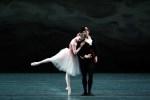
There are a lot of considerations that dance students and their families should discuss before an SI is chosen. We’ll get into those in another post. Focusing on the audition season itself, you need to know that even if you are 100% positive that you will not be able to attend an out-of-town summer intensive, it is still an absolute must for you to attend the summer intensive auditions that tour to your town. Why?

First off,  the more experience you have taking part in auditions, the better. Auditions are a way of life for dancers, and getting comfortable with the process is best accomplished by experience. You should consider auditions to be a vital part of your dance education.

Secondly, the audition results can give you an idea of how you are progressing. Are you good? How good? It can be nearly impossible to get a feel for your own talent and technique just from taking daily class at a small-town studio. Finding out what major schools are interested in you – and which ones aren’t – can help you understand how you are perceived and what kind of potential you are thought to have.

In addition, you will have a chance to be seen by top companies and schools who may recognize you next year if you are unable to attend the SI but do audition again. Often, SI schools send the same few people to the same cities, so that the Tulsa team, for example, will be fairly unchanged year after year. If you stood out at all, you may have made an enough of an impression with the adjudicators that they remember you from the prior year. You’d be surprised how often this happens and how much it can help with your training career.

For dancers located in areas without access to the very best schools, summer intensives can be their only access to opportunities to be trained by national master teachers, to be taught by professionals currently dancing with top companies, to meet other serious young dancers, to be seen by artistic directors and to devote a whole month or more of full 8-hour days to their dance training.

Summer is often the only time a young dancer has when time is not split between school, homework and other activities. Those dancers who do not take advantage of this time – even by attending just a local dance intensive – are not only wasting an opportunity to focus on dance without distraction; they are creating large developmental gaps between themselves and their many peers who do attend intensives.

These are just a few of the reasons that you should make SI auditions an annual part of your training process. In the next post, I will be providing links to audition tours and websites for the best of the best in SIs. Take a look, and start planning your 2011 audition schedule!

Inspiration: Kathryn Morgan

Young NYCB soloist Kathryn Morgan hails from Fayetteville, North Carolina, and received her initial training from Mobile Ballet in Alabama, where she recently returned to perform as a guest artist. In 2004, Kathryn went to the legendary School of American Ballet, moving into an apprenticeship with NYCB in 2006 and a corps de ballet post in 2007. Her promotion to soloist happened just over a year ago, in October of 2009.
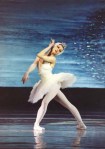
Kathryn, or “Katie”, is perhaps one of the company’s most charming ballerinas, and her quiet, radiant grace is apparent in every role. She has been featured by the New York Times, Dance Spirit and Pointe Magazine and guest-blogged for the latter. You’ll be truly inspired by the gorgeous photos on her website – it took me quite a while to decide which one was prettiest for this post!

UPDATE: Kathryn has a new website now, with a fabulous blog of her own. Check it out! It’s called IfThePointeShoeFits.

Ballet in Film: Only When I Dance

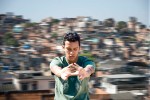
Only When I Dance is an award-winning documentary presented this year that follows two desperately underprivileged dance students, a girl and boy, from one of the most violent and tragic favelas in Rio. The odds of these two young people succeeding are stacked strongly against them. Find out what happens when two children dare to dream of escaping to a better life through dance.

Click here to find out how you can help the Vida Ballet Fund. This organization provides grants to young people from disadvantaged backgrounds of Rio and the surrounding favelas who would not otherwise have access to dance school or an opportunity to pursue dance as a career.

Inspiration: Olga Pavlova

Sometimes it’s tough to remember what you are working towards with the endless classes, rehearsals and corrections. Every dancer could use some inspiration to keep focused and excited about dance, so with that in mind, I thought I’d take some time to feature for you some of today’s elite ballet artists.
Trained at the Bolshoi Ballet Academy, Olga Pavlova is a versatile, ethereal ballerina currently with La La La Human Steps in Montreal. Check out her website bio and gorgeous photos!

Ballet in Print: Cuban Ballet

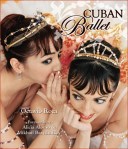
In order to reach their full potential as artists, many Cuban ballet dancers leave their country to escape the complicated politics of Cuba. And that nation’s loss has become the world’s gain as pointed out by noted dance critic and this book’s author, Octavio Roca. Cuban Ballet explores this evolution and is gorgeously illustrated with both vibrant full-color and dramatic black and white photographs of current and former Cuban ballet dancers.

Cuban Ballet provides an exceptional portrait of Cuban ballet’s history, including stories of select Cuban ballet stars. This book also features a forward by Mikhail Baryshnikov and by Alicia Alonzo, who you might have guessed is one of the dancers featured most prominently. Released only last month, this exciting and beautiful new book is available at a significant discount through Amazon.

So is vamp short for … vampire?

Uh, that would be a no. Kiddos, if you want be a ballet dancer, recreationally or professionally, you gotta speak the lingo. So today, let’s talk about the language of pointe shoes. And to talk about that, we have to understand how they’re made.

To create a traditional paste shoe, the fabric, leather and other components need to be shaped on a form, or last. Layers of canvas, burlap or muslin with paste and sometimes flour are often hand-formed for the box, baked for hours, and dried for sometimes weeks. Often, shoes are formed from the inside and then turned right-side-out for the final touches like binding. Most pointe shoes have no left or right until they are broken in by the dancer. (Just to clarify for the real newbs out there: There is no wood tip or block in a pointe shoe!)

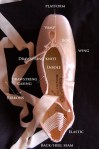
Each part of a pointe shoe, from the tip or platform on which the dancer balances when on pointe, to the thin and carefully sewn drawstring cover, or binding, has a name. So just for you, I’ve compiled this glossary of basic pointe shoe terms that you should know:

Binding: the fabric channel through which the drawstring runs

Box or Block: the stiff toe cup that encases the toes

Box liner: the soft fabric that lines the inside of the box

Crown: the vertical height between the vamp and the sole

Girth: the measurement around the widest part of the foot, at the metatarsals at the ball of the foot

High Profile: a pointe shoe box, often cylindrical, with a relatively large space between the outer sole and the top of the box, better for higher insteps.

Last: A last is designed to create a shape by replicating the form of a dancer’s foot. Every style, size and width requires its own last.

Low Profile: a pointe shoe box with a generally flat shape and a relatively small space between the outer sole and the top of the box, better for lower insteps

Metatarsals: the five bones between the ankle and the toes. Pointe shoe fitting is especially concerned with the area near the ball of the foot.

Outer Sole: the bottom part of the shoe, usually made of synthetic or leather, which is in contact with the floor when the dancer stands in the normal flat position

Platform: the part of the pointe shoe on which the dancer stands when en pointe

Pronation: the rolling inward of the foot so that when standing flat, more weight is on the ball of the foot than on the outside

Quarter: the part of the shoe covering the sides and heel of the foot

Shank: the stiff insole that provides support; Created from the leatherboard or redboard, this is the backbone of a pointe shoe. It is located under the socklining and provides support to the arch. A dancer’s strength and technical ability determine shank preference.

Side Wings: Side wings are an extension of the box and provide lateral support.

Side Quarters: the sections of satin from the side seams to the back of the stay

Sockliner: the soft fabric that lies directly underneath the foot and runs the length of the shoe

Sole: Made of either buffed or scored leather to provide traction, the sole is internally stitched to the upper.

Stay: fabric that covers the seam in the back of the shoe at the dancer’s heel

Throat: open area located between side seams at the center front of the shoe is the throat. It gives shape to the upper which accentuates a dancer’s arch.

Vamp: the section of the shoe “upper” measured from the platform back to and including the binding. A longer vamp can help draw the foot closer to the shank for more support on pointe, so that the foot doesn’t overextend.

Vamp Elastic: wide, firm elastic sewn at the throat of the shoe to extend the vamp and cover the top of the foot

Winged Box: a box with extra-long, stiff sides