Dancewear en l’air: The Cross-Bust Camisole Leo

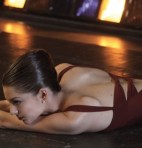
Nothing beats gorgeously simple Italian design, and here to prove it is Deha with model No. T02105. This leotard features excellent fit with a shape-accentuating cross-bust empire bodice and is available in eight interesting colors.

The CBT loves that the simple but stunning design of this piece is exactly what makes it so compelling – no skirt or embellishment necessary. And that makes it perfect for class.

Update: The link to the Deha leo has been having problems all day, so here’s a link to the English main page. Once you are there, click “Deha Ballet shop on-line” and you’ll see this leo on page two of the Donna (Ladies) section. Sorry for the inconvenience!

The Cecchetti Method: A Singular Systemization

The Italians were the first to codify and systematize ballet training. Enrique Cecchetti, born in the dressing room of a theater in 1850, is considered the father of this method, though Cecchetti built on the principles of Carlo Blasis, who codified his own teaching method in 1820.

Known for its brilliancy and virtuosity, this method includes many unique modifications of steps. For example, an Italian changement is a change of the feet done in the same way as a traditional changment except that both legs come to a retiré position mid-changée. Other evolutions include interesting “off-balance” poses – think a lá secónde with the body tilted away from the leg. Additionally, new labels and executions were created for port de bras, arabesques, attitudes, body positions and wall/corner numbering. Perhaps the most widely-seen modification is the flexed-foot, floor-striking battement frappé, which is seen in the classes of other techniques quite frequently.

As a part of the systematization of this method, the Cecchetti technique is governed by a strict program of examinations, and classes for each level are actually pre-set for the particular day of the week, so that the teachers do not plan new barre exercises or centre enchainments each week. This helps the students to study and perfect examination exercises.

The Cecchetti Counsel of America is the accrediting institution in the U.S., but the true home of this technique is the Accademia Teatro alla Scala in Italy. The Scala school is not just for dance but also includes music, stage, and performing arts management departments.

The ballet company of La Scala is one of the most revered in the world, and was and is home to many of the most famous dancers of today and yesterday including Maria Taglioni, Carlotta Grisi, Roberto Bolle and Alessandra Ferri. And although Svetlana Zakharova is a Vaganova ballerina, one of her current contracts is as a principal dancer étoile with La Scala.

Dancewear en l’air: The Twist-Back Tank

From the French brand Wear Moi, here is a wearable piece of art for your next class or audition. Wear Moi’s Isaline leo brings attention to your back with two lateral knotted strips of tulle to match the stretch tulle front and straps.

This leotard comes in four lovely shades, but its drama seems best suited to the rich maroon or ink black versions. Isaline would pair nicely with a simple black roll-waist knit tight or a matching skirt that won’t take steal attention away from its über-refined and understated details.

Ballet in Film: La Danse

You know I love my themes! Today is French method ballet, so it’s the perfect time to introduce La Danse, a very recent documentary about the Paris Opera Ballet.

This much anticipated film contains beautiful footage of the world-famous company, but be forewarned – it’s about two hours long and is a mix of both modern dance and ballet. Both are of the best quality, however, which makes this documentary worth the time – just have some snacks ready!

The French School of Ballet: The Elegant Original

The very first ballet school was established in France in 1661 by Louis XIV, which is why France is credited for being the original ballet technique despite Italy’s earlier balletic court dances. French ballet is known for its elegance and refinement rather than its virtousity. Check out the two beautiful videos here to see if you can get a feeling for the precision and understated beauty of this method.

The language of ballet terminology is French and is somewhat different in France than the version that is used in other methods. Take a quick peek at Gail Grant’s Dictionary and you’ll see many definitions annotated with, “A term of the French School.” Many of these phrases and words, such as sissone en descendant, are not used in any other method. The French School also has its own system ofarabesques, port de bras and wall/corner numbering.

L’École de Danse de I’Opéra de Paris is the modern day home of French ballet technique. Admission is extremely selective, and students at the Paris Opera Ballet School endure rigorous training and yearly eliminations. Apprentices and corps de ballet dancers are selected from those students that make it to graduation, which often makes training at this feeder school competitive and solitary.

The company, Paris Opera Ballet, currently numbers 191 ballet dancers total, and has a heirarchy system unique in the ballet world. POB has emerged as a leader not only in classical and contemporary ballet, but also in modern dance.

The French method is not often taught in the U.S., but it’s the direct parent school of all other ballet schools in the world. You can’t take a plié without having to credit the French!

Dancewear en l’air: The Sporty Zipper Unitard

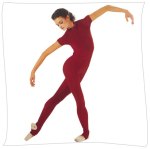
Unitards can be fun for rehearsals and even auditions, especially for contemporary ballet, and Sansha’s mock-neck unitard #503 is a modern change from the usual unembellished tank and long-sleeved versions.

This unitard features a zipper from the neck to right below the bust so you can customize your look. Stirrups at the feet keep the leg lines as long as possible and accentuate pointe shoes particularly well.

How do you say “Cecchetti” anyway?

There are many different styles of ballet taught around the world. Each is usually named after its founder and that person’s country: Cecchetti for Italian ballet, for example. But what are the differences between them? Which one came first? Does it matter which one you are trained in? How can you choose which one is best for you? How can you figure out which one you’re currently training in?

The four most popular styles of ballet in the U.S. are:

  1. French Technique – This is the original style of ballet and the foundation for its vocabulary. All other ballet techniques can be traced to the French style.
  2. Cecchetti Technique – (Pronounced like “check-ET-ee”) A style created by ballet master Enrique Cecchetti in Italy as a revision of the French technique.
  3. Vaganova Technique – (Pronounced like “va-GAH-no-va”) A technique created by Agrippina Vaganova in Russia as a hybrid revision of the French and Cecchetti styles.
  4. Balanchine Technique – (Pronounced like “BA-lan-sheen”) Created in the U.S. by Russian-born George Balanchine as a revision of the Vaganova technique.

Other popular styles include Royal Academy of Dance (RAD), Cuban method and Bournonville (Danish ballet). Each technique has its own special philosophy on what kinds of movements look best on the body and are best mechanically-speaking. The vocabularies can vary quite a bit as well. I’ll be posting soon to tell you more about what makes each style unique and what would make a dancer choose one technique over another.

You can usually figure out what technique you are being taught by simply reading the brochures or website of your school or asking your teacher. Especially in the U.S. however, ballet teachers may be trained in a mix of styles and end up teaching their students different things from different techniques. This can create confusion for the student, especially the student thinks she is being trained in only one technique.

It can be great for your versatility to explore different ballet styles, but only once you have reached a somewhat advanced level in your dancing. Doing so too early can confuse your muscle memory and your brain! Until you are ready, its usually best to find a teacher who articulates what technique is being taught and who specifies when you are presented with a step or vocabulary from a different style.

Dancewear en l’air: The Figure-Flattering Camisole Leo

Camisole leotards are the most popular leotards on the market, which is why there are so many available – good, bad and ugly. But when you’re searching for a classic, picture-perfect camisole that will flatter every shape, look no further than Mirella’s M210L.

This camisole is beloved by dancers for its shape enhancing princess seams and pinch-front, which together create a classic hour-glass effect. This leotard also comes in nine beautiful shades including Mirella’s unique Seafoam color as shown, which looks great on blondes and fair-skinned ballerinas.

Ballet in Film: TutuMUCH


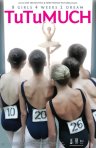
To keep with my theme today of professional track training, I thought it would be perfect to highlight the not-yet-released documentary TuTuMuch, which follows nine girls through the summer audition process of the revered Royal Winnipeg Ballet School.

Professional ballet schools can be very closed when it comes to their audition processes. For those of you who’ve never been through such an audition, TuTuMuch provides a revealing look at what happens behind the curtain. The vast majority of young dancers auditioning will not make it into the program, but those that do will be one step closer to making their dream a reality.

So you want to dance professionally?

Deciding to pursue a professional dance career is a huge decision. If its something you really want, you will have to have to put maximum effort not only into your training, but into setting yourself up in the best situation to support this goal. With so many factors to address, where should you start?

If you are still a young student, the first item to consider iswhether you are getting the training you need to be technically and artistically competitive. One way to assess your current school is to find out how many of its students have gone on to professional careers and exceptional college dance programs. You should also consider how many hours of training you receive each week and what level of proficiency your teachers each reached before becoming instructors. If you want to dance professionally, you should be training about four hours daily, five days a week, by age thirteen or so. Your teachers should have each either danced professionally or pursued study in pedagogy for their field of dance. Be aware that a former professional dancer may not know how to teach well, and a pedagogically trained teacher may not have enough knowledge about professional-level training.

For ballet, contemporary and modern dancers, finding a school that will put you at your best advantage for a professional career can mean transferring to a school that is attached to a professional company. Many such schools will require an audition for acceptance or at least for level placement. Some of the largest and best of these schools also offer academic classes, like Walnut Hill or the tuition-free Harid Conservatory. Some, like School of American Ballet and Joffrey Ballet School, are affiliated with professional children’s academic schools, and some, like The Rock School for Dance Education, have special arrangements with the local school system. Finding the right school, getting in, and finding a way to afford it can each be huge hurdles.

Some dancers simply do not have support from their family or money to attend or even apply to such prestigious schools, in which case transferring to the best school in your town is the next best option. It is a tougher road but not an impossible one. Before deciding this is your path, research all available scholarships, free-tuition programs and ways to raise funds. Remember that when you start auditioning for work, you will be competing against hundreds of graduates of professional schools like the ones above.

Deciding to transfer out of your current school can be a difficult one. Often a young dancer’s school is like her second home, her dance friends and teachers her second family. Remember that transferring schools doesn’t mean having to cut ties with everyone there, and you should always be respectful and appreciative of the many things your “old” school taught you. A dancer’s first school is usually the one that inspired her to begin a path to a professional career, and that passion for dance is the most invaluable part of a dancer’s education.

You will become eligible for many company auditions by sixteen, but that does not mean you need to start auditioning then. Most companies don’t take dancers until they are in their early twenties at least. Going to a very high-quality college dance program is the step I recommend for professional-track dancers graduating from high school. College dance programs are always evolving in quality, so when its time to start looking at colleges, I highly suggested getting yourself a copy of The Dance Magazine College Guide to find out which ones are best. Ideally, you want to find a truly top program that turns out professional dancers and is affiliated with a professional company so you can gain performing experience and set up a connection to a company while in college. Once again, getting into and affording the right school can be huge hurdles. Scholarships and working while in school can ease the financial burden, but the audition is all you.

About two years before you want to start your professional career, you will need to start intensive research on potential employers and decide on your application presentation. You may have to have to put in as many hours researching companies, developing your marketing materials (résumé, photographs, videos, etc) and earning money to fund an audition tour as you do training – and that’s a lot of hours.

Different companies value different qualities. Preferred body types, training techniques and dancer “looks” can vary widely. You don’t want to waste your time auditioning for a company that only likes lithe blondes with Balanchine training if you are a short redhead trained in Cecchetti. You’ll find that some companies welcome a variety of looks for their dancers, and you may prefer that culture.

Finally, it comes down to the audition. When at all possible, avoid the cattle calls of open auditions. It can be extremely difficult to find work this way. Instead, find out how to get into a company class. Some companies will want to see your video before they will agree to let you audition. Those pre-screened auditions are also much better than the cattle calls. If you are offered contracts, you will need to compare your potential pay and benefits, geographic locations, amenities, facilities,  performance opportunities, etc, to decide which offer you want to accept.

There is so much more to this process than I’ve laid out here, and I’ll try to address specific items in more depth in later posts. But hopefully this has given you the basic idea of what it really means to say, “I want to dance professionally!”

Dancewear en l’air: The Backseamed Pink Tight

Ballet tights in an unflattering shade of pink are one of the CBT’s pet peeves! Choosing a pink that clashes with your pointe shoes or ballet shoes will shorten your lines and just look wrong.
Pinks can vary depending on the amount of blue and yellow in the dye formula. Generally, classical or ballet pink tights look best with the more salmon-y shoes, like Freeds and Capezios, while theatrical pink looks better with truer pinks and paler shoes, like Grishkos and Russian Pointes. You may need to purchase one shade to match your soft shoes and one for pointe.

Non-mesh tights are usually very soft and appear to be a pretty pale pink in the package, but they often look white, yellow or purple once their on. Mesh tights can be almost scratchy sometimes, but usually have better pinks. (Steer clear of Capezio #9 in classical pink, though, it’s famous among dancers for looking bright orange!) A backseam makes alignment checks easier and visually lengthens your lines dramatically.

One of the best ballet tights on the market currently is the Body Wrappers A45, a convertible mesh version with a backseam available in ballet pink and theatrical pink. Its designed to feel super soft against the skin so you’ll get the best of both fabric worlds, and you’ll look polished and professional.

The Ballerina Gallery

Part of becoming a well-rounded ballet dancer is not only striving for versatility, but educating yourself on dance history and the great dancers that have come before you. For the latter, a visit to The Ballerina Gallery is a must.

A simple A-Z guide of some of the very best dancers that ever were and that are today, this online collection of biographies and photographs of great ballerinas is positively inspirational!

10 Pointe Shoe “Don’ts”

Fall is nearly here, and with it a brand new crop of beginner pointe students. Are you ready for pointe classes? Perhaps you have scheduled a fitting or are just waiting for shoe-approval from your teacher. Maybe you already sat down with a parent or an older student to learn how to sew your shoes. Or maybe you are even entering your second or third year of pointe.

The CBT sees a lot of mistakes from pointe students in their first few years. Its to be expected, but if you want to jump the learning curve a bit, there are some pointers that can save you time, frustration and embarrassment. So with that in mind …

  1. DON’T rely on your parents. As you may have gathered from the above and prior posts, students should start taking care of their own gear and hair for class sooner rather than later. Having your parents take care of these things implies to your teacher that you are probably too immature to handle really advanced training.
  2. DON’T try to cheat in your sewing with Pointe Snaps or any other such horrid invention. Not only do they totally not work, they stomp all over the traditions of ballet.
  3. DON’T use Knot Keepers or tape to keep your knots in place. By all means, be concerned if your ribbons come out of hiding -Professional contracts used to include monetary fines for dancers that had this happen. But don’t ruin the look of your shoes by cheating with these things. Just learn to tie them properly.
  4. DON’T use rosin on your shoes if you have a marley floor. Here’s where innovation is a good thing. Rosin was used by dancers back when ballet floors were made of wood. It made the shoes slightly tacky to give greater connection and feel for the floor. Marley’s special makeup eliminates the need for rosin, and rosin can actually damage a marley floor.
  5. DON’T force yourself to deal with loose lambs wool or paper towels as your beginner toe padding. Those things are just far too much trouble for even the most advanced dancers these days. Again, the quality innovation and technology in this area is worth taking advantage of.
  6. DON’T overpad your toes. This is a super common beginner mistake. Overpadding prevents you from feeling the floor and pointing your foot properly, which makes the feet look like floppy fish and ruins your lines! Pad within reason, and as your feet become used to pointe shoes, periodically try to scale back your padding by going to a smaller pad or by removing them in favor of spot-padding.
  7. DON’T be afraid to try different shoes for a while. It can take quite some time to find the shoe that fits you best. You’ll probably get a perfectly decent pair the first few times, but its worth it to keep trying different things to find your most perfect match. You have to be prepared to learn the balance point in each new shoe you try, however.
  8. DON’T practice center exercises at home. At least, not unless you like taking off from dancing for six weeks because you sprained your ankle trying to do a piqué arabesque in your kitchen…
  9. DON’T expect too much too fast. Pointe training has to be done gently and carefully in order to reach the desired result. Every pointe student has had to go through the on-two-feet-facing-the-barre stage. You will be beyond that before you know it and glad you put in the time.
  10. DON’T forget to be proud of yourself for all the hard work you’ve put in and for everything you have achieved.

Ballet in Print: In the Wings

Few photographers hold a candle to the perspective that Kyle Froman takes on ballet, and that really shows in his pictorial book, In the Wings: Behind the Scenes at New York City Ballet. This book is a dream for any aspiring student of ballet.

As an NYCB corps de ballet member for thirteen years, Kyle has had all the access to and intimacy with the company that a most photographers could only hope for. Add to this a professional dancer’s perspective on the productions that take place each night, and In the Wings becomes a wonderful peek into Balanchine’s great creation and one of the highest quality professional ballet companies in the world, New York City Ballet.