 A brand new series will soon be presented by Dance(212)! And this time they’ll be focusing exclusively on ballet students’ summer intensive experiences. Check out the preview here, and get ready to meet five exceptional and ambitious young dancers (including Hannah Miller, shown left) with talent and drive to spare. Tune in January 24 for the series premiere!
Tag: pointe
Getting Accepted: What Are “They” Looking For at SI Auditions?
 Summer Intensive auditions are now in full swing, and I’ve gotten tons of great questions from you guys lately about what the SI adjudicators will be looking for! I know you all sometimes feel a lot of pressure about these auditions, but you should know that the adjudicators will make it as positive an experience as possible. Often, your audition fee will be a “master class” fee, and you will have the benefit of instruction and correction from exceptional teachers during the audition class.
I know what you’re really interested in, though, is the nitty-gritty of how your are being judged. Many factors are considered in your evaluation. I like to divide these factors into two categories: physical attributes and performance attributes.\
By physical attributes, I am referring to the body of the dancer. Dancing is a sport (and of course an art), and just like any sport you must have a body that is physically capable of doing the work required. Your adjudicators will be looking for dancers of a healthy weight who have a suitable physical facility for ballet. By facility, I mean dancers with:
- Good rotation for turn-out
- Long, flexible limbs
- Supple muscularity
- Balanced proportions
- An overall good “look”
Of particular interest to auditioners might be:
- Longer limbs combined with a shorter torso
- A small head
- High but strong and controlled arches
- A touch of hyperextension in the knees
Of course, we can’t talk about ballet bodies without getting to the touchy question of weight. I am not going to sit here and tell you that SIs never accept underweight dancers. Sadly, some SIs might overlook an underweight dancer who is able to hobble through an audition, but these dancers generally do not make it far in ballet (or sometimes even that SI) due to their sheer inability to physically keep up. Without a proper muscular structure and proper food intake these dancers inevitably cannot perform as required. One of the saddest things I saw as an SI student was when dancers were sent home from a program for concerns of being underweight or unable to physically keep up. It goes without saying that being overweight will be similarly inhibiting, and that an athleticly slim figure is often preferred. So the most important thing is to be of a healthy athletic weight, and that means being neither over nor underweight.
Physical attributes are secondary to performance attributes, however, and these attributes include movement quality and the dancers ability to … dance! Performance attributes include:
- Quality training commensurate with age
- Good basic placement and core strength
- Coordination
- Musicality
- Proper use of plie
- Good lines
- Strong and articulated feet
- Quality port de bras
- Extension appropriate for age
- Strength on pointe, if appropriate
- Ability to understand corrections
- Ability to apply corrections
- Ability to pick-up choreography quickly
- Style and artistic expression
- Great mental attitude
- Passion for and enjoyment of dancing
You probably notice that the first ten items on this list are all related to technique. Remember that these adjudicators are not looking for perfection. In fact, up to the age of about 14, they are giving quite a bit of consideration to the dancer’s potential. If you are lacking in technique due to inadequate instruction for example, you can show through your ability to pick up corrections and choreography that you are very teachable and therefore perhaps an excellent candidate. As you get a bit older, however, adjudicators will be looking for a more finished product. By the age of 17 or 18, you will want to present yourself as a dancer who has most of her technique and movement quality at a professional level. They will want someone at that age to be working mostly on artistry with perhaps some technical fine-tuning remaining to be done.
Do not underestimate the importance of the last two items I’ve listed. Showing your love for dance through enthusiasm for learning and enjoyment of movement can and often does cause an adjudicator to give a student a second, third or even fourth look. Avoid the “deer in the headlights” look at all costs! Be present in the moment, attentive, focused mentally and with your eyes, and remember why you are there in the first place … because you love, love, love to dance!
Merde, ballerinas! May you all have an exciting and educational audition season!!
Inspiration: Natalia Osipova
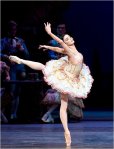 Happy New Year, dancers! You’ll be getting back to class soon and preparing for spring shows and recitals, so here’s some inspiration for your busy New Year. Remember that this year will be whatever you make of it!
Natalia Osipova graduated from the Bolshoi Ballet Academy in 2004 and was given a position in the Bolshoi’s corp. While still a student, Natalia won the Grand Prix IBC in Luxemburg. As a young professional she was granted soloist roles from the start and won a bronze medal at the Moscow IBC at the end of her first pro year.
Noted for her exceptional allegro, Natalia was highly praised by critics for her attack and brilliance. She was becoming well-known while still just a member of the corps. Her steady ascent has been punctuated by prestigious awards and critically acclaimed debuts. Natalia was promoted to lead soloist in fall of 2008 and finally to principal in May of this year. Check out amazing action photos of Osipova and more inspiring details about her journey to stardom at her website.
Pirouette Perfection with 24 Tips & a Vertiginous Video!
Pirouette help just in time for audition season! You might have noticed that I added a blogroll a few weeks back so you could have access to even more dance articles and resources. (It’s on the side of every page.) I add good new blogs as I find them, but my latest fave is Dance Advantage, which you will recognize from my below post on their Top Dance Blogs competition.
Dance Advantage takes a fun approach to dance student topics like technique, dance programs, performance/competition preparation, dance history, and even professional companies. You’ll love their technique section, which has neat, bullet-pointed summaries of basic and classic technical tips. Their 9 perfect pirouette improvement tips and 15 fantastic turn corrections are sure to help you to understand and stay focused on proper movement quality in a basic pirouette. You have probably heard these tips often from your dance teacher, but it’s great to have a quick reference in print!
Need pirouette inspiration and some more help? I found an excellent video for you from Anaheim Ballet which highlights my absolute favorite theories for achieving your balance point and, thereby, accomplish gorgeous turns:
2011 Summer Intensive Updates!
 If you haven’t been regularly checking my recent post on the best SIs, click back over to look for newly added quality regional programs (at the bottom of the post) and additional updated info on individual programs.
Also, Pointe Magazine has posted online two good articles on preparing for this audition season. “Rejected” is one dancer’s story of turning a potentially crushing letter into a motivational tool, and “The August Advantage” is a look into summer intensive extension and add-on programs for advanced, vocational students.
Inspiration: Keenan Kampa
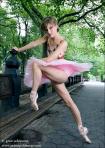 It’s impossible to not be inspired by Keenan Kampa. As the first American to graduate from the Vaganova Academy in St. Petersburg, Keenan, 21, has just accepted a position in the corps de ballet of Boston Ballet.
With long yet muscular limbs, Keenan has a natural facility for ballet. Born in Washington, D.C., Keenan studied at The Conservatory Ballet in Reston, VA, and then on scholarship with American Ballet Theatre JKO School in NYC. At 17, she reached the semi-finals at the Prix de Lausanne. She was soon thereafter spotted at a Russian Maryinsky master class and received an invitation to the Vaganova School. Her professional debut is widely anticipated, but you can check out her graduation performance, rehearsals and graduation exams now on her family’s youtube channel, kampagirls.
Ballet in Film: Masha, A Portrait of Maria Kochetkova
 A new film is in the works documenting 2002 Prix de Lausanne winner Maria Kochetkova, now principal dancer with San Fransisco Ballet, in rehearsals and performances of a brand new ballet. Maria trained at the Bolshoi Ballet Academy for eight years before joining the Royal Ballet and then the English National Ballet. Kochetkova graced the cover of this year’s April/May Pointe Magazine and has been awarded four International Ballet Competition gold medals in addition to one silver, one bronze and the jury prize.
You can view her personal website here. Pre-ordering of her DVD will be available at http://kck.st/b5LxPL, but here’s the beautiful trailer in the meantime. Check out her exquisite port de bras!
Teacher Summer Intensives & Workshops
 Student dancers, this post is not for you, but I will be completing my tips on DVD auditioning very soon!
I was recently asked if I know of any good teacher workshops. I compiled a list this past summer for my own use, and I am happy to share that, though I can’t guarantee that it’s exhaustive.
Some of these require auditions, some require a paper application process and others will accept anyone who registers and pays. Gelsey Kirkland’s school and Royal Winnepeg are linked to year-round programs. ABT and perhaps one or two others offer a certification after completion of their program. I went ahead and left my old notes on estimated costs on this list, though I don’t know if they are still accurate. The last three I have heard of by word of mouth, but could not find information on them at the time.
I am personally most interested in John White’s (author of the great teachers’ books “Teaching Classical Ballet” and “Advanced Principles in Teaching Classical Ballet”) program, and Ruth Petrinovic’s (teacher of master teacher David Howard) program. Ruth was trained to teach by JoAnna Kneeland, who is famous for popularizing the therapeutic barre. (JoAnna, Ruth and David are all Harkness people, I believe.) John recently completed a few years of running his elementary to intermediate program and is now running his intermediate to advanced program. I am told that the program really does build, so that you need to take the former before the latter. I’m not sure how long it will be before he goes back to running lower level program.
In addition to my list here, Dance Teacher magazine keeps a long list of schools that supposedly run teacher programs, but somehow a lot of them don’t really seem to do so. I think many schools consider teachers eligible to attend their student SI, but that doesn’t qualify at all as continuing education if you ask me. So here’s my list of programs:
Gelsey Kirkland Academy Teacher Training
http://www.gelseykirklandballet.org/academyteachers.html
Royal Winnipeg Ballet School Teacher Program (course/room/board $1450)
http://www.rwbschool.com/pro/Programs/Teac…narProgram.aspx
Ballet Magnificat Teacher’s Workshop (course/room/board $943)
http://www.balletmagnificat.com/E_teacher.html
Pennsylvania Academy of Ballet with John White (course/room/board $925)
http://www.paacademyofballet.com/vaganova11.htm
American Ballet Theater Teacher Certification Programs
Primary-Level 3 Training (course only $1650)
Level 4-5 (course only $1350)
Level 6-Partnering (course only $1325)
http://www.abt.org/education/teachercertification.asp
Tampa Ballet Center Ruth – Petrinovic’s Teacher Training (course only $900)
http://tampaballetcenter.org/Ruth%20Brochure.pdf
CPYB Teacher Workshop (course only $675)
http://www.cpyb.org/summer-programs/teachers-program
Dance Teacher Summit (course only $550)
http://danceteachersummit.com/
Dance Masters of America (course/room/board $850)
http://www.dma-national.org/xftraining.htm
Dance Educators of America
Level 1 (course only $1000)
Level 2 (course only $1000)
Level 3 (course only $1000)
http://www.deadance.com/dea/menu2/program.htm
National Dance Education Organization
http://www.ndeo.org/content.aspx?page_id=2…module_id=66988
Vaganova Summer School with Mansur Kalametnidov
http://www.russianballet.net/teachers.html
Pacific Northwest Ballet Teacher Seminar (no info found)
Vail International Dance Festival Ballet Teacher’s Seminar (no info found)
National Ballet of Canada (no info found)
So that’s it. Hope this helps! If you know of any others, just put them in the comments, and I’ll add them to this list.
DVD Auditions for the Distance Dancer – Part 1
 Uh-oh! One of your top summer intensive choices isn’t auditioning anywhere near you this year, and you can’t travel to them. No worries – DVD auditions are accepted by many national and regional ballet schools. (Though some, like SAB, only accept videos from foreign students.) And with a few tips, you’ll be well on your way to an audition-worthy disk.
This post is in two parts because there are so many tips on this that I’d like to give you. Today, I’ll focus on the content – what you are going to perform for your video audition. In Part 2, we’ll talk logistics, filming style, how-to and putting together the audition packet.
Just as with live auditions, most schools devote at least one page on their website to video auditions: what to wear, what steps to include, what papers to include and how long it should be. Find this for each of your video audition schools and print out the pages for easy reference and comparison. In order to prevent yourself from having to make more than one audition video, read through the requirements of all your schools of interest to see if you can make one DVD to satisfy all of them. Usually, the only time this won’t work is when one school requires a you to send a variation – many schools will not want variations on your video, so you will need to make a separate disks for the two types.
Most schools will simply want a short barre and center class, but with special modifications. If you read all requirements carefully, you will find that most modifications can be combined and do not conflict with each other, so that you can make one class DVD to use for all your auditions. If you can’t however, don’t try to buck the rules. If you need to make different tapes, just go ahead and make different tapes. Run a single taping session and use editing to pick and choose what portions should be included for each school. Then, make darn sure not to mix up those different DVDs.
While some of us (ahem, moi) might make perfectly successful SI DVD auditions without rehearsing, that is not the recommended protocol! I only made my tapes with no rehearsal as a young dancer because I didn’t know any better, and that’s the very reason I created this blog – So other dancers won’t be as clueless as I once was!
You want to decide ahead of time exactly what exercises you will perform, which side you will perform for each, what music you will use for each, etc, and then practice, practice, clean, clean. Make yourself a list so you don’t accidentally forget to perform one during your taping. If you forget to perform a step, it will be impossible to tape a new session and splice it into your DVD without the details of your hair, makeup and background giving away your cheat.
One of your teachers can help you put together exercises that conform with the audition requirements. Make sure to provide them with the requirements well in advance. If all it says is to include barre and center, here are some sample (Vaganova) exercises you might include for the barre:
Pliés – Just do something straightforward like demi, demi, grand, and a port de bras or port de corp in first, second, fourth and fifth.
Tendu – Three battement tendus (from fifth, first, and then fifth again) ending the third one in demi plié. Instead of en croix, perhaps go front, side, back, and then balance in fifth or rétiré before your reversal. I would also recommend using a full port de bras in each direction to show your understanding of the lines involved there.
Jeté – Two quick battement jetés and one pas de cheval, perhaps with the arm in second and ending with a relevé rétiré balance with arms in first or, if you are advanced enough, with a single pirouette from fifth. Perform this devant, a lá seconde, and devant with your inside leg to jazz it up before reversing, but realize how that will change the pirouette directions.
Rond de Jambe – To a waltz: two slow ronds par terre, two quick ronds, degagé to 90 degrees, demi rond at 90 to a lá seconde, one rond de jambe en l’air, demi rond to derrière 90, close fifth. Reverse. Since this is an audition, I would save time and not include a port de corp if you have already included one with your plié exercise.
Frappé – Two (Cecchetti) frappés devant, one relevé, repeat a lá seconde, repeat derrière, then frappé a lá seconde into relevé and petit battements. Reverse and balance in relevé sur le coup de pied before closing fifth.
Adagio/Fondu – Developpé devant, battement fondu simple to 90 degrees en relevé, hold or balance for a moment and close fifth. Repeat a lá seconde. Repeat derrière/arabesque. Instead of repeating to the side, hold the balance in arabesque for the final counts. Do not reverse.
Grand Battement – Keep it simple with two grand battements en croix with arm in third for devant and derrière.
You’ll note that this is a very short barre with few balances and port de corps. Remember that your adjudicators need only a snapshot of a class.
Center should include an adage, pirouettes, petit allegro, grand allegro and pointework for ladies so advanced. Some sample exercises:
Adagio – Beginning croisé, developpé croisé devant, passé through rétiré to attitude éffacé, stretch to second arabesque, relevé to pas de bourée into demi plié fifth, developpé écarté devant, promenade to écarté derrière, relevé and tombé into balancé to the right, devellopé the left leg through sur le coup de pied to chassé croisé en avant on the left and close the right leg back. Repeat left.
Tours – On the diagonal in fifth croisé with right foot front, chasse croisé en avant to prepare. Tombé pas de bourée to the right, piqué to first arabesque, land in fourth position with left leg front, single pirouette en dehors to fourth, double pirouette en dehors to fourth. (Or balance in retiré and then a single pirouette if that better suits your level.) Perform once right and once left, preferably without a break – Just rond the right leg around at the end of right side.
Petit allegro – From fifth en face, right foot behind: Glissade, jeté right, glissade, jeté left, balloté devant éffacé, balloté derrière éffacé, coupé and brush to assémblé side with the left leg, closing back. Peform right and left, with battu on the jetés and assemblé if you are advanced enough.
Grand allegro – Same preparation as pirouette exercise. Sauté first arabesque, glissade, pas de chat, sauté first arabesque, glissade, grand jeté, pas couru and piqué into third arabesque, chasse into grand jeté en tournant entrelacé landing in fourth arabesque, small devellopé through to devant and chassé into chainés, chassé out and into first arabesque a térre.
If you are over 13, you may be required to perform the whole video en pointe in addition to the next section.
Pointework 1 – En face: two echappés changée to second, one to fourth, and one passé through retire; repeat that phrase to the left; pique with the right leg into pas de bourée suivi traveling right, continue into a small circle around yourself, changée fifth in sous-sous, chassé an avant croisé on the left foot and close right foot behind to fifth. Repeat to the left.
Pointework 2 – En diagonale: pique first arabesque, tombé over, coupe under to renversé, pas de bourée en tournant, coupé over on the left foot into piqué pas de bourée closing in fifth position demi plié, and chassé en arriére to croisé devant in prep for left. Repeat to the left.
Pointework 3 – Piqué turns en diagonale.
Pointework 4 – If you have enough room on your tape, show off any pointe strengths that you would like in a set of 16 or 32 counts. I always added hops on pointe to my audition videos. Fouetté rond de jambes en tournant (foutté turns) are rarely requested, but do include them if they are a specialty of yours.
Remember to finish each exercise cleanly. And check those requirements – San Fransisco and Miami City have very specific DVD choreography specifications that would not be satisfied by the above sample.
If a variation is requested, make sure you don’t include something so long that you can’t also fit your barre and center while accommodating the time limit. Two of my favorite short variations for pre-pro dancers are Bluebird from Sleeping Beauty and Kitri’s (second) first act variation from Don Quixote. Each one is only about a minute, and both feature jumps, turns and pointework.
See? This won’t be so bad. Videos let you a) audition in the comfort of your home-field-advantage studio, b) create exercises that present you at your very best, c) practice the exercises ahead of time and d) take multiple recordings from which to choose your best execution. In the next post, I’ll help you get this awesome DVD made and help you put together your best video application packet.
Preparing Your SI Audition Season
 You have reviewed the summer intensive audition tours for this season and know what schools are visiting your area… You have been taking classes for a few years at least and are excited to see what the student audition circuit will be like… Visions of acceptance letters are dancing in your head! But wait – how do you get from sitting in front of your computer to opening one of those promising envelopes?
Preparing an optimal audition season for yourself takes thoughtfulness and preparation. You are going to have to be very proactive and responsible. There are a lot of to-dos, but it’s all very straightforward. And wouldn’t you know, I’ve got it all laid out for you in a nice checklist!
_____ 1. Get organized! Open a Word document and start a numbered list of the auditions you want to attend. Include all of the auditions that you are interested in, even if you’re not sure you can make it. Note the date, time and location (studio and city) for each one.
_____ 2. Rearrange your list by date, placing the earliest audition at the top. Look for conflicts. Inevitably, two good schools will overlap on one date, and you will have to choose between the two. If this happens, take a good look at the schools and talk to your teachers to decide which one you prefer.
_____ 3. Go down your list and ask yourself – What auditions are coming within easy traveling distance of your hometown? Which ones would require significant travel? Are those auditions worth a road trip? Can you get together a group of other dancers for a carpool to some of the auditions that are farther away? Make notes about this for each audition.
_____ 4. Share the list with your parents. Talk to them about your desired audition schedule and which auditions they will drive you to or that you will be allowed to drive to. Mark all of those auditions on your calendar and on your family calendar.
_____ 5. For those auditions that your parents either cannot drive you to (or that you are not allowed to drive to), ask if you would be permitted to go with a friend or with another dance parent. Contact dance friends that might be interested in carpooling and see if they (or their parents) can take you together or with a group, and then put these auditions on your calendar and your family calendar. (If you are unable to get to an audition that you really wanted to attend, don’t worry – a DVD audition is a good alternative. I’ll talk about those in a later post.)
_____ 6. You should now have your final schedule! It’s time to preregister. Quite a few schools have made preregistration available on their websites. Carefully check each school’s site to see if this option is available. Some schools have made online preregistration mandatory! It would be very embarrassing to get turned away for overlooking this step.
_____ 7. It’s time to get prepare your audition materials. Most schools have a page on their website describing the audition requirements in detail. Print out this out for each of your auditions.
_____ 8. Let’s talk about photos first. Each school has unique photo requests that are usually listed on their website, but you will be pretty much set for anything if you take the following shots in pink tights and a black leo (no skirt) with full stage hair and makeup and in pointe shoes (if you are that advanced): 1) a close-up headshot from the collarbone up, 2) full body first arabesque, 3) full body tendu a lá seconde with arms in second, 4) full body favorite pose. Professional photos are not necessary and are not the norm for students, but a teacher may be able to better than a parent for taking photos that show you to your best advantage. A size of 5×7″ is usually preferred. Write your full name and age on the back of each print.
_____ 9. Next is money, honey. SI auditions usually cost between $30 and $35 payable in cash, check or money order. You will have to check the audition information for each SI to find out which payment methods are preferred for each. Be up front with your parents from the get-go about this if you are relying on them to cough up these fees. If they cannot or will not subsidize your auditions (or any other aspect of your training for that matter), you are going to have to decide how important this is to you and, if it is truly important, how you can earn the money you need perhaps by becoming an assistant teacher or offering to clean the studio for your directors.
____ 10. Finally, there’s always random stuff that schools will want. (For example, SAB requires proof of birth at the audition.) You need to carefully read the websites and maybe even make a few phone calls to make sure you collect what you need to have.
You’ll notice that as a student, résumés, professional photos and recommendation letters are not a part of most auditions. Not only that, such materials will often be turned away by schools that do not specifically ask for them.
Now that you have your materials, go back to your list and create an audition packet for each school. Pay special attention to photo size and type specifications, payment preferences and preregistration. If you have read each school’s website carefully, you will be a-okay.
You have now prepared an excellent SI audition season for yourself – Well done! In my next post, I’ll let you know what to do on the day of an audition – and what to expect.
Inspiration: Carla Körbes
 Carla Körbes is a principal dancer with Pacific Northwest Ballet in Seattle. Carla was born in Porto Alegre, Brazil, where she began her training with local teachers. Famed NYCB dancer Peter Boal encouraged her to go to the School of American Ballet after dancing with her at Ballet Vera Bublitz as a guest artist. Carla did so and for the 1997-1998 term was under the sponsorship of the legendary Alexandra Danilova.
Carla accepted an apprenticeship with NYCB in 1999, joined the corps de ballet in 2000 and was promoted to soloist in 2005. Later that same year, she joined PNB as a soloist and was promoted to principal in 2006.
Carla has performed countless leading roles and received many high awards and honors. You might enjoy reading blog posts authored by Carla (at The Winger), which include loads of amazing photographs of her in rehearsal.
2011 Summer Intensive Auditions!
 PLEASE CLICK HERE FOR 2012 AUDITIONS.
Here it is: the 2011 audition schedule of the best of the best summer intensives. You don’t want to miss auditioning for these major players. (As you might have guessed, most are affiliated with professional companies.) Check out the tours and start planning your audition schedule for 2011. I’ll be posting soon on how you should prepare your annual SI audition season!
(Want to know what the audition judges will be looking for? Click here for my recent post on that very topic. Accepted to multiple programs? Click here for tips on choosing your SI.)
So without further ado, here’s The List:
School of American Ballet
Affiliated with New York City Ballet: http://nycballet.org/nycb/home/
Summer Course: http://www.sab.org/summercourse/overview.php
Audition Tour: http://www.sab.org/summercourse/national_auditions/audition_tour_schedule.php
Ah, the Big Kahuna of SI auditions, the SAB audition may be the most selective and toughest audition that will tour near your town. High arches and hyperextension are pretty much requisite. Not to fear, while making it into the SAB SI (not to be confused with their LA young dancer’s two-week session) is often the only way to get into their year-round program, it is certainly not the only path to a professional career. This is a must for your audition list, but don’t be shocked if you are one of those who don’t make it. If you do, check out some Balanchine videos to decide if you are interested in being trained at the school, and be forewarned that the highly competitive lifestyle of the program is similar to European state schools like the Paris Opera Ballet School and the Vaganova Academy.
ABT Summer Intensive (Jacqueline Kennedy Onassis School at American Ballet Theatre)
Affiliated with American Ballet Theatre: http://abt.org/
Summer Intensive: http://www.abt.org/education/summerintensive.asp
Audition Tour: http://www.abt.org/education/nationalaudition.asp
This one is also a must for your schedule. ABT and NYCB are the top New York City ballet companies, but they feature totally different techniques and their ballet schools are similarly contrasted. While SAB and NYCB train and feature Balanchine-style exclusively, ABT is accepting of many techniques and has developed its own synthesized training curriculum. Their audition tour is comprehensive, and they offer extension programs in addition to their main New York City program. Be advised however, that while some students who only make it into a satellite are able to get into the elite NYC program in a subsequent summer, the satellite programs are not nearly as revered as the NYC program and are thought to be more on the level of a good quality regional school’s program. This year, the satellites include Detroit, MI; Tuscaloosa, AL; Austin, TX; and Costa Mesa, CA.
Bolshoi Ballet Academy
Affiliated with the Bolshoi Ballet: http://www.bolshoi.ru/en/
Summer Intensive: http://www.bolshoiballetacademy.com/program.htm
Audition Tour: http://www.bolshoiballetacademy.com/auditions.htm
This program takes place in two U.S. locations, Middlebury, CT, and NYC. It is affiliated with the world-famous Bolshoi, and will pay all expenses for 10 select students to attend their SI in Moscow. For more information on the Moscow program, see http://www.bolshoiballetacademy.com/nsli.php. Additionally, two students will be selected to perform in the Academy’s Gala Performance in Moscow, all expenses paid. Highly elite.
Kirov Ballet School
Affiliated (informally) with the Kirov Ballet: http://www.mariinsky.ru/en
Summer Intensive: http://www.kirovacademydc.org/curr/summer_index.html
Audition Tour: http://www.kirovacademydc.org/news/cal_index.html
Audition dates are not yet listed for this prestigious Vaganova technique school, but check back regularly. The fall/winter session is an academic boarding school for dancers. Safe to say this school is one of the top 5 nationally.
Harid Conservatory
No Affiliation
Summer School: http://harid.edu/Summer%20School.htm
Audition Tour: http://harid.edu/auditions.htm
Harid offers some of the most solid training in the U.S. Very competitive school, very superior training. Like the Kirov, the Harid school is an academic boarding school in the fall/winter. Easily a top 10 school; I believe they only accept 50-60 students for the summer.
Royal Winnipeg Ballet School (Canada)
Affiliated with Royal Winnipeg Ballet: http://www.rwb.org/
Summer Intensive: http://www.rwbschool.com/
Audition Tour: http://www.rwbschool.com/pro/Auditions/AuditionTourSchedule.aspx
Just like at SAB and many other top schools, Royal Winnipeg’s summer session serves as the second portion of the audition for their fall/winter session. (The first part of the winter audition is the audition tour.) RWBS teaches the Cecchetti technique and is a partner school of the prestigious Prix de Lausanne. See my earlier post about the documentary TuTuMuch for additional information. Also, check out the School of National Ballet of Canada, a state-funded school with a similar audition process.
Gelsey Kirkland Academy of Classical Ballet
No Affiliation
Summer Intensive: http://www.gelseykirklandballet.org/summer.html
Audition Tour: http://www.gelseykirklandballet.org/academyauditions.html
This very new and very elite school is the brain child of Gelsey Kirkland – if you don’t know who that is, please get your google on and educate yourself! Gelsey envisioned a ballet school that would not only train superior technicians but also superior artists. The focus at this school is on expression and the art of performing story ballets, and the faculty includes legendary master teachers like Gelsey’s former mentor David Howard. You are going to need to have your technical ducks in a row or have exceptional potential if you want to be accepted into this school.
Kaatsbaan International Dance Center Extreme Ballet
No Affiliation
Summer Intensive: http://www.kaatsbaan.org/extreme.html
Audition Tour: (At the bottom of the above linked page.)
This outstanding and selective program takes place in Tivoli, NY, and boasts some of the finest faculty and founders that the U.S. has to offer. When I auditioned many years ago (and was accepted – woohoo!) I believe that they were only accepting 35 students nationally, so it is competitive to enter. The program is for dance students who are deemed truly capable of becoming professional artists. During the program, students are divided into small groups for personal mentoring and coaching.
Boston Ballet School
Affiliated with Boston Ballet: http://bostonballet.org/
Summer Dance Program: http://www.bostonballet.org/sdp.html
Audition Tour: http://www.bostonballet.org/school/summer/SDP-Auditions.html
The Boston Ballet School Summer Dance Program, is highly competitive to enter and provides one of the most elite programs in the nation. Like SAB, this one truly is a must for your SI auditions list… Ok, so I’m a little partial! Once in the program, you will have an opportunity to audition for their excellent school year programs.
Pacific Northwest Ballet School
Affiliated with Pacific Northwest Ballet: http://www.pnb.org/default.aspx
Summer Course: http://www.pnb.org/PNBSchool/Classes/SummerCourse/
Audition Tour: http://www.pnb.org/PNBSchool/Classes/SummerCourse/#AuditionTour
Possibly one of the top ten ballet schools in the country, PNB School in Seattle is without question worth your audition time. Famous for accepting a young Jenna Elfman into their program, they do tend to often favor taller blondes.
San Francisco Ballet School
Affiliated with San Francisco Ballet: http://www.sfballet.org/
Summer Summer Session: http://www.sfballet.org/balletschool/summersession.asp
Audition Tour: http://www.sfballet.org/balletschool/summersession/auditions.asp
San Francisco Ballet and Pacific Northwest Ballet are the two most prestigious ballet companies on the west coast. This is definitely a top ten school and one for your audition list.
Joffrey Ballet School (NYC)
Affiliated with three pre-professional touring companies: http://www.joffreyballetschool.com/touring-company-overview.html
Summer School: http://www.joffreyballetschool.com/summer-program-auditions.html
Audition Tour: https://thriva.activenetwork.com/Reg4/(S(jsm3oejrjzusn255awyuda45))/Form.aspx?regkey=RpYOYPxE378wNjTYCkFkMw%3d%3d
As the original school of the Joffrey Ballet when it was still in NYC, I understand that it holds no formal affiliation with the company today, but does enjoy an informal linkage. Many graduates of the NYC school have gone on to professional careers with the Joffrey Ballet in Chicago. This is a highly competitive and historically prestigious school, easily in the top 15 nationally. Receive training from outstanding former dancers and master teachers like Gelsey Kirkland while experiencing NYC life. In order to see the audition schedule, you will need to select the programs of interest while creating a free account at the above link.
The Rock School for Dance Education
No affiliations, though formerly attached to Pennsylvania Ballet
Summer Ballet Intensive: http://therockschool.org/summer/ballet_intensive
Audition Tour: http://therockschool.org/summer/audition
The Rock usually has one of the more comprehensive tours, so if you are in a state that isn’t visited often by major schools, you may be pleasantly surprised by this one. The Rock is a great beginner audition because usually they do not have a limit on how many students they accept. In other words, if there are 20 students from one city that they like, they will invite all 20 instead of having to cut it down to fit a set acceptance limit. If you’re good, they will accept you. Also, they are somewhat flexible on body type. If you love Balanchine style but were not accepted to SAB, Rock is an excellent possible alternative for you. In addition to the SI, check out the very selective coaching intensive at http://therockschool.org/summer/coaching_intensive.
Miami City Ballet School
Affiliated with Miami City Ballet: http://www.miamicityballet.org/
Summer Program: http://www.miamicityballet.org/school/summer_program.php
Audition Tour: http://www.miamicityballet.org/school/admissions_auditions.php
Even before Alex Wong made it big on SYTYCD, Miami City was a highly revered ballet company and school. If you love Balanchine technique, this is an excellent alternative to SAB. Very competitive.
Joffrey Ballet Academy of Dance
Affiliated with Joffrey Ballet: http://www.joffrey.com/
Summer Intensives: http://www.joffrey.com/academy/programs/summerintensives
Audition Tour: http://www.joffrey.com/academy/programs/summerintensives
Joffrey Ballet’s Chicago home is the site for their Chicago Academy’s summer intensive. See above for the famed NYC Joffrey Ballet School summer info. Joffrey Academy is pretty flexible on body type acceptance, even more so than the NYC version I believe.
Central Pennsylvania Youth Ballet
No Affiliation
Summer Program: http://www.cpyb.org/summer-programs/5-week-summer-program
Audition Tour: See Below
Marcia Dale Weary is a true teachers’ teacher. She has turned out countless professional dancers and contributed significantly to pedagogical study. To apply to the CPYB Summer Ballet Program, fill out the form at http://www.cpyb.org/wp-content/uploads/2010/11/2011-5_Week-Summer-Ballet-Program-Application-1110.pdf.
There are countless very worthwhile SI’s hosted by regional companies and schools. I’d recommend that you check out these links to good quality regional SIs: Alvin Ailey, Anaheim Ballet, Atlanta Ballet, American Academy of Ballet, Ballet Austin, Ballet Chicago, Carolina Ballet, Cary Ballet, Festival Ballet of Rhode Island, Goh Ballet, Houston Ballet, Julliard, Kansas City Ballet, LINES Ballet, Long Beach Ballet, Louisville Ballet, Maryland Youth Ballet, Milwaukee Ballet, Nashville Ballet, Nutmeg Conservatory, Orlando Ballet, Pittsburgh Ballet Theatre, Texas Ballet Theatre, Virginia School of the Arts, Walnut Hill, Washington Ballet. In the U.S., there are good quality SI programs in nearly every major city. Compared to the national-level programs I have featured, these good quality second-tier schools accept more students, are often willing to overlook technique in favor of very good potential and are more accepting of different body types. Additionally if you are not quite competitive at a national level but are getting old enough to start planning your professional career, regional schools and companies may be a smarter choice for you in order to look for potential work opportunities.
For a complete list of all of your SI options (but with only basic data and contact info), check out Pointe Magazine’s summer intensives audition issue (Dec 2010/Jan 2011, available now) or their online summer study guide. Currently, Pointe has yet to update their online guide, but things don’t change that much from year to year, so you can check it out now to get a feel for things and check back later or buy the print version for the 2011 info.
Update: Comments are now closed for this post and for those older than 90 days. However, you are invited to comment on newer ones. Just visit the home page to see the latest posts! If you are looking for advice on choosing the right SI for you, read this post and comment there if you need further info. If you are looking for 2012 information, look for my 2012 list this fall. Thanks!
The 2011 SI Audition Season is Here!
 People, it’s time. Time to get prepared for the 2011 Summer Intensive audition season!! For serious dancers – whether aiming for a pro or college career out of high school, summer intensives with top schools are a vital part of thorough dance training. And top SIs do not admit students without an audition.
There are a lot of considerations that dance students and their families should discuss before an SI is chosen. We’ll get into those in another post. Focusing on the audition season itself, you need to know that even if you are 100% positive that you will not be able to attend an out-of-town summer intensive, it is still an absolute must for you to attend the summer intensive auditions that tour to your town. Why?
First off, the more experience you have taking part in auditions, the better. Auditions are a way of life for dancers, and getting comfortable with the process is best accomplished by experience. You should consider auditions to be a vital part of your dance education.
Secondly, the audition results can give you an idea of how you are progressing. Are you good? How good? It can be nearly impossible to get a feel for your own talent and technique just from taking daily class at a small-town studio. Finding out what major schools are interested in you – and which ones aren’t – can help you understand how you are perceived and what kind of potential you are thought to have.
In addition, you will have a chance to be seen by top companies and schools who may recognize you next year if you are unable to attend the SI but do audition again. Often, SI schools send the same few people to the same cities, so that the Tulsa team, for example, will be fairly unchanged year after year. If you stood out at all, you may have made an enough of an impression with the adjudicators that they remember you from the prior year. You’d be surprised how often this happens and how much it can help with your training career.
For dancers located in areas without access to the very best schools, summer intensives can be their only access to opportunities to be trained by national master teachers, to be taught by professionals currently dancing with top companies, to meet other serious young dancers, to be seen by artistic directors and to devote a whole month or more of full 8-hour days to their dance training.
Summer is often the only time a young dancer has when time is not split between school, homework and other activities. Those dancers who do not take advantage of this time – even by attending just a local dance intensive – are not only wasting an opportunity to focus on dance without distraction; they are creating large developmental gaps between themselves and their many peers who do attend intensives.
These are just a few of the reasons that you should make SI auditions an annual part of your training process. In the next post, I will be providing links to audition tours and websites for the best of the best in SIs. Take a look, and start planning your 2011 audition schedule!
Inspiration: Kathryn Morgan
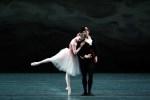 Young NYCB soloist Kathryn Morgan hails from Fayetteville, North Carolina, and received her initial training from Mobile Ballet in Alabama, where she recently returned to perform as a guest artist. In 2004, Kathryn went to the legendary School of American Ballet, moving into an apprenticeship with NYCB in 2006 and a corps de ballet post in 2007. Her promotion to soloist happened just over a year ago, in October of 2009.
Kathryn, or “Katie”, is perhaps one of the company’s most charming ballerinas, and her quiet, radiant grace is apparent in every role. She has been featured by the New York Times, Dance Spirit and Pointe Magazine and guest-blogged for the latter. You’ll be truly inspired by the gorgeous photos on her website – it took me quite a while to decide which one was prettiest for this post!
UPDATE: Kathryn has a new website now, with a fabulous blog of her own. Check it out! It’s called IfThePointeShoeFits.
Supercharge Your Pointework!
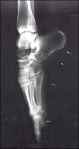 The American Orthopaedic Foot & Ankle Society agrees: pointework is a serious undertaking. They endorse several tried-and-true dancer exercises that you will find enormously impactful for your oh-so-important foot and ankle training to enhance stabilization, strength and articulation. Add these simple, technique-cleansing routines to your regimen today (You’ll thank me later!):
Doming Exercise
The dancer sits on a chair with knees bent to 90 degrees and feet flat on floor. The dancer then tries to make an arch under the metatarsal heads while keeping the toes flat and long, not allowing any curling of toes. Hold for count of ten, repeat 5 times with each foot. This helps strengthen the intrinsic muscles (the small muscles between the metatarsal bones.
Marble Exercise
Place 20 marbles on the floor. Pick them up one at a time by curling the toes around them. Move each marble to a jar and when dropping in the jar, spread the toes apart as widely as possible. Repeat with other foot.
Alphabet Exercise
Write A to Z with each foot, using the foot and ankle and not the leg to draw the letters. This is a good overall ankle strengthening exercise.
Theraband (Sport Cord) Exercise
Dancers should move their ankle in 4 directions against the theraband. Flex (dorsiflexion), pointe (plantarflexion), sickle (inversion) and wing (eversion). Dancers should first point their foot followed by trying to turn the foot in (“sickle”) against the resistance of the theraband. A dancer should be able to see the tendon just behind the inside of their ankle working. This tendon is the tibialis posterior which is crucial for rising up on the toes.
Releves
The dancer should do calf raises with their feet in a parallel position, otherwise known as a releve. After barre work, it is good to do 24 single leg releves in parallel on each leg. This will help strengthen the Achilles tendon and calves.
 BalletScoop