 If you are getting to an advanced stage in your training, chances are you have already worn or will soon wear a tutu. I’m not talking about those mass-made recital costumes that arrive crumpled up in plastic bags – I’m talking about a fully or partially handmade tutu carefully constructed with hoops, high-quality tulle and a corset-style basque and bodice. (Insert high-pitched squeal of girly joy!)
If you’ve been dancing for a while, you probably already know the basic tutu cuts. The romantic style is easy to spot because of its ankle or below-the-knee length in voluminous layers of soft net and tulle. The classical tutu usually refers to the pancake or platter style with its flattened shape that is hooped to stay straight out from the hip.
There are three common subcategories of the classical tutu. The original is the pancake described above. The Balanchine or Karinska tutu, also called a powderpuff, is obvious from its loosely tacked softer tulle or net that is shorter in length than the pancake and not hooped. The bell tutu is similar to the pancake, but bells slightly downward with no hoop and has more layers than a pancake style.
Practice or rehearsal versions are available in all the styles above, but are most common for pancake tutus. If you are purchasing a rehearsal tutu of any kind, it is best to spend more if you can to get a professional version because that will give you the versatility to alter it into a performance piece. Most professional tutu-makers make practice versions based on the same construction as their performance versions. Ordering from one of them is the easiest way to ensure you have a tutu you can use for practice and potentially for performance. This will require some careful measuring with the help of a friend and some patience for the creation of your tutu. Each maker can tell you the specifics of their ordering process and often has a page on their website devoted to this information.
Practice tutus are most versatile in white but much easier to keep clean-looking in black. Cleaning any tutu can be a difficult process. Chemical dry cleaning destroys their delicate frills, hoops can rust in water, and the delicate decorations and beading can be harmed by any cleaning method. Foregoing an overall cleaning in favor of spot cleaning and deordorizer (think Febreze) can be a good solution, though sweat and grime may eventually break down the fabric. Ideally, design the tutu as best you can so that embellishments can be removed for cleaning. This makes it much more versatile anyway.
If you need to go a less expensive route, there are some decent options out there. You’ve may have noticed that most discount dance suppliers have tutu sections, and those can be great resources. Try not to buy really cheap and ill-made tutus; that’s just throwing away money. Even if you can’t afford a pro-made tutu, you should still look for something with good quality tulle and a corset basque. Some decent practice tutus are made by Bloch, Star Styled, Body Wrappers, Main Street Dancewear, Sansha, Algy Performs, Wear Moi and Mondor. A few also sell bodice-style leotards that can be matched to the tutu for a very simple performance piece. Most of these styles are available through discount dancewear retailers.
Once you have your prized tutu, you should keep it in primo condition by storing it a proper tutu bag to protect it from crushing. Tutus should never be folded, but if you must, picking it up from the crotch and gently folding it upside down can minimize damage. If you pack it right-side-up, your tutu will flatten and the look will be ruined. Hanging tutus should be upside-down as well. Pancake tutus can be stored flat on a shelf provided they are not stacked one top of the other so that air can circulate.
Now that you are armed with the scoop on tutus and how and what to buy, here is a list of some of today’s best professional tutu makers for U.S. shoppers:
Class Act Tutu
Primadonna Tutus
Winthrop Corey Designs
Tutu Etoile
Grishko
Cameo Dancewear
Tutu.com
Classic Dance Costumes
Tutus Divine
Prima Fashions
Tutus.com
Rosetti Costumes
Theatre Ballet
Tutus by Edna
Aurora Dancewear
The Costume Lady
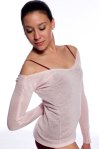 Professional ballerinas, fashion models and movie stars are just a few who reach for K.D. Dance sweater AC03DB when they want to throw something on that will flatter no matter what.
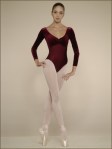 Ok, so winter isn’t exactly here yet, but it will be soon! What better way to stay warm when the chilly days come than with a luxiouriously velvety velour long-sleeved leo, like Grishko’s
  Skirts make ballet more fun, don’t you think? That’s exactly what I think when I see a
  Have you ever looked with awe and envy at the highly arched banana feet of famous dancers like
  Flaunt Bodywear’s teardrop leotard
  In classic Balanchine style, this tank dress from Body Wrappers has clean lines and minimal fuss. The back is not too high or too low, and the attached skirt is just the right length for class or performance. Even the model here is sporting a Balanchine-esque pose.
 Studying a Giselle variation this year? You’ll look ready for the title role in this lovely peasant-top style,
  Nothing beats gorgeously simple Italian design, and here to prove it is Deha with model No.
 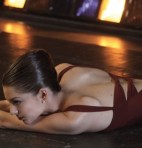 From the French brand Wear Moi, here is a wearable piece of art for your next class or audition. Wear Moi’s
 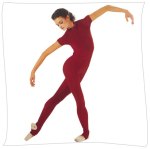 Unitards can be fun for rehearsals and even auditions, especially for contemporary ballet, and Sansha’s mock-neck unitard
  Camisole leotards are the most popular leotards on the market, which is why there are so many available – good, bad and ugly. But when you’re searching for a classic, picture-perfect camisole that will flatter every shape, look no further than Mirella’s
  Ballet tights in an unflattering shade of pink are one of the CBT’s pet peeves! Choosing a pink that clashes with your pointe shoes or ballet shoes will shorten your lines and just look wrong.
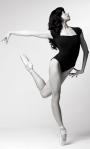 Looking for a leotard that covers without looking dowdy? The
 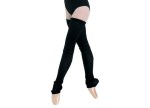 Legwarmers are an absolute staple for ballet dancers. You can throw them on with practically anything to keep your gams toasty and cozy in a chilly studio, and they come in a wide variety of lengths and fabrics. Perfect for barrework and stretching, the Bloch
  BalletScoop