Ballet in Film: And We Will Dance

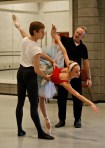
Thinking about North Carolina School of the Arts for your summer program? And We Will Dance is a documentary about four dancers at the school and their pursuit of dance. Check out the trailer here and the official website here.

Now headed by ABT and former NYCB principal dancer Ethan Stiefel of Center Stage fame, UNCSA is an academic and talented arts boarding high school with an excellent record for training dancers. During the school year, UNCSA also offers training for students younger than high school. Post high school, UNCSA provides a well-respected BFA program.

Update: Ethan Stiefel has accepted the position of artistic director of the Royal New Zealand Ballet and will step down from his post as UNCSA dean at the end of this academic year.

Ballet in Film: Dancing Across Borders

Dancing Across Borders is the story of a young Cambodian dancer plucked from his home in a small fishing community to be trained at SAB. If you haven’t seen it yet … go watch it right now! This film is one of my new favorites, if only for the much-deserved coverage of Black Swan set coach Olga Kostritzky, one of the best teachers I ever had (as one of my level’s main teachers at the 2001 Rock SI), and for the extensive footage of Balanchine style and choreography, since there’s isn’t a ton of the stuff on DVD.

But there is much more to this film than footage of SAB teacher-gods like Ms. Olga, Jock Soto and Peter Boal. It is the story of Sokvannara “Sy” (pronounced “See”) Sar, a young man with a remarkable spirit who is plucked from his home country and thrust into the world of pre-professional ballet training by the hand of an intentionally benevolent (though perhaps difficult to like) New York socialite Anne Bass.\

This film might as well be dedicated to honor international ballet students everywhere, as it does an excellent job of talking openly – often through Sy’s own words – about the inevitable emotional consequences of being so far from your home, your family, your language and everything you’ve known. In this case, the scarring was exacerbated by Sy’s lack of control over his fate for the first few years of his training. Unlike some international students, he did not really choose to leave his country for ballet training, ballet chose him. He knew it was a chance to support his family that he couldn’t possibly turn down, though he neither spoke English nor had seen ballet before Bass brought him a ballet film and radically suggested that he leave everything he’d ever known for this bizarre, western pursuit.

Sy’s journey is simply fascinating. He was entered into the Professional Children’s School for academics but was not instantly accepted to SAB despite the pleas of Anne Bass to Peter Martins. Instead, Sy falls into the singularly capable hands of Ms. Olga, who takes on the task of molding the 16-year old Cambodian through private classes from basically a pedestrian into a SAB-level phenom. You’ll have to watch the film to find out what happens from there, but suffice it to say his future would include a little town called Varna.

Dancing Across Borders is available streaming on Netflix and can be purchased, along with t-shirts and posters, at the official site. Proceeds from the official shop go directly towards Nginn Karet Foundation for Cambodia’s “Give a Future to a Child of Angkor”, a program that helps children fulfill their dream to follow in the footsteps of dancers and musicians seen on Angkor Wat and other ancient Khmer temples. Please consider making a purchase from the Dancing Across Borders official shop.

Spoiler Alert! I noticed that the Washington Post article that I linked above mentions rather forebodingly that Sy quit PNB recently. I didn’t want you left hangin’ on where he is now so I did some searching, and it appears from Saint Louis Ballet’s facebook page that he will be joining them for the Spring 2011 season.

Finding The Best College Dance Program for You

Dancing in a great college program gives you the opportunity to refine your dancing to a professional level through one major while preparing for a “back-up” career with a second major – or to continue doing what you love while pursuing your academics. But as a student making plans for dancing in college, you have more to think about than the average teen. What program is right for me? How tough will it be to find what I need from a college program? Can I find the same or better quality training than what I’ve had up to now? Are there programs that focus seriously enough on my dance genre that I can have a chance to turn pro after college? How do I begin researching good dance college programs?\

According to College Matchmaker, which provides links to and info on thousands of colleges, there are 254 four-year colleges in the U.S. with majors for ballet, dance or musical theater. That’s a lot to consider, especially if you don’t even know what you should be looking for. An excellent place to start your planning is by reading through Dance Advantage’s college guide. This section of the DA website provides invaluable information from how to decide what you are looking for in the first place to how to excel once you are there, plus a nice list of external articles and websites to get you well on your way creating and narrowing down your list of colleges.

There is a lot to be gained by pursuing a higher education while refining yourself as a dancer. If you are not sure whether to even continue dancing while in college or whether to skip college altogether and pursue a career in dance immediately, researching your options thoroughly before deciding can give you a more realistic picture so that you can fully assess all the pros and cons.

What makes the “best” college for you will depend on a variety of factors, including your goals in dance, whether you want to get to a pro level via college or go recreational, and what kind of college dance programs are available to you financially. If you have professional contract offers already and are considering accepting one, you should seriously research your options for pursuing your education in that city, though you may not opt for a dance program at all. During your research, don’t get too hung up on terminology for dance programs (B.A. vs. B.F.A, for example). Focus on the instructor quality, the program’s intensity, class offerings, performance opportunities, facilities and of course where the alumni are now. Good programs will require an audition.

Lastly, consider whether to treat your college education and your dance education as separate pursuits, just as you may have done during your high school years. If you have access to a superior dance school, there may not be a college program available to you that will surpass it, so that it is certainly worthwhile to consider enrolling in the dance conservatory or school to continue with dance while taking non-dance college courses. There is a wide variety of quality in U.S. college dance programs today, but for an idea of what to expect, check out this article from Dance Informa Magazine.

As you can tell, there are many, many options to consider even before you start examining college dance programs. But it’s not as daunting as it might seem! Take control of your college future by delving into the articles and links I’ve provided, and before you know it you’ll be well on your way to planning your college career.

Love Your Dance Teacher? Nominate Her! (Or Him!)

Dance Teacher Magazine is seeking student submissions for their 2011 Dance Teacher Awards. Exceptional teachers may be honored by a Dance Teacher Award at the 2011 Dance Teacher Summit! Click here for submission requirements and nomination categories.

Show your favorite dance teacher how much he or she means to you with a nomination for a Dance Teacher Award!

Update: Dance Studio Life and Dance Life TV are also sponsoring a teacher award program, the Dance Life Teacher Conference Scholarship Program. The DLTC program is held in three rounds of essay, video and finally an editors’ vote. Your teacher could win a scholarship to attend the Dance Studio Life Conference and formal recognition by DSL. Nominate your favorite dance teacher today!

Dance(212) is Back & Focused on Ballet!

A brand new series will soon be presented by Dance(212)! And this time they’ll be focusing exclusively on ballet students’ summer intensive experiences. Check out the preview here, and get ready to meet five exceptional and ambitious young dancers (including Hannah Miller, shown left) with talent and drive to spare. Tune in January 24 for the series premiere!

Getting Accepted: What Are “They” Looking For at SI Auditions?

Summer Intensive auditions are now in full swing, and I’ve gotten tons of great questions from you guys lately about what the SI adjudicators will be looking for! I know you all sometimes feel a lot of pressure about these auditions, but you should know that the adjudicators will make it as positive an experience as possible. Often, your audition fee will be a “master class” fee, and you will have the benefit of instruction and correction from exceptional teachers during the audition class.

I know what you’re really interested in, though, is the nitty-gritty of how your are being judged. Many factors are considered in your evaluation. I like to divide these factors into two categories: physical attributes and performance attributes.\

By physical attributes, I am referring to the body of the dancer. Dancing is a sport (and of course an art), and just like any sport you must have a body that is physically capable of doing the work required. Your adjudicators will be looking for dancers of a healthy weight who have a suitable physical facility for ballet. By facility, I mean dancers with:

  • Good rotation for turn-out
  • Long, flexible limbs
  • Supple muscularity
  • Balanced proportions
  • An overall good “look”

Of particular interest to auditioners might be:

  • Longer limbs combined with a shorter torso
  • A small head
  • High but strong and controlled arches
  • A touch of hyperextension in the knees

Of course, we can’t talk about ballet bodies without getting to the touchy question of weight. I am not going to sit here and tell you that SIs never accept underweight dancers. Sadly, some SIs might overlook an underweight dancer who is able to hobble through an audition, but these dancers generally do not make it far in ballet (or sometimes even that SI) due to their sheer inability to physically keep up. Without a proper muscular structure and proper food intake these dancers inevitably cannot perform as required. One of the saddest things I saw as an SI student was when dancers were sent home from a program for concerns of being underweight or unable to physically keep up. It goes without saying that being overweight will be similarly inhibiting, and that an athleticly slim figure is often preferred. So the most important thing is to be of a healthy athletic weight, and that means being neither over nor underweight.

Physical attributes are secondary to performance attributes, however, and these attributes include movement quality and the dancers ability to … dance! Performance attributes include:

  • Quality training commensurate with age
  • Good basic placement and core strength
  • Coordination
  • Musicality
  • Proper use of plie
  • Good lines
  • Strong and articulated feet
  • Quality port de bras
  • Extension appropriate for age
  • Strength on pointe, if appropriate
  • Ability to understand corrections
  • Ability to apply corrections
  • Ability to pick-up choreography quickly
  • Style and artistic expression
  • Great mental attitude
  • Passion for and enjoyment of dancing

You probably notice that the first ten items on this list are all related to technique. Remember that these adjudicators are not looking for perfection. In fact, up to the age of about 14, they are giving quite a bit of consideration to the dancer’s potential. If you are lacking in technique due to inadequate instruction for example, you can show through your ability to pick up corrections and choreography that you are very teachable and therefore perhaps an excellent candidate. As you get a bit older, however, adjudicators will be looking for a more finished product. By the age of 17 or 18, you will want to present yourself as a dancer who has most of her technique and movement quality at a professional level. They will want someone at that age to be working mostly on artistry with perhaps some technical fine-tuning remaining to be done.

Do not underestimate the importance of the last two items I’ve listed. Showing your love for dance through enthusiasm for learning and enjoyment of movement can and often does cause an adjudicator to give a student a second, third or even fourth look. Avoid the “deer in the headlights” look at all costs! Be present in the moment, attentive, focused mentally and with your eyes, and remember why you are there in the first place … because you love, love, love to dance!

Merde, ballerinas! May you all have an exciting and educational audition season!!

Dear CBT: Choosing a Style of Ballet

Dear CBT,

My daughter, age 15,  was a long-time student of a highly-recognized, mixed-method (mostly Cecchetti) ballet teacher where she received wonderful training for 7 years. We recently moved, however, and placed her in a Vaganova program. Do you have any advice for someone studying Vaganova that would help her decide which way to go in the future?

Also there seems to be much less emphasis in this school on the proper physiology of the movements, the students having to just “do it” whereas in her previous ballet school there was always a how and a why to muscle movement and muscle control for the combinations. For example, she learned how to rotate her upper thighs for turnout, etc.  Here it’s just, “Turn out!”

Thank you.  Love your website, found it by accident.

Sincerely,

Devoted Dancer’s Parent

Dear DDP,

In the US, it is common to receive ballet training in a mix of styles. The ultimate goal is to have a versatile, able-bodied dancer with strong technique who can perform any ballet stage choreography. Various technique methods are only a “means to and end” of performing stage choreography, which is a separate concept than academic ballet work. All of the major methods of ballet technique will get the dancer there. Generally, dancers trained in methods that differ from a company they wish to join should have strong enough technique that they can assimilate their technique if and when they are hired. (The exception being New York City Ballet, who often only accepts SAB students.)

The advantage to focusing on one method of training is consistency for the body and reducing confusion for the student. Where one style might ask a dancer to place their foot behind the knee at the toe in a tour piqué en dedans, for example, another technique might demand it be crossed at the heel, placed in front of the knee or placed to the side of the knee. Each technique would call the other incorrect, but it is of little matter in which method a dancer is trained – the properly finished dancer in any method should be able to perform either version regardless of which one she was trained to do.

The caveat to all this is that when changing from one to the other, there are sometimes significant differences in movement style. From Balanchine to Vaganova, for example, your daughter may find that movements are a little bit slower and there is a lot more epaulment with softer, less flowery port de bras work. On the Cecchetti to Vaganova transfer, she will find that she will need to cultivate cleaner, longer lines.

My advise is to give it a year and see if “works” for her. (Does she enjoy the movement style? Is the training high quality?) But don’t worry too much about changing the method. There will be some adjusting to do, but that shouldn’t be anything a your daughter cannot handle. Vaganova is a strong, clean and dynamic method of ballet that will be very useful to your daughter. Many companies prefer it, and many others welcome it.

Regarding your second question, a good teacher will explain and instruct on the hows and the whys of movement. Having a successful professional career is not enough to make a really good teacher however (pedagogical training is also necessary), and it is possible that the school you have chosen is an example of that. Give them some months to display their best teaching methods, but I’d move on if this continues to be an issue.

I hope this helps. Thanks for reading BalletScoop!

Update: If you are interested in understanding more about the various methods of ballet technique, you might enjoy reading my prior posts on French, Vaganova, Cecchetti, Balanchine and other styles.

Dancewear en l’air: The Tie-Dye Camisole Leotard

Looking for something new and fun to wear for rehearsals and auditions? Check out Energetiks AL34, a freestyle and feminine camisole leotard with a tie-dye velvet insert on an empire – remember, that’s “AHM-peer” 🙂 – waist.

This statement-making yet simple leo features a studious pinched V-front and a pinched straight back which keeps the tie-dye accent from making it all look too over-the-top. I just love the look of that pinched straight back, which precisely accents the back muscles.

This limited-edition piece is available in an array of purples, pinks, and reds along with classic black and the cobalt shown here. I would definitely splurge and get the Energetiks tie dye skirt (which I’ll post in un momento) to wear with this fabulous and fun ballet leotard!

Dancewear en l’air: Tee Time

I do not like when students try to wear junk in my classroom (Hellooo, demerits!), but also can’t stand scantily clad students dallying between classes even more. For pete’s sake, put on some pants!  – Or an adorable dancer t-shirt like this one from HD Wear, a up-and-coming ballet t-shirt designer. It’s stylish, covers nicely and makes a cute statement. Better yet, put on both. Now how hard was that?
Pirouette Perfection with 24 Tips & a Vertiginous Video!

Pirouette help just in time for audition season! You might have noticed that I added a blogroll a few weeks back so you could have access to even more dance articles and resources. (It’s on the side of every page.) I add good new blogs as I find them, but my latest fave is Dance Advantage, which you will recognize from my below post on their Top Dance Blogs competition.

Dance Advantage takes a fun approach to dance student topics like technique, dance programs, performance/competition preparation, dance history, and even professional companies. You’ll love their technique section, which has neat, bullet-pointed summaries of basic and classic technical tips. Their 9 perfect pirouette improvement tips and 15 fantastic turn corrections are sure to help you to understand and stay focused on proper movement quality in a basic pirouette. You have probably heard these tips often from your dance teacher, but it’s great to have a quick reference in print!

Need pirouette inspiration and some more help? I found an excellent video for you from Anaheim Ballet which highlights my absolute favorite theories for achieving your balance point and, thereby, accomplish gorgeous turns:

2011 Summer Intensive Updates!

If you haven’t been regularly checking my recent post on the best SIs, click back over to look for newly added quality regional programs (at the bottom of the post) and additional updated info on individual programs.

Also, Pointe Magazine has posted online two good articles on preparing for this audition season. “Rejected” is one dancer’s story of turning a potentially crushing letter into a motivational tool, and “The August Advantage” is a look into summer intensive extension and add-on programs for advanced, vocational students.

Dancewear en l’air: The Long-Sleeve Turtleneck Leo

A long-sleeved turtleneck leotard can be a lifesaver on wintery days, especially if you have a dress code that does not allow warm-ups. These styles can look a bit plain, however, which is why I love this mesh-inset version, Melinda (L4504C), from Sansha.

With a stylish keyhole cutout in the back and mesh fabric for the sleeves and across the collarbone, this leo evokes that dramatic evening-dress look. It’s only available in black, which works well since other colors in mesh can look a bit garish instead of elegant. I think this leo would look adorable in a winter class with a short black wrap skirt and bunched ankle warmers.

Dancewear en l’air: Ballerina Mukluks

There was frost on my windshield this morning down here in the deep South – which means mukluk season is officially upon us! For those of you that aren’t familiar with the comfy, knit foot and calf warmers called mukluks (pronounced muck-lucks or mook-looks, depending on who you ask), these little guys are totally perfect for keeping your feet warm between classes. (But please, please, please do not dance or go on pointe in them!) They a perennial fashion favorite at many SIs, too.

Mukluks are similar to a thickly knit sock, but they have a sewn-on indoor-use leather sole. They aren’t always easy to find, but Turtle ImportsEmpire Dance, Merde Dancewear, Barbaraz through Ebay and Bohemian Groove through Ebay are carrying them now. Then can also sometimes be found around holiday time at American Eagle, Old Navy, Wal-Mart, Target, Victoria’s Secret, AC Moore and local dance boutiques. Check out Alaskan Mukluks for more sources. Grishko and Gaynor Minden currently make synthetic, more modern versions.

Do you know where to score some sweet mukluks or have a review of some that you own? Leave a comment below to let your fellow dancers know!

Update: Mukluks by Himalayan Craft are available on the Russian Pointe website here.

Ballet in Print: Girl in Motion (with a sneak peek!)

Miriam Wenger-Landis, former professional dancer with Miami City Ballet, published a lovely novel this year for young dancers called Girl in Motion. This book chronicles the experiences of small-town girl Anna, a very talented young dancer who has been accepted to the year-round program at the fictional School of Ballet New York after attending their summer intensive.

Miriam Wenger-Landis trained at SAB as a young dancer and is able to use those experiences to write believably and compellingly about Anna’s world. Thanks to Dance Spirit Magazine, you can read two excerpts of Girl in Motion online – Part 1 was published on their site in September, and part 2 will be available next month!