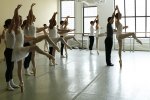
 Summer programs come in many varieties for all sorts of dancers, but they can usually be categorized as one of three types: intensive, workshop or camp. What defines each? Let’s take a look at each type of program.
- Camps – Dance camps usually accept a range of abilites and experience levels and offer classes geared less to professional aspirants and more to those interested in dance to expand their life experience and for the sheer joy of it. The focus is usually on improving technique with a few classes a day while leaving time for lots of fun activities and events for socializing and enjoying the summer. These programs can be as short as one week or as long as all summer. Examples of dance camps include Just for Kix Summer Dance Camps, Brant Lake Dance Camp and American Dance Training Camps.
- Workshops -Workshops can have the same daily intensity as intensives, but they usually last just 1-2 weeks. Workshops often take place in university settings, regional schools or as add-ons to summer intensives. For commerical dancers and students working towards high-level versatility, putting together a workshop tour of multiple programs that span the summer is a great tool for training. Some workshops are dedicated exclusively to younger dancers or for choreographic experimentation. Examples of workshops include the Broadway Dance Center Summer Workshop Series, the Florida State University Summer Intensive Dance Workshop, the Regional Dance America National Choreography Intensive and the School of American Ballet’s Los Angeles Workshop for Young Dancers.
- Intensives – Summer intensives (or SIs for short) are designed for professionally-oriented students and generally consist of 4-6 weeks of all-day lessons. They can be competitive and are usually associated with professional companies or residency conservatories. SIs may be based off of regional, national or international programs. Examples are the Boston Ballet School Summer Dance Program, the University of North Carolina Summer Intensive, the Harid Conservatory Summer School and the School of American Ballet Summer Course.
Any of these types of summer programs may offer guest teachers for a few days or weeks out of the program. If you are looking for an intensive, notice that the presence of the word “intensive” does not necessarily mean that the program falls within the above guidelines. On the other hand, true intensive programs may choose not to use the word “intensive” in their title. Take the time to look closely at the daily schedule, faculty and duration of each program to decide where each program falls.
How can you decide what type is right for you? That depends on many factors, including your available funds and scholarships, your dance goals and the specifics of the program’s training schedule and faculty. Make a list and consider your realistic goals and desires in dance. At the higher levels, an audition will certainly be in order, which could possibly limit your options.
Don’t assume that higher level programs are beyond your reach financially – I’ve seen many high quality intensives that cost the same as some smaller workshops. But note that the quality of one is not necessarily higher than the other based on cost, size or other single factors.
There are tons of options out there, and I’m sure you already have ideas about what’s ideal for you. If you’re heading to a summer program right now, think about your experience so you can decide if the program worked well for you. Think about what you want next year. There are tons of options out there, and there really is something for everyone. You have the power of choice, so exercise it!
 Partnering in ballet is one of the most exciting classes for many students – but it can be a little intimidating for sure. Students in local schools often find that their partnering opportunities are limited to conventions, rehearsals for specific shows and summer programs. For students seriously interested in ballet who do not have much access to partnering during the year, I encourage attendance at an SI where it’s offered three times per week or daily. (Some otherwise good programs offer it only once or twice a week – or not at all.) When its time to actually take the classes though, the initial excitement may morph into anxiety. What will pas de deux work be like? What if I mess up or can’t do what is asked? What if I don’t like my partner or he doesn’t like me? What if I do like him?
 Summer is here! And with it long days of sleeping in, outdoor activities and barbecues – at least until summer dance classes begin. What better way to entertain yourself whether hanging out at home or in the dorms at an SI than with a packed book of ballet-specific crafts.
  Multi-talented artist
  That’s right, birdies, you can now follow me for musings, posts and all the ballerina-in-training news that’s fit to tweet! Check out the instant feed at right and click the “Follow Me” button below it to get in the loop.
 BalletScoop